
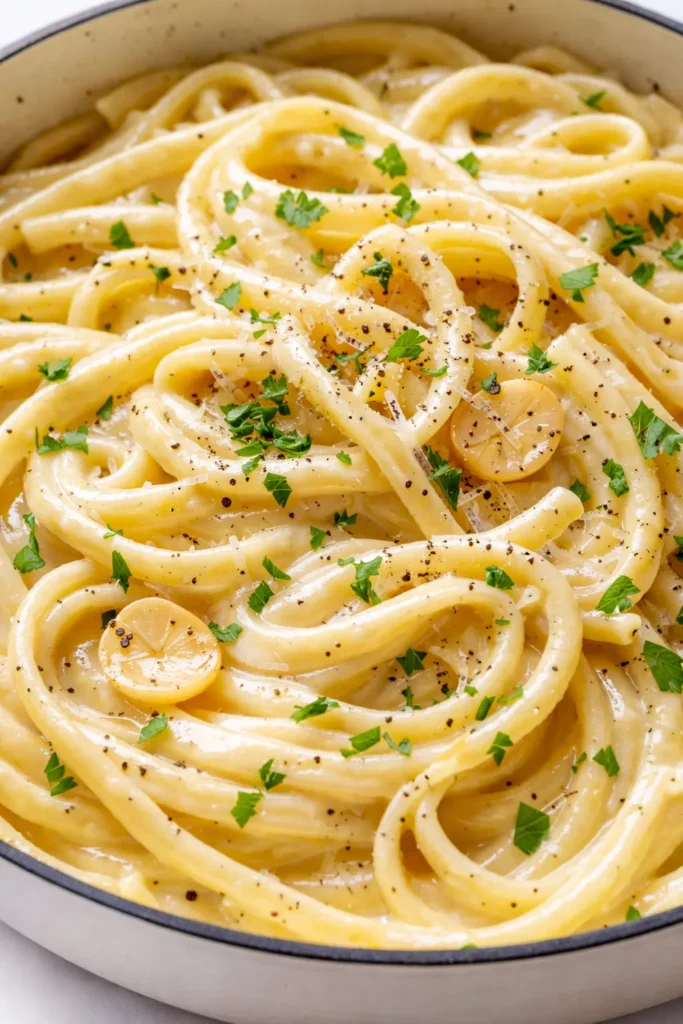
The twirl test is the only one that matters for a dish like this. This one passes it every single time — the sauce clings to the pasta, the garlic doesn’t turn bitter, and you get exactly one pot to wash. That’s the whole promise.
The short version: This one-pot creamy garlic pasta is ready in 25 minutes, leaves you with one pot, and the sauce stays silky (not gloppy) from the first bite to the last.
I’ve tested this more times than I care to admit, and the secret is in the order you add the garlic. Not the type of cream. The order. It’s such a small shift, but it changes everything about how the finished dish reads — and how your kitchen smells while it’s happening.
- Serves: 4 as a main
- Hands-On Time: 10 min | Total Time: 25 min
- Difficulty: Easy enough for a Tuesday
- Cost per serving: ~$2.50
- Calories: ~480 per serving
- Dietary Notes: Vegetarian. Adaptable for gluten-free.
(Photo above: Overhead shot of the pasta in a wide, shallow bowl, twirled into a neat nest with a fork. A light sprinkle of fresh parsley and a generous crack of black pepper on top. Natural light from a side window, wooden table beneath.)
The Trick That Keeps the Sauce Silky (Not Gloppy)
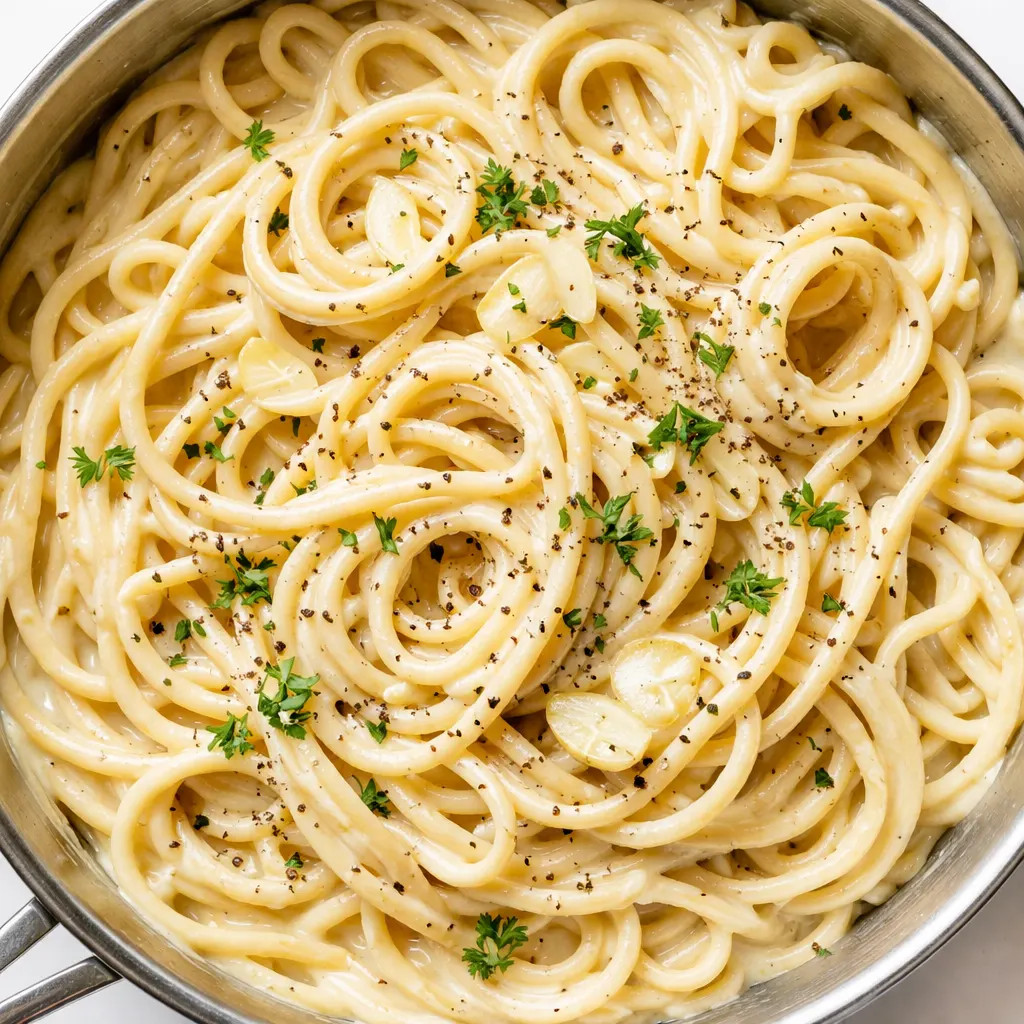
Most one-pot pastas have a moment where the sauce breaks or turns into a paste. This one doesn’t because the garlic gets a head start. Sautéing it in olive oil before any liquid goes in softens its bite and releases its sweetness. Then the milk and broth do the work of creating a creamy emulsion with the starch from the pasta. No heavy cream required, though you’re welcome to add a splash at the end if you’re feeling extra.
The real trick? Adding a squeeze of lemon at the very end. It cuts the richness and makes the whole thing taste lighter than it is. You won’t taste lemon. You’ll just taste pasta that tastes like it’s been cooked by someone who knows what they’re doing.
Everything You Need (And Why They Work)
- 12 oz fettuccine or linguine: The flat shape holds the sauce better than a round strand. Don’t substitute with angel hair — it turns to mush. I’ve tested this with spaghetti in a pinch and it works, but the twirl factor is definitely lower.
- 4 cloves garlic, thinly sliced: Use a knife, not a press. You want thin, even slices that soften in the oil without burning. My kids are suspicious of big chunks of garlic, so I slice them super thin — they melt right in and no one complains.
- 1 ½ cups whole milk: The fat content matters here. Skim milk will curdle. Whole milk gives it a silky body. I’ve tested this with 2% and it works, but whole milk is noticeably better.
- 1 cup low-sodium chicken or vegetable broth: Brings depth without fighting the garlic.
- 1 cup freshly grated Parmesan: Pre-shredded won’t melt properly. Grate it yourself. It takes two minutes. This is the single ingredient I will not compromise on — the texture of the sauce depends on real Parmesan melting into it.
- 2 tbsp unsalted butter: Adds shine and richness at the end.
- 1 lemon: The brightening agent. Don’t skip it. Half a lemon is usually enough, but I always keep the other half on hand in case it needs a little extra lift.
- Red pepper flakes (optional): For a tiny kick that makes the creamy base feel less one-note.
- Salt and black pepper: Season the water like you mean it. It’s the only chance to season the pasta itself.
What You’ll Need (Minimal)
- Large pot or Dutch oven (5.5 qt or larger) — if you don’t have one, a deep skillet with high sides works too.
- Wooden spoon or tongs
- Chef’s knife + cutting board
- Microplane or box grater for the Parmesan
- Liquid measuring cup
That’s it. You probably have all of this already.
Here’s How I Do It (Step by Step)
This goes fast once you start, so have everything prepped and ready by the stove. The whole thing moves in one pot, but it moves quickly.
- Sauté the garlic: Heat 2 tbsp olive oil in your pot over medium heat. Add the thinly sliced garlic and a pinch of red pepper flakes. Cook for 1-2 minutes until fragrant and just starting to turn golden at the edges — do not let it brown fully or it will become bitter.
- Add liquids: Pour in the milk, broth, and 2 cups of water. Add 1 ½ tsp salt and a generous amount of black pepper. Bring to a boil over high heat. (📸 Photo tip: You should see the bubbles breaking the surface all over, not just at the edges. That means you’re at a rolling boil.)
- Cook the pasta: Add the pasta directly to the pot, pressing down gently as it softens. Cook, stirring frequently with tongs, until the pasta is al dente and the sauce has thickened enough to coat the back of a spoon — about 10 to 12 minutes. The sauce will look thin at first, but the starch from the pasta will thicken it as it goes. Don’t walk away during this part. Stirring keeps the pasta from sticking together.
- Finish the sauce: Reduce the heat to low. Add the butter and half the Parmesan. Stir vigorously until the butter melts and the cheese emulsifies into the sauce. The sauce should be silky and clingy, not watery or gloppy.
- Acid & adjust: Remove the pot from the heat. Squeeze the juice of half a lemon over the top and stir. Taste. Add more salt, pepper, or lemon juice until the flavors pop. (📸 Photo tip: The sauce should coat the pasta completely but still pool slightly in the bottom of the pot. If it looks dry, add a splash of warm water or milk and stir.)
- Serve immediately: Divide the pasta into bowls, swirling it into a nest with a fork or tongs. Top with the remaining Parmesan and a crack of black pepper.
The Make-Ahead Version (Best Eaten Fresh)
This is one of those dishes that’s genuinely best served immediately. The sauce continues to absorb into the pasta as it sits, so if you’re making it ahead, undercook the pasta by a minute and add a splash of milk or broth when reheating. I’ve learned this the hard way — the leftovers are still good, but that first serving is the magic one.
- Fridge: Store in an airtight container for up to 3 days. Reheat gently in a skillet with a splash of milk.
- Freezer: Not recommended. The dairy-based sauce can separate when thawed.
- Reheat: Skillet over medium-low heat with a splash of milk or broth, stirring until the sauce re-emulsifies. The microwave works in a pinch but tends to make the pasta a bit softer.
Things I Wish I’d Known Before I Started
- The garlic slicing matters: Thin, even slices are the goal. A garlic press creates a paste that burns too easily in the initial sauté, giving the whole dish a bitter edge. A knife is the right tool here. Trust me on this one.
- Don’t rinse the pasta: You want every bit of starch to stay in the pot. Starch is what makes the sauce creamy without needing a pint of cream. Rinsing it down the drain is pouring your emulsion right out.
- The lemon isn’t optional: I know it sounds like a small detail, but the acidity is what cuts the richness and keeps you coming back for another bite. Without it, the dish feels heavy. With it, it feels balanced. Even if you’re out of fresh lemon, a tiny splash of white wine vinegar works in a pinch.
- Grate your own cheese: Pre-shredded cheese contains anti-caking agents that prevent it from melting into a smooth sauce. You’ll end up with a grainy texture instead of a silky one. A block of Parmesan and a microplane are worth the extra 90 seconds.
Ways to Make It Your Own
- Gluten-Free: Use your favorite gluten-free pasta. Note that gluten-free pasta absorbs liquid differently, so you may need to reduce the broth slightly and keep a close eye on the texture.
- Add Protein: Toss in some cooked chicken, crispy bacon, or leftover roasted vegetables at the end. My husband likes his with a jammy soft-boiled egg on top for extra richness.
- Dairy-Free: Substitute the whole milk with full-fat oat milk (it has the best creaminess) and use a dairy-free butter or olive oil. Skip the Parmesan, or use a high-quality nutritional yeast for a cheesy flavor.
- More Veggies: Sauté a handful of spinach or chopped kale in after the garlic softens, before adding the liquids. It wilts right into the sauce and makes it feel slightly more virtuous.
Questions I Get About This Recipe All the Time
Q: Why did my sauce turn out gloppy?
A: Ugh, I’ve been there. You probably cooked it too long after the pasta was done, or the heat was too high. Once the pasta is al dente and the sauce is thickened, remove it from the heat immediately. The carryover heat will continue to thicken it. If it happens, add a splash of hot water and stir vigorously — it’ll bring it back.
Q: Can I use heavy cream instead of milk?
A: Yes, but the result will be significantly richer and heavier. If I am using heavy cream, I dilute it with a splash of water or broth so it doesn’t overwhelm the dish. The whole milk version is actually my preferred version because it lets the garlic flavor come through more clearly.
Q: Can I make this vegan?
A: I have tested a vegan version with oat milk and a cashew-based Parmesan that works really well. Use 2 tablespoons of olive oil in place of the butter and add a tablespoon of nutritional yeast for the cheesy depth.
Q: How do I reheat leftovers without breaking the sauce?
A: The microwave is harsh on creamy sauces. Instead, reheat it in a skillet over medium-low heat with a splash of milk. Stir gently until the sauce re-emulsifies. It won’t be quite as silky as the first time, but it is very close.
More Recipes My Family Makes on Repeat
If you liked this one, here are a few others that get the same reaction at our table:
- Creamy Lemon Chicken Orzo — One pot, thirty minutes, and that same twirl-able, sink-into-it sauce you love here.
- Simple Roasted Tomato Soup with Grilled Cheese Croutons — The ultimate creamy companion to dunk into. Plus, croutons.
- Crispy Skillet Salmon with Lemony Garlic Sauce — If you want to stick with the savory garlic theme but switch up the protein.
This is the kind of pasta you make on a Tuesday when you want something that feels luxurious but costs pennies. Twirl it, scoop it, eat it straight from the bowl. No apologies.
Let me know if you make it — drop a comment below or tag me in your pasta twirl shot. I live for those.
📌 One-pot creamy garlic pasta recipe that stays silky, not gloopy — save this for your next easy weeknight dinner that needs to come together fast.
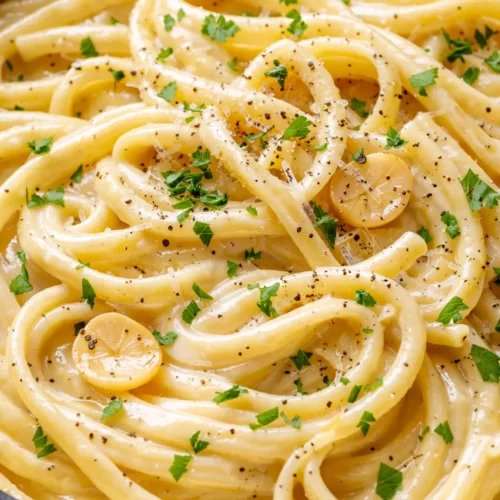
One Pot Creamy Garlic Pasta
Equipment
- Large pot or Dutch oven (5.5 qt or larger)
- Wooden spoon or tongs
- Chef’s Knife and Cutting Board
- Microplane or box grater
- Liquid Measuring Cup
Ingredients
For the Pasta
- 12 oz fettuccine or linguine
- 4 cloves garlic, thinly sliced
- 1 1/2 cups whole milk
- 1 cup low-sodium chicken or vegetable broth
- 2 cups water
- 1 cup freshly grated Parmesan cheese
- 2 tablespoons unsalted butter
- 1 lemon
- Red pepper flakes (optional)
- Salt and black pepper
- 2 tablespoons olive oil
Instructions
- Saute the garlic: Heat 2 tbsp olive oil in your pot over medium heat. Add the thinly sliced garlic and a pinch of red pepper flakes. Cook for 1-2 minutes until fragrant and just starting to turn golden at the edges — do not let it brown fully or it will become bitter.
- Add liquids: Pour in the milk, broth, and 2 cups of water. Add 1 1/2 tsp salt and a generous amount of black pepper. Bring to a boil over high heat.
- Cook the pasta: Add the pasta directly to the pot, pressing down gently as it softens. Cook, stirring frequently with tongs, until the pasta is al dente and the sauce has thickened enough to coat the back of a spoon — about 10 to 12 minutes. Do not walk away — stirring keeps the pasta from sticking.
- Finish the sauce: Reduce the heat to low. Add the butter and half the Parmesan. Stir vigorously until the butter melts and the cheese emulsifies into the sauce. The sauce should be silky and clingy, not watery or gloppy.
- Acid and adjust: Remove the pot from the heat. Squeeze the juice of half a lemon over the top and stir. Taste and add more salt, pepper, or lemon juice until the flavors pop. If the sauce looks dry, add a splash of warm water or milk and stir.
- Serve immediately: Divide the pasta into bowls, swirling it into a nest with a fork or tongs. Top with the remaining Parmesan and a crack of black pepper.
Notes
Related Recipes:
 Cheesy Hamburger Casserole Bake That’s Ready in 40 Minutes (No Canned Soup Here)
 Lemon Capellini Salad for Late Summer Evenings: Bright, Tangy, Ready in 20 Minutes
 Creamy Garlic Tagliatelle That Looks Like a Restaurant Dish in 20 Minutes
 Texas Roadhouse Style Baked Salmon with Sweet and Savory Glaze — Ready in Under 30 Minutes
 Easy Italian Meatloaf That’s Actually Juicy (Not Dry) — in 1 Hour
 The Biscuits and Gravy Casserole That’s Actually Crispy on Top (And Ready in 40 Minutes)