
The first time I made this, I stood over the pot and ate a forkful directly from the pan. Not because I was starving — because I couldn’t believe a sauce this rich and silky came together without a pint of heavy cream and a stick of butter staring into each other’s eyes. This is creamy lemon pasta that tastes like you spent the afternoon on it. You spent twenty minutes. The secret is emulsifying the pasta water with the cheese and a measured splash of cream — enough to feel decadent, not so much that you need a nap after.
The short version: A bowl of creamy lemon pasta that costs under $5, takes 20 minutes, and looks like it came from a restaurant with cloth napkins and a waiter who knows your name.
I have made this on a Tuesday when I had nothing in the fridge but lemons and a hunk of Parmesan. I have made it for friends who texted me the next day asking for the recipe. It is the single most useful recipe in my dinner rotation, and I am not exaggerating.
- Serves: 2 as a main, 4 as a side
- Hands-On Time: 10 min | Total Time: 20 min
- Difficulty: Beginner-friendly, looks like you know what you’re doing
- Cost per serving: ~$4
- Calories: ~480 per serving
- Dietary Notes: Vegetarian. Adaptable for gluten-free (use GF pasta).
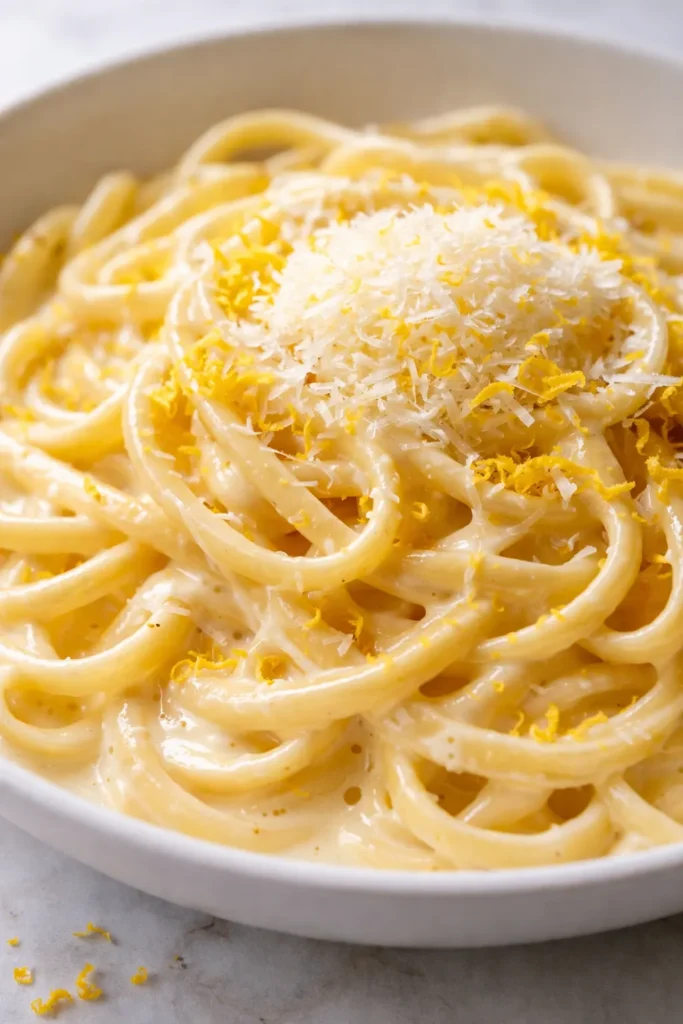
(Photo above: A shallow white bowl of linguine, the sauce clinging to every strand, finished with a fine dusting of lemon zest and a crack of black pepper. A fork is resting on the rim, and there’s a single basil leaf placed deliberately on top — not scattered. The light is coming from the left, catching the glossy sheen of the sauce.)
The Thing That Makes This Sauce Silky Without Being Gloopy
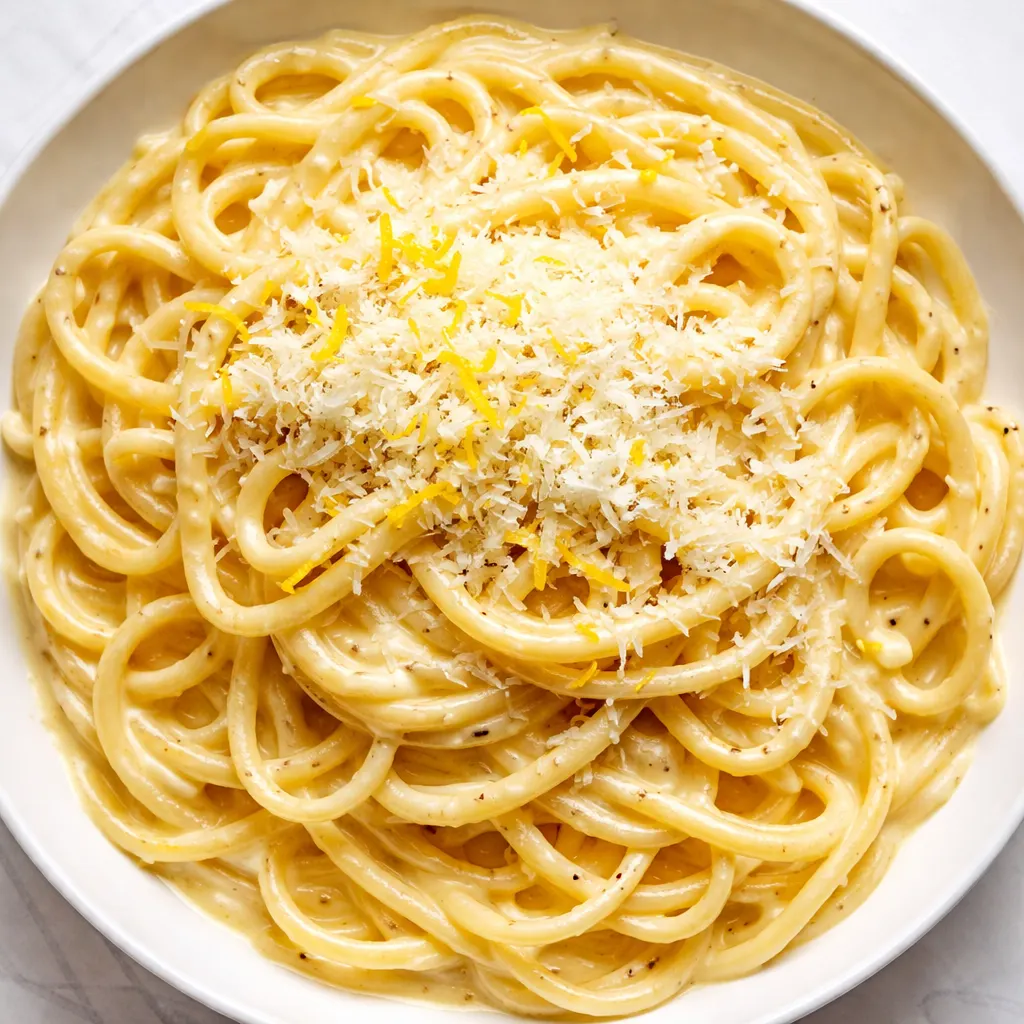
Most creamy lemon pasta recipes fall into one of two traps: they’re either so thin the sauce slides off the pasta like rainwater, or so heavy you feel it in your chest for hours. This one threads the needle perfectly.
The trick is reserving a full cup of pasta water and using it to thin the cream and cheese mixture while you toss the hot pasta. The starch in the water emulsifies the fat from the cream and the Parmesan into a smooth, cohesive sauce that clings to every strand without separating into a greasy mess.
I learned this after a string of gritty, broken sauces that looked like a scientific error on a plate. This version refuses to break. It stays silky from the first forkful to the last, and it makes you look like you know exactly what you’re doing in the kitchen.
Ingredients Worth Talking About (With Real Talk)
- 1 lb dried pasta (linguine or spaghetti): The shape matters. Flat, long noodles catch the sauce better than tubes or short shapes. De Cecco or any bronze-die-cut pasta releases more starch, which helps the sauce bind. Trust me on this one. My kids can tell the difference when I use a different shape — they’ll eat it, but they’ll ask why it’s not “the good kind.”
- 1 cup heavy cream: Yes, a full cup. It sounds like a lot, but it’s split between the sauce and the finish. Use the real stuff — half-and-half won’t give you the same silky texture without breaking under the acid from the lemon. I tried a lighter version once. I don’t talk about it.
- 2 large lemons (zest + juice): This is non-negotiable. Bottled lemon juice tastes like regret and smells like cleaning products. You need the zest for brightness and the juice for acidity. Zest the lemons before you juice them — the zest is what makes the dish look finished and intentional. A microplane is the tool here. A box grater will give you angry, bitter shreds.
- 1 ½ cups finely grated Parmesan: Pre-shredded Parmesan has anti-caking agents — cellulose, potato starch, all that stuff — that make it seize up in the sauce instead of melting smoothly. Grate it yourself from a block of real Parmigiano-Reggiano. It takes two minutes with a microplane and it’s the single biggest difference between a smooth sauce and a grainy one. I know it’s annoying. I know. Just do it this once and you’ll never go back.
- 3 tbsp butter: Unsalted. It adds richness and helps the sauce emulsify. Salted butter works in a pinch, just be careful with additional salt at the end.
- Salt, black pepper, red pepper flakes: For the pasta water and the finish. The red pepper flakes are optional but I think they’re essential — just a tiny pinch to cut through the richness.
- Fresh basil or parsley (optional): For the finish. Place it, don’t scatter it. I prefer basil here because the anise-adjacent quality plays beautifully with the lemon.
What to Pull Out Before You Start
- A large pot (5-6 quarts) for the pasta
- A large skillet or saute pan (12-inch) for the sauce
- A microplane or fine grater for the lemon zest and Parmesan
- A set of tongs for tossing the pasta with the sauce
- A liquid measuring cup for the pasta water
That’s it. No special equipment. No blender, no food processor. Just a pot, a pan, and a good microplane.
Here’s How I Do It (No Fancy Skills Required)
Set everything up before you start — this comes together fast, and you don’t want to be grating Parmesan while your pasta is turning into a brick in the colander.
Get the water boiling: Bring a large pot of generously salted water to a rolling boil. Add the pasta and cook until 1 minute shy of al dente. Reserve 1 ½ cups of pasta water before draining. Do not forget this step. I cannot stress this enough.
- Zest and juice the lemons: Finely grate the zest of both lemons into a small bowl. Then juice them into a separate bowl. You want about ¼ cup of juice. Set the zest aside for the finish. (📸 Photo tip: The zest should look fluffy and bright yellow, with no white pith attached. Pith is bitter and will ruin your sauce.)
- Start the sauce base: In a large skillet over medium heat, melt the butter. Add the garlic and cook until fragrant, about 30 seconds — don’t let it brown, or it will taste bitter instead of sweet and nutty. (📸 Photo tip: The garlic should look translucent and smell nutty, not sharp. If it starts to color, pull the pan off the heat.)
- Add the cream and lemon juice: Pour in the heavy cream and the lemon juice. Whisk to combine. Let it simmer gently for 1-2 minutes, until it thickens slightly — it should coat the back of a spoon and leave a clean line when you drag your finger through it. This is called nappe, and it’s the goal. (📸 Photo tip: The sauce should look smooth and pale yellow, with tiny bubbles around the edges. If it looks separated or greasy, whisk in a splash of pasta water.)
- Add the Parmesan: Reduce the heat to low. Add the grated Parmesan in small handfuls, whisking constantly, until it’s fully melted and the sauce is smooth. Do not let it boil or the cheese will seize up and you’ll be staring at a grainy, sad sauce. Low heat is your friend here.
- Add the pasta water: Ladle in ½ cup of the reserved pasta water and whisk until the sauce is glossy and pourable. It should look thinner than you want it to — the pasta will absorb some of it as you toss. Trust the process.
- Combine the pasta and sauce: Add the drained pasta directly to the skillet. Use tongs to toss the pasta in the sauce, adding more pasta water a splash at a time, until the sauce coats every strand and moves freely around the pan. This takes about 1-2 minutes of tossing. The pasta will absorb the sauce and look glossy and alive.
- Finish and serve: Remove from heat. Sprinkle half the lemon zest over the pasta and toss once more. Taste — add salt if needed, though the Parmesan usually covers it. Divide into bowls. Top each bowl with the remaining zest, a crack of black pepper, a pinch of red pepper flakes, and a few basil leaves placed deliberately on top. Not scattered. Placed.
How I Meal Prep This (For the Week)
This is one of those rare creamy pastas that reheats well — if you treat it right. I make a double batch on Sunday and we’re set for two easy lunches that don’t taste like sad leftovers.
- Fridge: Store in an airtight container for up to 4 days. The sauce will thicken as it sits — that’s fine, it’s just the pasta absorbing the liquid.
- Freezer: Not recommended. The cream sauce can separate when thawed and the texture won’t be the same. This one is best fresh or within a few days.
- Reheat: The microwave works in a pinch, but the stove is better. Add a splash of water or milk to the pan, reheat over medium-low, and toss until the sauce loosens up again. It takes 3 minutes and tastes fresh. Don’t blast it on high heat or you’ll end up with a greasy mess.
Things I Wish I’d Known the First Time I Made This
- Grate your own Parmesan. I know it’s annoying. I know the pre-grated stuff is sitting right there in the fridge section, looking convenient and harmless. But it contains anti-caking agents that will make your sauce grainy and stiff instead of silky and smooth. Buy a block of real Parmigiano-Reggiano and grate it on a microplane. The difference is night and day, and it’s the most important step in this entire recipe. Even if you mess this part up a little, it’ll still taste good — I’ve done it. But it won’t look as good as it could.
- Don’t skip the pasta water. The starch in the pasta water is what emulsifies the sauce. Without it, the fat and the liquid will separate into a greasy, broken mess. Reserve a full cup — even if you don’t use it all, it’s better to have it and not need it than to need it and not have it. This is not a step you can skip. I learned this the hard way.
- Taste before you salt. Parmesan is salty. Pasta water is salty. The butter has salt. Add a pinch of salt to the cream sauce if you need it, but don’t season the finished dish aggressively until you’ve tasted it. I’ve ruined a batch by over-salting at the end — it’s a sad, sad thing to have a perfectly silky sauce that’s too salty to enjoy.
- Zest twice, juice once. One lemon for the juice, both for the zest. The zest on top is what makes the dish look intentional and finished — it’s the visual cue that tells your brain “this is a real recipe, not just pasta with sauce.” The bright yellow flecks against the pale cream sauce are beautiful and they tell the eater exactly what they’re getting.
Swaps That Actually Work (For When You Don’t Have the Exact Thing)
- Gluten-Free: Use a good quality brown rice or chickpea pasta. Cook it slightly less than the package directs and reserve extra pasta water — GF pasta absorbs more liquid and you’ll need more to get the sauce to the right consistency.
- Dairy-Free: This is tough because the base is cream and cheese, but I’ve had readers report success with full-fat oat milk or canned coconut cream (the thick part only) and a dairy-free Parmesan alternative. The texture won’t be as silky, so it’s a “when you have no other option” version. I haven’t tested it myself, so I can’t promise perfection.
- Add Protein: I often toss in leftover shredded rotisserie chicken or a handful of sautéed shrimp when I want it to be a heartier meal. Add the protein to the skillet with the cooked pasta to warm it through. My husband loves the shrimp version — he says it feels like a restaurant dish.
- Kid-Friendly Version: My kids find lemon juice too sharp sometimes, so I reduce the juice to 2 tablespoons and add an extra splash of cream. They still get the bright flavor, just less acidic. They ask for it by name now, which is the highest compliment I can give a recipe.
The Questions I Get About This Recipe All the Time
Q: Why did my sauce turn out grainy when I added the Parmesan?
A: Two likely culprits: the heat was too high when you added the cheese (it seized up from the heat shock), or you used pre-shredded cheese with anti-caking agents. Keep the heat on low when you add the cheese, and grate it yourself from a block. If it’s already grainy, try whisking in a splash of warm water or cream over very low heat — sometimes you can coax it back together. No promises, but it’s worth a try before you start over.
Q: Can I use milk instead of heavy cream?
A: I do not recommend it. Milk lacks the fat content to emulsify properly and will likely curdle when combined with the lemon juice and heat. If you’re in a pinch, use half-and-half, but accept that the sauce will be thinner and less luxurious. The whole point of this recipe is the silky, restaurant-quality texture — skimping on the cream works against that goal.
Q: How long does this pasta last in the fridge?
A: Up to 4 days in an airtight container. The sauce will thicken as it sits — that’s the pasta absorbing the liquid, not a sign that something went wrong. When you reheat it, add a splash of water or milk and toss it over low heat until it loosens up. I do not recommend freezing it — the cream sauce can separate and the texture won’t be the same after thawing.
Q: What do you serve with this pasta?
A: My favorite pairing is a simple arugula salad with shaved fennel, a lemon vinaigrette, and a generous shower of Parmesan. The peppery arugula cuts through the richness of the pasta perfectly. For a heartier meal, I serve it alongside a piece of simply seared salmon or roasted chicken thighs. My kids love it with garlic bread on the side — I can’t argue with that logic. Bread for dipping into the extra sauce is always a good idea.
More Recipes My Family Makes on Repeat
If this creamy lemon pasta is already earning a spot in your dinner rotation, here are a few other weeknight heroes that get the same reaction at my table:
- [INTERNAL LINK PLACEHOLDER: Cacio e Pepe] — The three-ingredient Roman classic that looks impossibly elegant for how easy it is. The exact same pasta water trick applies here.
- [INTERNAL LINK PLACEHOLDER: One-Pot Tomato Basil Pasta] — Everything cooks in a single pot, including the pasta. Minimal effort, maximum flavor, and the clean-up takes five minutes.
- [INTERNAL LINK PLACEHOLDER: Garlic Butter Shrimp Scampi] — Ready in 15 minutes and feels like a special occasion for zero extra work. The lemon-garlic-butter sauce is a perfect companion to this pasta.
A bowl of creamy lemon pasta is the kind of dinner you make when you want to impress yourself just as much as anyone else at the table. It’s fast, it’s forgiving, and it makes a Tuesday night feel like a small celebration you didn’t have to plan for.
If you make it, I’d love to know how it turned out for you. Drop a comment below, or tag me on Pinterest and Instagram so I can see your beautiful bowl of pasta. Nothing makes my day like seeing someone else nail that silky, glossy sauce.
📌 Creamy lemon pasta recipe that comes together in 20 minutes with simple, affordable ingredients — save this for your next busy weeknight when you need something fast, beautiful, and genuinely delicious.
Creamy Lemon Pasta
Equipment
- Large Pot (5-6 quarts)
- Large Skillet (12-inch)
- Microplane or Fine Grater
- Tongs
- Liquid Measuring Cup
Ingredients
- 1 lb dried linguine or spaghetti
- 1 cup heavy cream
- 2 large lemons (zest and juice)
- 1 ½ cups finely grated Parmesan cheese (from a block)
- 3 tbsp unsalted butter
- 3 cloves garlic, minced
- to taste salt (for pasta water and finishing)
- to taste freshly cracked black pepper
- a pinch red pepper flakes (optional)
- a few leaves fresh basil or parsley (for garnish)
Instructions
- Bring a large pot of generously salted water to a rolling boil. Add the pasta and cook until 1 minute shy of al dente. Reserve 1 ½ cups of pasta water before draining.
- Zest both lemons finely into a small bowl, then juice them into a separate bowl (you need about ¼ cup juice). Set the zest aside.
- In a large skillet over medium heat, melt the butter. Add the garlic and cook until fragrant, about 30 seconds — do not let it brown.
- Pour in the heavy cream and lemon juice. Whisk to combine. Let it simmer gently for 1-2 minutes until it thickens slightly and coats the back of a spoon.
- Reduce heat to low. Add the grated Parmesan in small handfuls, whisking constantly, until fully melted and smooth. Do not let it boil or the sauce may become grainy.
- Ladle in ½ cup of the reserved pasta water and whisk until the sauce is glossy and pourable. It should look thinner than desired — the pasta will absorb it.
- Add the drained pasta directly to the skillet. Use tongs to toss the pasta in the sauce, adding more pasta water a splash at a time, until every strand is coated and the sauce moves freely (about 1-2 minutes).
- Remove from heat. Sprinkle half the lemon zest over the pasta and toss once. Taste and adjust salt if needed. Divide into bowls. Top with remaining zest, a crack of black pepper, a pinch of red pepper flakes, and a few basil leaves placed deliberately on top. Serve immediately.
Notes
Related Recipes:
 Cheesy Hamburger Casserole Bake That’s Ready in 40 Minutes (No Canned Soup Here)
 Lemon Capellini Salad for Late Summer Evenings: Bright, Tangy, Ready in 20 Minutes
 Creamed Cabbage and Ground Beef Casserole That’s Rich, Tender, and Done in 45 Minutes
 Grilled Peach Burrata Salad That Tastes Like a Fancy Restaurant — at Home in 20 Minutes
 Creamy Garlic Tagliatelle That Looks Like a Restaurant Dish in 20 Minutes
 The Creamy Green Sauce Pasta That Looks Like You Made It for Instagram (But Tastes Even Better)