
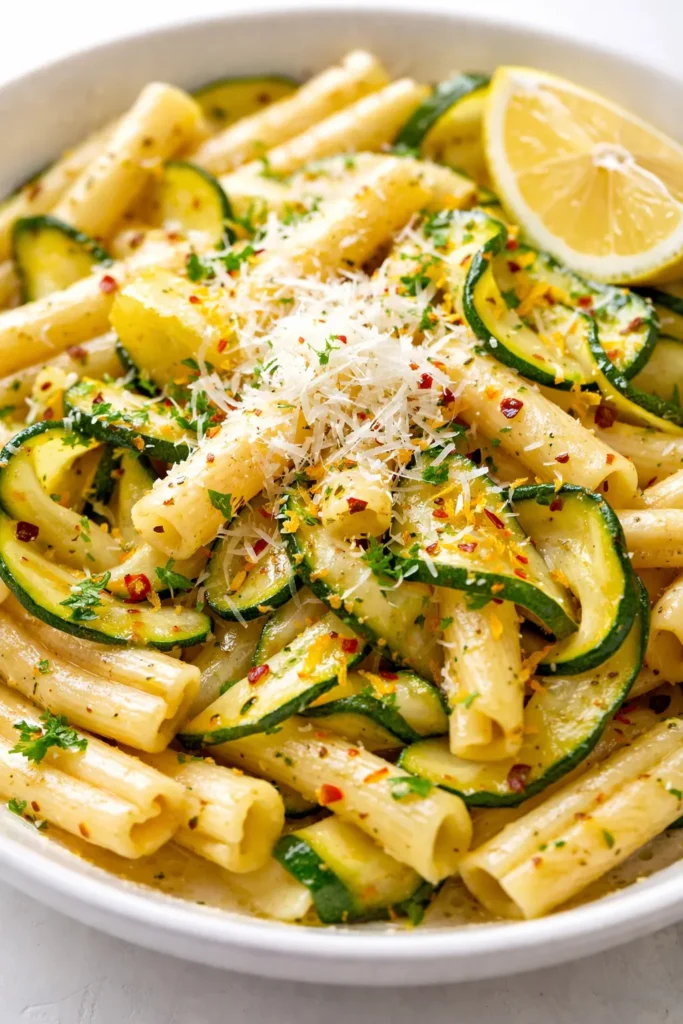
I’ve had too many bowls of pasta where the zucchini turns into sad, watery mush and the lemon disappears into the background. This version fixes both problems. The zucchini gets browned and concentrated, the garlic melts into the oil, and the lemon hits at the very end so it actually tastes like lemon — sharp and bright, not like vaguely citrus-flavored water.
The short version: A 30-minute pasta that tastes like late summer — without the soggy zucchini problem haunting every bite.
I’ve made this every other week since July. My partner, who claims to be indifferent to zucchini, has started asking for it by name. That’s how you know a recipe works.
- Serves: 4 as a main / 6 as a side
- Hands-On Time: 15 min | Total Time: 30 min
- Difficulty: Weeknight easy — one pot, one pan, one very happy outcome
- Cost per serving: ~$2.50
- Calories: ~450 per serving
- Dietary Notes: Vegetarian. Easily adaptable for vegan and gluten-free diets.
(Photo above: A wide ceramic bowl of casarecce tangled with ribbons of browned zucchini and lemon zest, a generous crack of black pepper on top, natural side light from a late summer afternoon. A linen napkin folded underneath. Pasta water gloss visible on the curves of the noodles.)
The Trick to Zucchini That’s Not a Soggy Mess
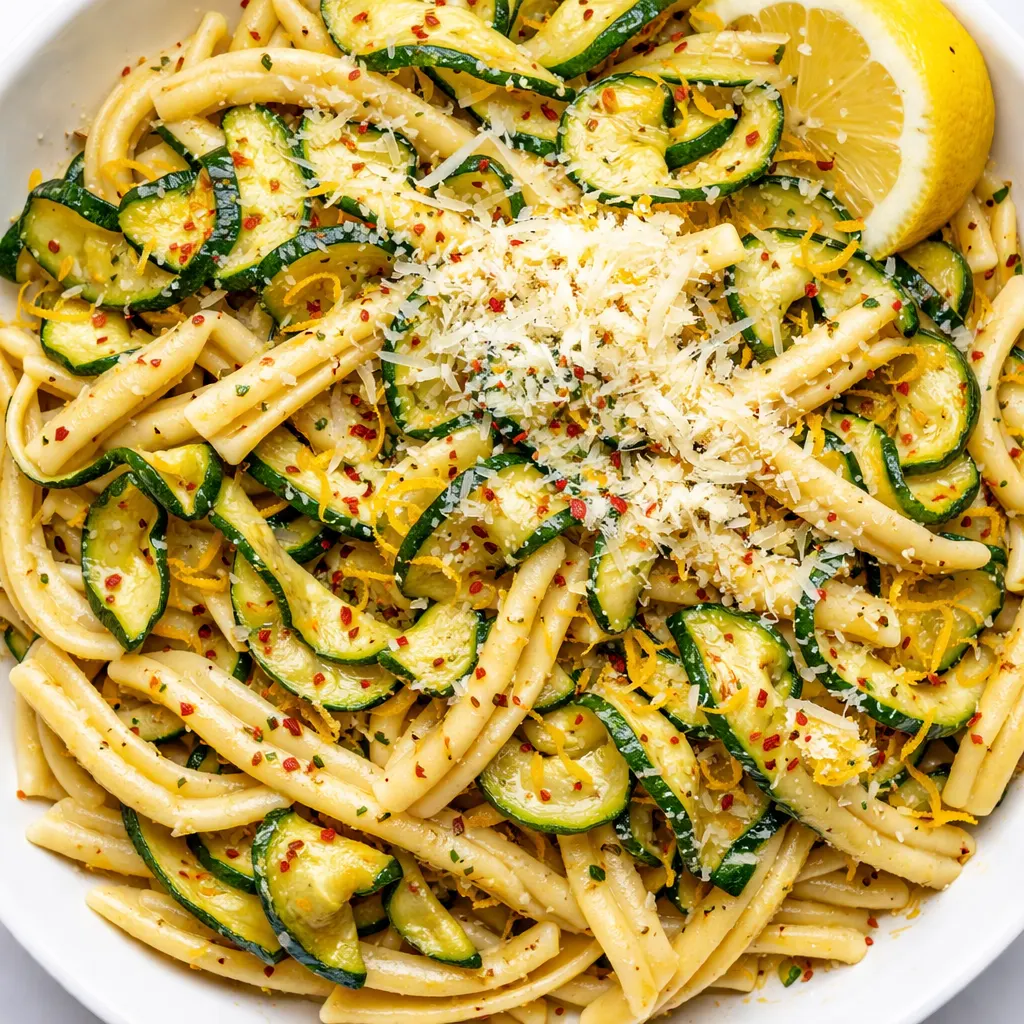
The enemy of a good zucchini pasta is uncontrolled moisture. Zucchini is mostly water. If you just toss it in a hot pan with oil, it releases all that water at once and steams before it ever gets a chance to brown. You end up with pale, translucent strips that taste like regret.
So I do two things differently. First, I salt the zucchini early and let it drain in a colander. That draws out the excess water before it hits the heat. Second, I cook it in batches — yes, it’s one extra step and one more dirty bowl — but it means the zucchini actually gets golden, concentrated edges instead of turning to mush. It’s the difference between zucchini that disappears into the sauce and zucchini that you actually notice in every single bite.
This technique produces a sauce that clings to the pasta and a garlic-lemon finish that tastes like summer in a bowl, not a watery afterthought.
Ingredients That Deserve a Little Respect
- 1.5 lbs zucchini (about 2 medium): The star of the show. Salting them first is the non-negotiable move here. My kids can smell the difference when I skip this step — and they’ll push the zucchini to the side. Don’t skip it.
- 2 lemons: One for zest and juice in the sauce, one for a final squeeze at the table. The second lemon is a game-changer. It keeps the dish tasting bright even on day two.
- 4 cloves garlic, thinly sliced: Thin slices melt into the oil without burning. I’ve used a garlic press here in a pinch — the flavor is still great, though the texture is less elegant.
- ½ tsp red pepper flakes: Optional, but I’ve never made this without them. A little heat wakes up the lemon and keeps the dish from feeling one-note.
- 1 lb pasta (casarecce, fusilli, or spaghetti): Something with nooks and crannies to catch the sauce works best. My family loves casarecce for this — the little twists hold onto the zucchini ribbons.
- 1 cup grated Parmesan: Stir it in at the end for body and saltiness. I use real Parmesan here, not the green can. It makes a difference in how the sauce comes together.
- 2 tbsp butter & 3 tbsp olive oil: The fat base for browning the zucchini and building the sauce. The butter adds richness, but a good olive oil is the backbone.
The Setup (It’s Minimal, I Promise)
- Large pot for pasta — 5 quarts minimum
- Large 12-inch skillet — stainless steel or cast iron works best for browning the zucchini. Nonstick can work but won’t give you the same golden edges.
- Colander for draining the zucchini and the pasta
- Microplane or box grater for the lemon zest and Parmesan
If you don’t have a 12-inch skillet, use a larger pan or work in more batches. Crowding is the enemy of browning.
Let’s Make It (No Stress, Just Good Food)
Here’s the rhythm: zucchini sits while the water boils, pasta cooks while zucchini browns, sauce comes together in the time it takes to drain the pasta. You’ve got this.
Step 1: Prep the zucchini. Slice the zucchini into ribbons or half-moons — about ¼-inch thick. Toss with 1 teaspoon of salt and let it sit in a colander set over a bowl for 10 minutes.
- Drain the zucchini: After 10 minutes, you’ll see beads of moisture on the surface. Pat the zucchini dry with a clean kitchen towel or paper towels. This is the step that changes everything. (📸 Photo tip: You’ll see beads of moisture on the surface — that’s the water you’re not going to eat. The towel should come away damp.)
- Start the pasta: Bring a large pot of generously salted water to a boil. Cook the pasta until 1 minute shy of al dente. Reserve 1 cup of pasta water before draining.
- Brown the zucchini: Heat 2 tablespoons of olive oil in your large skillet over medium-high heat. Add half the zucchini in a single layer — don’t crowd it. Cook for 3-4 minutes per side until deeply golden and slightly charred at the edges. Transfer to a plate and repeat with the remaining olive oil and zucchini. (📸 Photo tip: You want golden edges, not pale and watery. If the zucchini looks translucent, keep going.)
- Make the sauce: Lower the heat to medium. Add the sliced garlic and red pepper flakes to the skillet and stir for about 30 seconds — until fragrant but not brown. Add ½ cup of the reserved pasta water and the zest of one lemon, scraping up any browned bits from the bottom of the pan.
- Finish the dish: Add the drained pasta and browned zucchini back to the skillet. Toss well, adding the butter and Parmesan cheese. Squeeze in the juice of one lemon and toss again. If the sauce is too tight, add a splash more pasta water until it coats the noodles nicely.
- Serve it: Plate the pasta in warm bowls. Top with a generous crack of black pepper, extra Parmesan, and a final squeeze of lemon from the second lemon.
Making This Work for a Busy Week
This one is best fresh — the pasta soaks up the sauce and the zucchini loses its crispness over time. But I know how real life works. Here’s how to get ahead without sadness:
- Fridge: Store in an airtight container for up to 3 days. The texture is best on day one, but it’s still delicious on day two — especially for lunch straight from the container.
- Reheat: Add a splash of water or olive oil and reheat in a skillet over medium heat. The microwave works in a pinch but the stovetop restores more texture.
- Freezer: Not recommended for this one. The zucchini turns to mush and the sauce breaks. Make it fresh — it’s just 30 minutes.
Things I Learned the Hard Way (So You Don’t Have To)
- Salt is your best friend here. Don’t skip the salting step. It’s the difference between zucchini that adds texture and zucchini that adds a puddle. Even if you’re short on time, let it sit for 5 minutes instead of 10. Something is better than nothing.
- Don’t crowd the pan. I know it’s annoying to work in batches, but if you pile the zucchini in, it steams. Patience equals browned edges. I’ve tried crowding it when I was in a hurry, and I regretted it every time.
- Save more pasta water than you think you need. The starchy water is what makes the sauce silky and helps it cling to the pasta. I save a full cup, even if I only use half. You can always add more, but you can’t add it back once it’s down the drain.
- Lemon at the end, not the beginning. If you add lemon juice too early, the heat kills the brightness. Squeeze it in right before serving. The second lemon at the table is a small touch that makes a huge difference.
Make It Yours (Because Every Kitchen Is Different)
- Vegan / Dairy-Free: Skip the Parmesan and butter. Use a good quality olive oil — a peppery one if you have it — and toss in a handful of toasted breadcrumbs or pine nuts at the end for texture. This is the version I make for my friend Jenna who’s dairy-free — she loves it.
- Gluten-Free: Use a good GF pasta made from brown rice or chickpeas. Watch it closely so it doesn’t overcook — GF pasta goes from perfect to mushy faster than regular pasta. Reserve extra pasta water since GF pasta can be thirsty.
- Add Protein: Toss in a handful of cooked shrimp, shredded rotisserie chicken, or crispy chickpeas. My husband likes this with spicy Italian sausage on the side — it makes it a heartier meal.
- Make It Spicy: Double the red pepper flakes and add a drizzle of chili crisp at the end. The heat cuts through the richness of the butter and Parmesan beautifully.
- Make It a Side Dish: Serve alongside grilled chicken or fish for a summer dinner that comes together in under 30 minutes.
The Questions I Get About This Recipe All the Time
Q: Why did my zucchini turn out soggy?
A: Ugh, I’ve been there. Two reasons: either you didn’t salt it and pat it dry, or you crowded the pan. Give the zucchini space in the skillet and don’t rush the browning. You’ve got this next time — it’s a forgiving recipe even when it’s not perfect.
Q: Can I use yellow squash instead?
A: Yes, yellow squash works great here. It has a similar water content, so the same rules apply — salt it first and cook it in batches. The flavor is a little milder, but the texture will be just as good.
Q: How long does this last in the fridge?
A: About 3 days, but the texture is best on day one. If you’re making it ahead, store the pasta and zucchini separately and combine them when you reheat. Add a splash of water or olive oil to bring the sauce back to life.
Q: What do you serve with this?
A: A simple green salad with a sharp lemon vinaigrette and a glass of something crisp and white — Sauvignon Blanc or Pinot Grigio is perfect. My kids love this with a piece of crusty bread and butter on the side.
More Recipes My Family Makes on Repeat
If you liked this one, here are a few others that get the same reaction at our table:
- Cacio e Pepe with Brown Butter — Fancy enough for company, fast enough for a Tuesday.
- Sheet Pan Lemon Salmon and Potatoes — Everything cooks on one tray. Minimal cleanup, maximum flavor.
- Garlic Bread with Herbed Ricotta — The perfect side for any pasta night. My kids fight over the last piece.
Make this once, and I promise it’ll become your answer to “what’s for dinner?” on those late-summer nights when you want something that feels like effort but isn’t.
If you make it, drop a comment below — I love hearing how it goes for you. Or tag me on Pinterest so I can see your version.
📌 This bright, garlicky zucchini pasta with lemon comes together in just 30 minutes — save it for your next summer weeknight dinner when you need something fast and fresh.
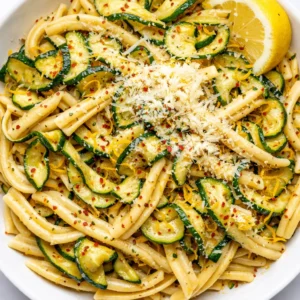
Pasta with Zucchini Lemon Garlic Sauce That’s Actually Bright and Not Watery — in 30 Minutes
Equipment
- Large Pot (5 quarts or more)
- Large 12-inch Skillet (stainless steel or cast iron preferred)
- Colander
- Microplane or box grater
Ingredients
- 1.5 lbs zucchini (about 2 medium)
- 2 lemons (one for sauce, one for serving)
- 4 cloves garlic, thinly sliced
- 1/2 tsp red pepper flakes (optional but recommended)
- 1 lb pasta (casarecce, fusilli, or spaghetti)
- 1 cup grated Parmesan (real, not canned)
- 2 tbsp butter
- 3 tbsp olive oil
- to taste salt (for salting zucchini and pasta water)
- to taste black pepper, for serving
Instructions
- Slice the zucchini into ribbons or half-moons about 1/4-inch thick. Toss with 1 teaspoon of salt and let it sit in a colander set over a bowl for 10 minutes. After 10 minutes, pat the zucchini dry with a clean kitchen towel or paper towels.
- Bring a large pot of generously salted water to a boil. Cook the pasta until 1 minute shy of al dente. Reserve 1 cup of pasta water before draining.
- Heat 2 tablespoons of olive oil in your large skillet over medium-high heat. Add half the zucchini in a single layer — don’t crowd it. Cook for 3-4 minutes per side until deeply golden and slightly charred at the edges. Transfer to a plate. Repeat with the remaining olive oil and zucchini.
- Lower the heat to medium. Add the sliced garlic and red pepper flakes to the skillet and stir for about 30 seconds until fragrant but not brown. Add 1/2 cup of the reserved pasta water and the zest of one lemon, scraping up any browned bits from the bottom of the pan.
- Add the drained pasta and browned zucchini back to the skillet. Toss well, adding the butter and Parmesan cheese. Squeeze in the juice of one lemon and toss again. If the sauce is too tight, add a splash more pasta water until it coats the noodles nicely.
- Plate the pasta in warm bowls. Top with a generous crack of black pepper, extra Parmesan, and a final squeeze of lemon from the second lemon.
Notes
Related Recipes:
 Cheesy Hamburger Casserole Bake That’s Ready in 40 Minutes (No Canned Soup Here)
 Lemon Capellini Salad for Late Summer Evenings: Bright, Tangy, Ready in 20 Minutes
 Creamy Garlic Tagliatelle That Looks Like a Restaurant Dish in 20 Minutes
 Texas Roadhouse Style Baked Salmon with Sweet and Savory Glaze — Ready in Under 30 Minutes
 Grilled Chicken Wraps That Stay Crispy (Even the Next Day) — in 35 Minutes
 Easy Italian Meatloaf That’s Actually Juicy (Not Dry) — in 1 Hour