
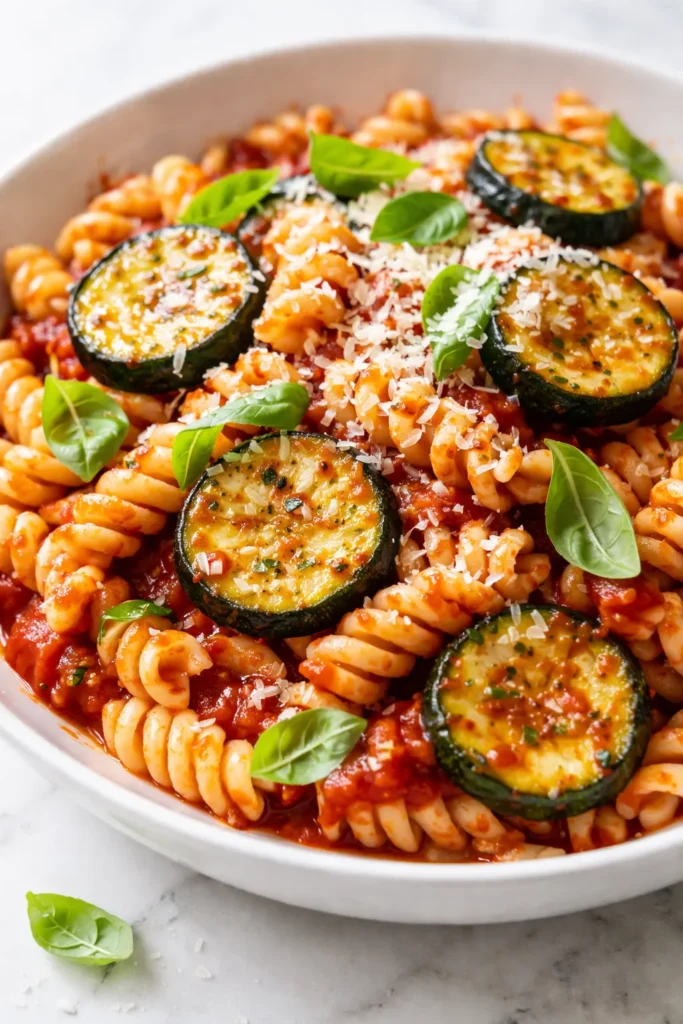
The problem with most zucchini pasta is that it tastes like a wet garden. This one doesn’t. The difference isn’t a secret technique — it’s treating the zucchini like a protein: sear it hard, get color on it, and let the tomatoes do the heavy lifting for the sauce. It takes one extra pan and about four minutes, and it’s the difference between a bowl that feels like a compromise and one that feels like a genuine dinner. It gets a deep, savory flavor that makes everyone at the table ask what you did differently.
The short version: Tomato zucchini pasta that comes together in 30 minutes and doesn’t turn into a watery mess. I make this at least once a week from July through September.
I’ve made this for three dinner parties and two solo weeknights, and it works for both. The secret is in the first step, which most people skip.
- Serves: 4 as a main
- Hands-On Time: 20 min | Total Time: 30 min
- Difficulty: Easy — one good pan and a timer
- Cost per serving: ~$4.50
- Calories: ~480 per serving
- Dietary Notes: Vegetarian. Adaptable for gluten-free (sub pasta) or vegan (omit parmesan or use nutritional yeast).
(Photo above: overhead shot of the pasta in a wide, shallow ceramic bowl, the sauce clinging to the fusilli, seared zucchini coins scattered on top, torn basil and a flaky salt finish catching the light from a kitchen window.)
The One Step That Keeps This From Turning Into a Soggy Mess
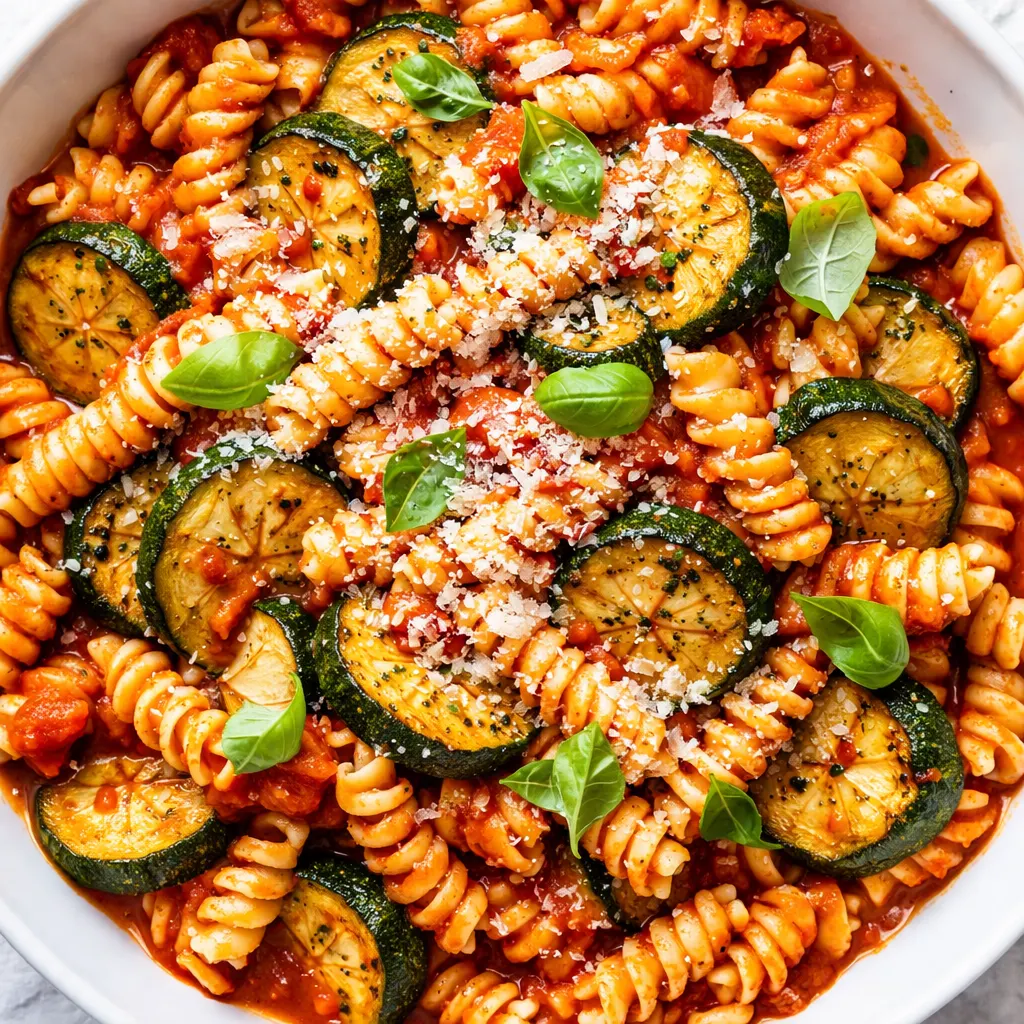
Zucchini is mostly water. If you add it to the pan without searing it first, it releases that water into your sauce, and you end up with a watery, sad bowl of pasta. The fix is dead simple: get your pan screaming hot, add the zucchini in a single layer, and don’t touch it for a full 3 minutes. You want deep, golden brown spots. That’s where the flavor lives and where the water goes away. I learned this after making watery pasta for an entire summer. Never again.
The second trick is using a good tomato paste or high-quality crushed tomatoes and cooking them down until they concentrate. The sweetness of the tomato balances the slight bitterness of the well-browned zucchini. It’s a classic pairing, but only if you respect both ingredients.
Everything You Need (And a Few Honest Notes)
- Pasta (12 oz / 340g): I use fusilli or casarecce — something with nooks for the sauce to grab. Spaghetti works in a pinch but you’ll lose some sauce-to-noodle ratio.
- Zucchini (2 medium, about 1 lb): Look for firm, shiny ones. If they’re soft or wrinkly, they’re old and will be mushier. Yes, it matters.
- Tomatoes (1 can, 14.5 oz / 400g, crushed or whole peeled): San Marzano if you have them, but any decent canned tomato works. I’ve used Cento and Muir Glen. Both fine. Don’t use fresh tomatoes here unless it’s peak August and you’re willing to peel them.
- Garlic (4 cloves): Thinly sliced, not minced. Minced burns too fast. Sliced gives you garlic flavor without the acrid edge.
- Parmesan (1 oz / 30g, finely grated): Buy a wedge and grate it yourself. The pre-shredded stuff has anti-caking powders that stop it from melting into the sauce. I am not a snob about most things, but I am about this.
- Basil (a small handful): Torn, not cut. Cutting bruises the leaves and turns them black. Tear them just before you use them.
- Olive Oil, Salt, Flaky Salt: Good olive oil for finishing. Flaky salt (Maldon or similar) for the end. It’s not a garnish, it’s a textural note.
The Setup (It’s Minimal, I Promise)
- 12-inch skillet or cast iron pan: The wider the better — you need surface area to sear the zucchini, not crowd it.
- Large pot for pasta: Standard. Salt the water well — it should taste like the ocean.
- Tongs: For pulling the pasta directly into the sauce. This is the move that saves you from a watery bowl.
- Microplane or fine grater: For the garlic and the parmesan. One tool, two jobs.
Let’s Make It (Step by Step)
This moves fast, so read through once before you start. The timing works out so the pasta is ready exactly when the sauce is done.
Prep: Put a large pot of salted water on to boil. Cut the zucchini into 1/2-inch coins. Not thinner — they’ll disappear. Not thicker — they won’t cook through.
- Sear zucchini: Heat your skillet over medium-high heat. Add 2 tablespoons of olive oil. Once it shimmers, add the zucchini in a single layer (work in batches if you need to). Let them sit for 3-4 minutes without moving them. Flip when deeply golden. Cook another 2 minutes. Transfer to a plate. (📸 Photo tip: You should see deep brown spots on the zucchini — not pale. If it’s not browning, your pan isn’t hot enough.)
- Start sauce: Drop your pasta into the boiling water. Reduce the skillet heat to medium. Add 1 tablespoon of olive oil and the sliced garlic. Cook for 30 seconds until fragrant.
- Finish sauce: Add the canned tomatoes. If using whole peeled, crush them with your hands first. Increase heat to medium-high and let it simmer for 8-10 minutes, stirring occasionally, until it thickens and looks darker.
- Combine: Use tongs to pull the pasta directly from the pot into the sauce. Add about 1/2 cup of pasta water. Toss vigorously. The sauce will emulsify and cling to the pasta. (📸 Photo tip: It should look creamy and glossy, not watery. If it looks dry, add another splash of pasta water.)
- Finish: Remove from heat. Add the zucchini back in, along with the grated parmesan and torn basil. Toss gently to combine.
- Plate: Divide into bowls. Finish each bowl with a drizzle of good olive oil, a sprinkle of flaky salt, and a few extra basil leaves. Serve immediately.
How I Make This Work for a Weeknight
This is one of those rare pasta dishes that’s almost better the next day — so I often make a double batch of the sauce and zucchini on Sunday, then just boil fresh pasta during the week.
- Fridge: Store the sauce and zucchini separately from the pasta for up to 4 days. Combine and reheat. The zucchini softens a bit, but the flavor deepens.
- Freezer: The sauce freezes well for up to 3 months. Zucchini does not freeze well — it gets mushy. Make fresh zucchini when you reheat.
- Reheat: Reheat the sauce in a skillet, boil fresh pasta, or cook dried pasta directly in the sauce with a splash of water. The microwave works for the combined dish in a pinch, but the skillet is better.
Things I Wish I’d Known the First Time
- Don’t crowd the zucchini. If your pan is too full, the zucchini steams instead of sears. Brown spots = flavor. Steam = sad. Cook in batches if you have to.
- Save the pasta water. It’s the glue that holds the sauce and pasta together. Without it, the sauce slides off. With it, everything clings. I’ve forgotten it and regretted it immediately.
- Taste before you add salt (especially parmesan). Parmesan is salty. Pasta water is salty. Taste the sauce before you add a final salt hit. You can always add more. You can’t take it out.
- Finish with acid. A squeeze of lemon at the very end brightens everything. It’s not traditional in a tomato sauce, but I don’t care. It works. Try it once.
Swaps That Actually Work
- Gluten-Free: Use a good gluten-free pasta — the bronze-die kind if you can find it. The sauce is naturally gluten-free. My celiac friend loves this.
- Vegan: Omit the parmesan or use a high-quality nutritional yeast (about 2 tablespoons). I’ve tested it. It’s different but genuinely good.
- Protein: Add a can of drained chickpeas or white beans in step 4. My kids don’t notice the difference. I add a handful of chickpeas on my bowl for extra staying power.
- Spicy: Add 1/2 teaspoon red pepper flakes with the garlic. I do this for the adults after the kids’ portion is set aside.
- Herb Swap: No basil? Use fresh parsley or mint. Mint with zucchini is underrated and works beautifully.
Questions I Get About This Recipe All the Time
Q: Why did my zucchini turn out mushy?
A: Ugh, I’ve been there. You either crowded the pan (steamed instead of seared) or you didn’t let them sit long enough to get a crust. Make sure your pan is hot, use a single layer, and trust the 3-4 minute rule. Even if they’re a bit soft, they’ll still taste good in the sauce.
Q: Can I use fresh tomatoes?
A: Yes, but only in peak summer. You’ll need about 1.5 lbs. Score and blanch them for 30 seconds, peel the skins, then crush them by hand. In winter or off-season, canned tomatoes are genuinely better. I tested this extensively.
Q: How long does this last in the fridge?
A: The combined pasta lasts 3-4 days in a sealed container. Reheat in a skillet with a splash of water to loosen the sauce. The zucchini will be softer the next day, which is why I recommend storing the sauce and zucchini separately if you’re meal prepping.
Q: What do you serve with this?
A: Usually just a simple green salad with a sharp vinaigrette (the acid cuts through the richness). I also love it with crusty bread to soak up any leftover sauce on the plate. My kids eat it on its own and ask for seconds.
More Recipes My Family Makes on Repeat
If you liked this one, here are a few others that get the same reaction at our table:
- Brown Butter Mushroom Pasta — The weeknight pasta that feels fancy but takes 20 minutes.
- Crispy Skillet Salmon with Lemon-Butter Sauce — Perfect when you want a protein that’s just as fast as pasta.
- Easy Summer Minestrone — For nights when you want all the vegetables in one bowl.
This is the pasta I make on a Tuesday in July when the zucchini is starting to pile up and I need something that feels like a real meal, not a side dish. It never disappoints.
If you try it, drop a comment below — I love hearing how it goes for you and your family! And definitely tag me on Pinterest so I can see your bowl.
📌 This Tomato Zucchini Pasta recipe that stays perfectly saucy (never watery) — save it for your next summer weeknight dinner.
Tomato Zucchini Pasta That’s Actually Worth the Hype — in 30 Minutes
Equipment
- 12-inch skillet or cast iron pan
- Large Pot
- Tongs
- Microplane or Fine Grater
Ingredients
- 12 oz pasta (fusilli or casarecce)
- 2 medium zucchini, cut into 1/2-inch coins
- 1 can (14.5 oz) crushed or whole peeled tomatoes
- 4 cloves garlic, thinly sliced
- 1 oz (30g) Parmesan cheese, finely grated
- 1 handful fresh basil, torn
- 3 tablespoons olive oil, divided
- to taste salt
- for finishing flaky salt
Instructions
- Cut zucchini into 1/2-inch coins. Put a large pot of salted water on to boil.
- Heat your skillet over medium-high heat. Add 2 tablespoons olive oil. Once it shimmers, add zucchini in a single layer (work in batches if needed). Let them sit for 3-4 minutes without moving. Flip when deeply golden. Cook another 2 minutes. Transfer to a plate.
- Drop your pasta into the boiling water. Reduce skillet heat to medium. Add 1 tablespoon olive oil and sliced garlic. Cook for 30 seconds until fragrant.
- Add the canned tomatoes (crush whole peeled tomatoes by hand first). Increase heat to medium-high and let it simmer for 8-10 minutes, stirring occasionally, until thickened and darker.
- Use tongs to pull pasta directly from the pot into the sauce. Add about 1/2 cup pasta water. Toss vigorously until the sauce emulsifies and clings to the pasta. If dry, add another splash of pasta water.
- Remove from heat. Add the zucchini back, along with grated Parmesan and torn basil. Toss gently to combine.
- Divide into bowls. Finish each with a drizzle of good olive oil, a sprinkle of flaky salt, and extra basil leaves. Serve immediately.
Notes
Related Recipes:
 Cheesy Hamburger Casserole Bake That’s Ready in 40 Minutes (No Canned Soup Here)
 Creamy Garlic Tagliatelle That Looks Like a Restaurant Dish in 20 Minutes
 Texas Roadhouse Style Baked Salmon with Sweet and Savory Glaze — Ready in Under 30 Minutes
 Easy Italian Meatloaf That’s Actually Juicy (Not Dry) — in 1 Hour
 The Biscuits and Gravy Casserole That’s Actually Crispy on Top (And Ready in 40 Minutes)
 Air Fryer Chicken and Vegetables That Don’t Taste Like a Regret (30 Minutes, One Pan)