
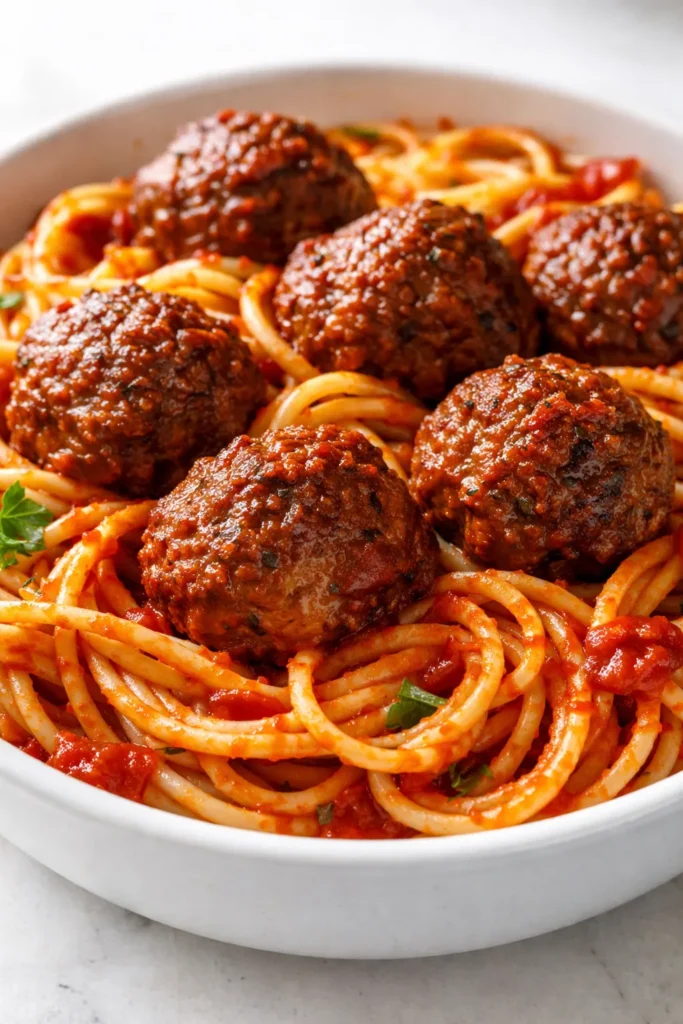
I’ve made a lot of meatballs in my day. The kind that fall apart in the pan. The kind that turn into rubber hockey pucks. The kind that look fine but taste like you forgot something. After years of trial and error (and one particularly sad batch that my friends politely pushed around their plates), I landed on this method. It’s not fancy. It’s just the one that works every single time.
The short version: Juicy, golden-brown meatballs that hold their shape without being dense, simmered in a quick tomato sauce — ready in 45 minutes flat.
I’ve made these for weeknight dinners, for Sunday sauce days, and for that one friend who swears she doesn’t like meatballs (she asked for the recipe).
- Serves: 4 as a main (6 as an appetizer with toothpicks)
- Hands-On Time: 25 min | Total Time: 45 min
- Difficulty: Easy — this is a forgiving recipe, even for a Tuesday
- Cost per serving: ~$2.50 (using store-brand everything)
- Calories: ~350 per serving (4 meatballs with sauce)
- Dietary Notes: Naturally gluten-free with one swap (see Variations)
(Photo above: A shallow bowl of golden-brown meatballs resting in a warm marinara sauce, topped with a small pile of fresh basil leaves and a grating of Parmesan. The meatballs are uniform in size, with visible browned crust. Shot from a low angle, natural light from the left, a linen napkin folded in the background.)
The Thing That Makes These Different from Every Other Meatball Recipe I’ve Tried
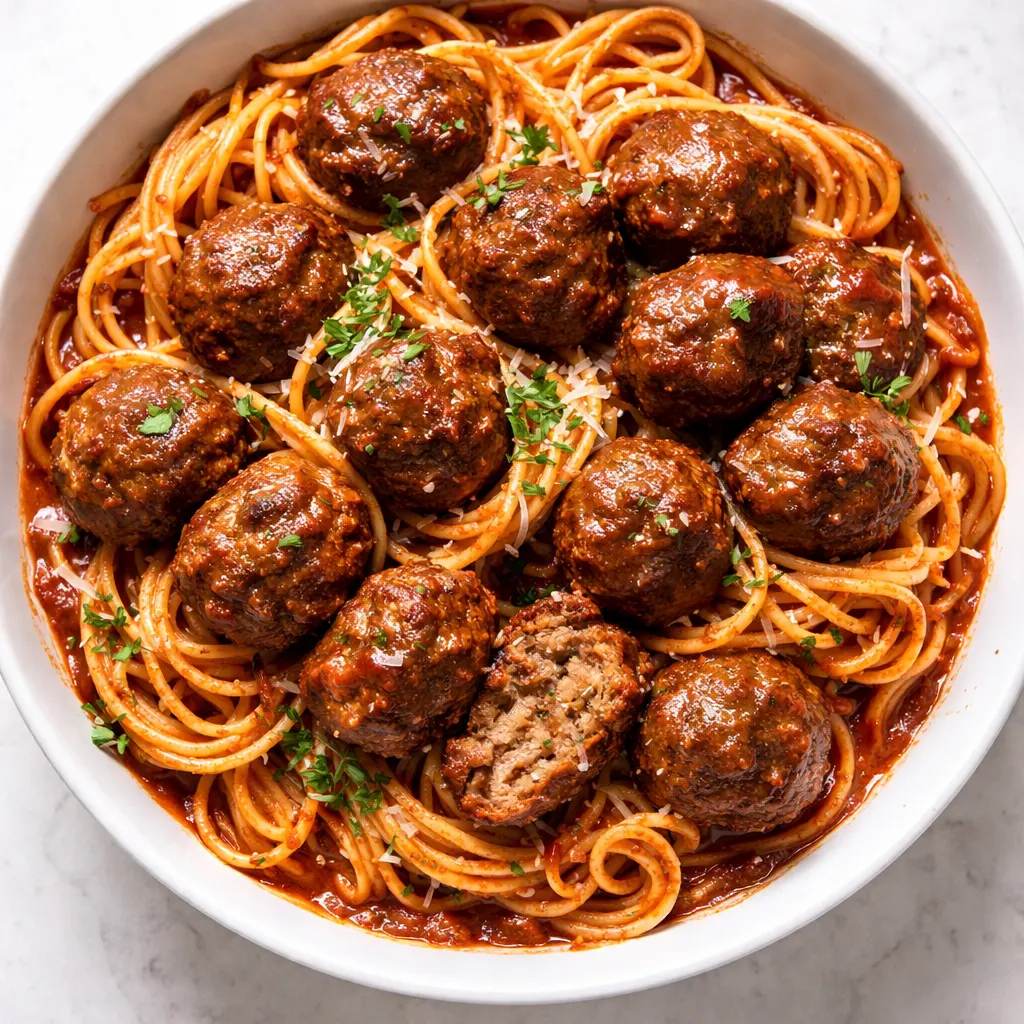
It’s the panade. That sounds fancy, but it’s just bread and milk mixed into a paste before you add the meat. Most people skip this step or rush it. Don’t. The panade keeps the meatballs tender by trapping moisture — it’s the difference between a meatball that feels like a dense burger and one that practically falls apart on the fork (in the good way).
Second: I don’t overwork the mixture. I mix until everything just comes together — maybe 30 seconds. Overmixed meatballs are tough meatballs, and nobody needs that energy on a weeknight.
Third: I sear them first, then finish them in the sauce. That crust is non-negotiable. It adds texture and depth that all-day simmering alone won’t give you.
Everything You Need (And a Few Notes From Me)
- 1 lb ground beef (80/20 preferred): The fat keeps things flavorful. Lean ground beef will work, but the meatballs will be less juicy.
My tip: I’ve used 85/15 in a pinch and it’s fine — just don’t go below 90/10 or you’ll miss the fat. - ½ lb ground pork: Adds richness and a little extra fat. You can use all beef, but the pork makes the texture softer.
This is the ingredient that makes people ask “what’s your secret?” - 2 slices white bread, crusts removed: Not sourdough, not whole wheat — plain white bread. The starches hydrate evenly.
I’ve used sandwich bread, brioche, even stale hot dog buns. It matters less than you think. - ½ cup whole milk: The bread soaks this up to make the panade. I’ve used 2% in a pinch — it works, just slightly less rich.
- ⅓ cup finely grated Parmesan: Not the green can, but good-quality grated from a deli or a block. The nuttiness is key.
My rule: if it doesn’t smell like Parmesan, don’t use it. - 1 large egg: Binder. One is enough — two makes them bouncy.
- 3 cloves garlic, grated on a Microplane: Minced is fine, but grated melts into the meat evenly so you don’t get a surprise garlic chunk.
- ¼ cup finely chopped fresh parsley (flat-leaf): Adds freshness. Dried parsley won’t do the same thing.
I know parsley gets a bad rap, but here it’s not a garnish — it’s a flavor note. Use it. - 1 tsp salt, ½ tsp black pepper, ¼ tsp red pepper flakes (optional): Season the mixture, not the outside.
- 2 tbsp olive oil for searing: Enough to coat the pan. Avocado oil works too.
- 1 (24-oz) jar good-quality marinara (or homemade): I use Rao’s when I’m not making my own. San Marzano tomatoes crushed by hand work beautifully too.
What to Pull Out Before You Start
- Large mixing bowl
- Small bowl for the panade
- Sheet pan or large plate for formed meatballs
- 12-inch skillet or heavy-bottomed pan (cast iron or stainless — not nonstick if possible, for better browning)
- Wooden spoon or spatula
- Microplane or fine grater (for garlic and Parmesan)
If you don’t have a Microplane, mince the garlic very fine and use the small holes on a box grater for the Parmesan.
Here’s How I Do It (No Fancy Skills Required)
This goes fast once you start, so read through the steps once. Don’t skip the panade — it’s the whole reason these work.
Preheat & prep: Take the meat out of the fridge about 15 minutes before you start so it’s not ice-cold. Cold meat makes for uneven cooking.
- Make the panade: In a small bowl, tear the bread into small pieces and pour the milk over it. Let it sit for 5 minutes, then mash it with a fork into a paste. It should look like wet oatmeal. (📸 Photo tip: You’ll see the bread fully absorbed and a thick, creamy paste — no visible milk remaining.)
- Combine the meat mixture: In a large bowl, combine the beef, pork, panade, Parmesan, egg, garlic, parsley, salt, pepper, and red pepper flakes if using. Use your hands — seriously, a spoon won’t distribute evenly. Mix gently until just combined, about 30 seconds. Don’t squeeze or knead it like bread dough.
- Form the meatballs: Lightly wet your hands (keeps the mixture from sticking). Roll into golf-ball-sized balls — about 1.5 tablespoons each. Place them on a sheet pan. You should get about 16–18 meatballs. (📸 Photo tip: They should be uniform in size — use a small cookie scoop if you want, but hand-rolling is fine. The surface should look slightly rough, not smooth and tight.)
- Sear the meatballs: Heat the olive oil in the skillet over medium-high heat until shimmering. Add the meatballs in a single layer (work in batches if needed — crowding causes steaming). Cook for 3–4 minutes per side, turning gently, until deeply browned on at least two sides. Don’t move them too early — let the crust form. You’ll see the edges turn dark golden and the meatball release easily from the pan.
- Simmer in sauce: Reduce the heat to low. Pour the marinara sauce around the meatballs (not on top, or you’ll wash off the crust). Cover and simmer for 15–20 minutes, until the meatballs are cooked through and the sauce has thickened slightly. I test one of the biggest meatballs by cutting into it — the center should be steaming and no longer pink.
- Finish and serve: Spoon the sauce and meatballs onto a platter or into a shallow bowl. Top with a few fresh basil leaves and a shower of Parmesan. Let them rest for about 5 minutes before serving — the carryover heat firms them up just enough.
How I Meal Prep These for the Week
I make a double batch on Sundays and we’re set for at least two dinners. The meatballs actually get better after a day in the fridge — the flavors meld and the texture softens.
- Fridge: Store cooked meatballs and sauce together in an airtight container for up to 4 days. Reheat gently in a covered skillet over low heat, adding a splash of water if the sauce thickens too much.
- Freezer: Yes, and it’s my favorite life hack. Flash-freeze the uncooked meatballs on a sheet pan, then transfer to a freezer bag. To cook from frozen: sear straight from the freezer (add 2 minutes per side), then simmer in sauce as directed.
- Reheat: Best in a skillet on the stove. The microwave works if you’re in a hurry, but the meatballs will lose their crust — still tasty, less dramatic.
Things I Wish I’d Known the First Time
- Don’t skip the panade soak time. Five minutes is non-negotiable. If the bread isn’t fully softened, you’ll get dry spots in the meatball. I’ve been impatient and regretted it.
- Wet hands are your friend. Dry hands = sticky mess. Keep a bowl of water nearby and dip your fingers between each meatball. The shapes come out smoother and you won’t lose half the mixture to your palms.
- Temperature matters more than you think. If the pan isn’t hot enough, the meatballs will steam instead of sear, and you’ll lose that crust. Wait until the oil shimmers and ripples before adding them. Even if you mess up the heat a little, they’ll still taste good — I’ve done it.
- One test meatball saves the batch. Before forming all of them, cook one in a small pan and taste it. Adjust seasoning for the rest. I discovered my garlic was weak this way once and saved 15 meatballs from blandness.
Swaps That Actually Work
- Dairy-Free: Omit the Parmesan and use dairy-free milk (unsweetened oat or almond) for the panade. The texture will be slightly less rich, but still tender. I make this for a friend who’s lactose-intolerant and she clears the plate.
- Gluten-Free: Use gluten-free bread or crushed GF crackers for the panade. I like Schar sandwich bread. The milk soak works the same. My nephew can’t have gluten and he never knows the difference.
- All-Beef Version: Use 1.5 lbs ground beef (80/20) instead of the beef-pork combo. Add 1 tablespoon olive oil to the mixture for moisture. The texture will be slightly firmer — still delicious.
- Spicy Version: Double the red pepper flakes and add a finely chopped Calabrian chili to the sauce. I do this for adults after the kids are in bed — it’s a completely different vibe.
- Baked Meatballs: Skip the sear if you’re really pressed for time. Arrange on a lined sheet pan and bake at 400°F for 15–18 minutes, then add to simmering sauce for 10 minutes. Less crust, but still tasty. I’ve done this on nights when I can’t stand at the stove — it works.
Questions I Get About This Recipe All the Time
Q: Why did my meatballs fall apart in the pan?
A: Ugh, I hate when that happens. Most likely the mixture was too wet or you moved them too early. Make sure the panade isn’t too liquidy (it should be a thick paste) and let the meatballs sit for a solid 3–4 minutes before touching them. The crust acts as glue. If they still fall apart, try adding an extra tablespoon of breadcrumbs next time — that usually solves it.
Q: Can I make these with ground turkey or chicken?
A: Yes, but you’ll want to add a little extra fat. Use dark meat turkey (93/7) or add 2 tablespoons olive oil to the mixture. The panade is even more important here because lean poultry dries out fast. I’ve done it for a lighter version — just watch the cooking time; they cook a few minutes faster.
Q: How long do these last? Can I freeze them?
A: Cooked meatballs in sauce will keep in the fridge for up to 4 days. They actually get better on day 2. For the freezer: I freeze them uncooked on a sheet pan, then transfer to a bag — they’ll keep for up to 3 months. Cook directly from frozen (add 2–3 minutes to the searing time). Reheat in a covered skillet with a splash of water or sauce.
Q: What do you serve with these meatballs?
A: Three things I rotate: (1) a bowl of spaghetti with extra sauce and a pile of Parmesan — classic for a reason; (2) crusty bread for dipping, with a simple arugula salad dressed in lemon and olive oil on the side (the acidity cuts the richness — my kids don’t love the arugula so I skip it for them); (3) on their own as an appetizer at a party, with toothpicks and a little bowl of the sauce for dipping. People disappear them.
More Recipes My Family Makes on Repeat
If you liked this one, here are a few others that get the same reaction at our table:
- [INTERNAL LINK PLACEHOLDER: Easy Homemade Tomato Sauce] — The one I use for these meatballs when I have 30 extra minutes
- [INTERNAL LINK PLACEHOLDER: Spinach and Ricotta Stuffed Shells] — The make-ahead dinner that my friends always request
- [INTERNAL LINK PLACEHOLDER: Garlic Butter Mushroom Pasta] — The 20-minute weeknight hero that tastes like it took twice as long
These meatballs have become my go-to for the kind of dinner that feels like a hug — whether it’s a quiet Wednesday or a full table of friends. I love hearing how they turn out for you, so if you make them, drop a comment below or tag me on Pinterest so I can see yours.
📌 Classic Italian meatballs that stay tender every time — save this recipe for your next Sunday supper or busy weeknight when you need something that feels like comfort food.
Classic Italian Meatballs That Stay Tender Every Time — Ready in Under an Hour
Equipment
- Large Mixing Bowl
- Small Bowl
- Sheet pan or large plate
- 12-inch skillet (cast iron or stainless)
- Wooden spoon or spatula
- Microplane or Fine Grater
Ingredients
- 1 lb ground beef (80/20 preferred)
- ½ lb ground pork
- 2 slices white bread, crusts removed
- ½ cup whole milk
- ⅓ cup finely grated Parmesan
- 1 large egg
- 3 cloves garlic, grated on a Microplane
- ¼ cup finely chopped fresh parsley (flat-leaf)
- 1 tsp salt
- ½ tsp black pepper
- ¼ tsp red pepper flakes (optional)
- 2 tbsp olive oil for searing
- 1 24-oz jar good-quality marinara (or homemade)
Instructions
- Preheat & prep: Take the meat out of the fridge about 15 minutes before you start so it’s not ice-cold.
- Make the panade: In a small bowl, tear the bread into small pieces and pour the milk over it. Let it sit for 5 minutes, then mash it with a fork into a paste. It should look like wet oatmeal.
- Combine the meat mixture: In a large bowl, combine the beef, pork, panade, Parmesan, egg, garlic, parsley, salt, pepper, and red pepper flakes if using. Use your hands and mix gently until just combined, about 30 seconds. Don’t squeeze or knead.
- Form the meatballs: Lightly wet your hands to keep the mixture from sticking. Roll into golf-ball-sized balls — about 1.5 tablespoons each. Place them on a sheet pan. You should get about 16–18 meatballs.
- Sear the meatballs: Heat the olive oil in the skillet over medium-high heat until shimmering. Add the meatballs in a single layer (work in batches if needed). Cook for 3–4 minutes per side, turning gently, until deeply browned on at least two sides. Don’t move them too early — let the crust form.
- Simmer in sauce: Reduce the heat to low. Pour the marinara sauce around the meatballs (not on top). Cover and simmer for 15–20 minutes, until the meatballs are cooked through and the sauce has thickened slightly.
- Finish and serve: Spoon the sauce and meatballs onto a platter or into a shallow bowl. Top with a few fresh basil leaves and a shower of Parmesan. Let them rest for about 5 minutes before serving.
Notes
Related Recipes:
 Cheesy Hamburger Casserole Bake That’s Ready in 40 Minutes (No Canned Soup Here)
 Creamy Garlic Tagliatelle That Looks Like a Restaurant Dish in 20 Minutes
 Texas Roadhouse Style Baked Salmon with Sweet and Savory Glaze — Ready in Under 30 Minutes
 Easy Italian Meatloaf That’s Actually Juicy (Not Dry) — in 1 Hour
 The Biscuits and Gravy Casserole That’s Actually Crispy on Top (And Ready in 40 Minutes)
 Creamy Rotel Pasta with Ground Beef That’s Ready in 30 Minutes (No Cans of Soup!)