
Let me be real with you. I’ve had more sad bowls of shrimp alfredo than I can count — the kind where the sauce is either a pool of grease sitting on top of the pasta or a solid brick at the bottom of the bowl. This isn’t that. The first time I made this for my friend Daisy, she asked for the recipe before she finished eating. I texted it to her standing at the kitchen counter with the empty pan in front of me. That’s the kind of alfredo this is.
The short version: A genuinely creamy shrimp alfredo that comes together in exactly 30 minutes and feels like a real dinner, not a weeknight compromise.
I’ve tested this on a Tuesday when I needed the week to feel like it was going somewhere, and on a Saturday when friends showed up hungry and I had roughly zero time to panic. It passed both tests with room to spare.
- Serves: 4 as a main
- Hands-On Time: 20 min | Total Time: 30 min
- Difficulty: Easy — one pan, a colander, and a spoon
- Cost per serving: ~$4.50
- Calories: ~580 per serving
- Dietary Notes: Can be gluten-free with a pasta swap
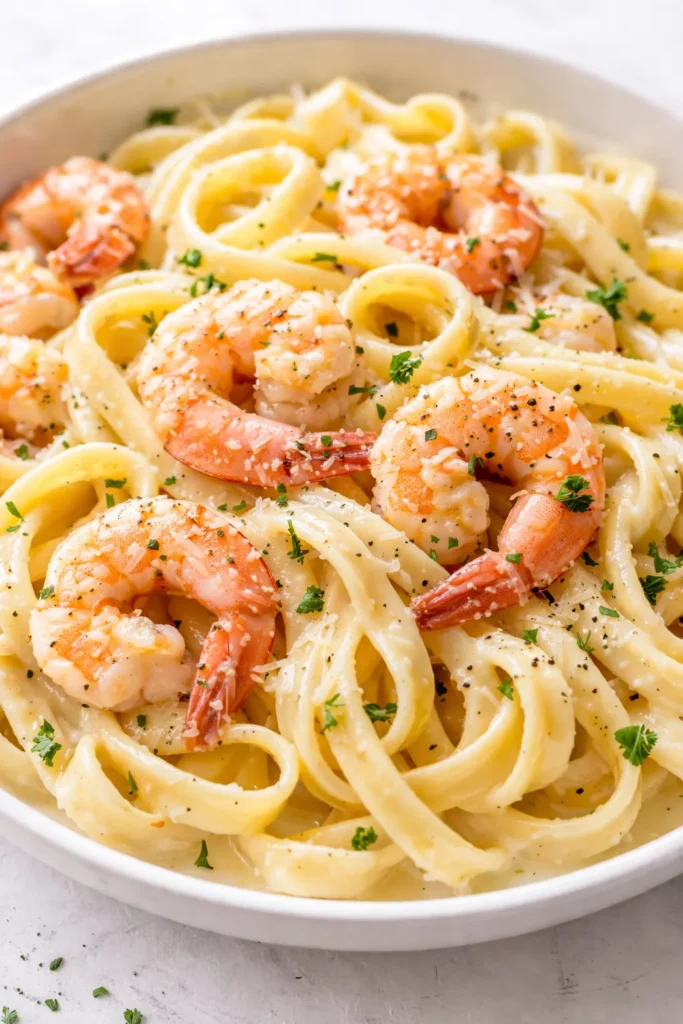
(Photo above: A wide shallow bowl of fettuccine, the sauce clinging to every strand, with seared shrimp arranged on top. Fresh parsley flaked over it. Shot from a low angle so you can see the texture of the sauce — glossy, not greasy.)
The Thing That Keeps This From Turning Into a Gloppy Mess
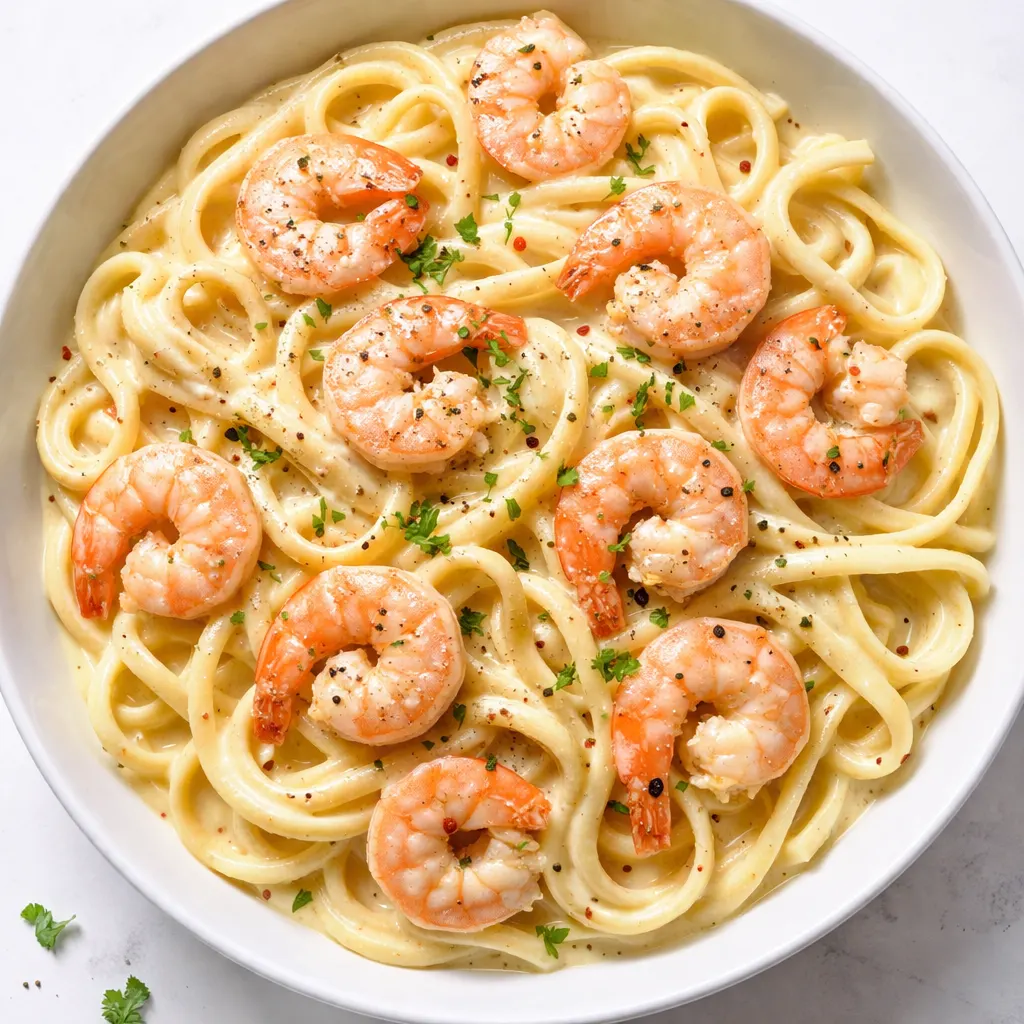
Most alfredo sauces go wrong because the heat is up too high or the pasta releases too much starch into the pan. Here’s what I do instead. I finish the pasta in the sauce over low heat with a splash of the pasta water. The water has just enough starch to bind the sauce to the noodles without making it heavy. It sounds like a tiny detail. It’s the entire difference between a sauce that coats and a sauce that clumps.
The thing about alfredo is it’s not a complex sauce. It’s cream, butter, cheese, and pasta water. The complexity comes from the technique. Most recipes skip the explanation of why you need the pasta water or why you finish the pasta in the sauce. They just tell you to do it. I’m going to tell you exactly why each step matters, so if something looks wrong at any point, you’ll know what to fix.
And the shrimp? They go in first, get pulled out, and go back in at the very end. No rubbery shrimp. That’s not a cooking tip, it’s just not ruining good shrimp.
What Goes In — Plus the Notes I’d Tell a Friend
- 1 lb large shrimp (21-25 count), peeled and deveined: The size matters here. Small shrimp vanish into the sauce. Large ones feel like the main event. Frozen works great — just thaw them in cold water for 10 minutes and pat them extremely dry. Soggy shrimp are sad shrimp.
- 8 oz fettuccine or linguine: I use dried pasta here. Fresh is lovely but it doesn’t hold up to the sauce the same way. If you’re gluten-free, use a rice-blend pasta, not 100% corn or quinoa. Those get mushy too fast.
- 2 tbsp unsalted butter: We’re not making a roux here. This is for flavor and to start the sauce. Salted butter works, just watch your added salt.
- 3 cloves garlic, thinly sliced: Not minced. Thin slices melt into the butter and give you little pockets of garlic without the harshness. My friend Sarah insists on using a microplane here. I’ve told her she’s wrong. We’re still friends.
- 1 ½ cups heavy cream: Yes, it’s heavy cream. We’re not pretending this is health food. We’re making it taste good. You can sub half-and-half but the sauce won’t be as thick. If you do, reduce the pasta water by a tablespoon.
- ¾ cup freshly grated Parmesan: This is non-negotiable. Pre-shredded has anti-caking agents that make the sauce grainy. Get a block and grate it yourself. It takes 60 seconds. Do it while the pasta water comes to a boil. A block of real Parmesan lasts for weeks in the fridge. It’s the single highest-impact effort-to-reward ratio in this entire recipe.
- ½ cup reserved pasta water: This is the glue that binds the sauce to the pasta. Don’t skip it. Scoop it out before you drain the pasta.
- Salt, black pepper, and a pinch of nutmeg: Nutmeg isn’t optional. It doesn’t make it taste like nutmeg. It makes the cream taste more like cream. I know nutmeg in savory dishes sounds precious. It’s not. It’s doing work in the background.
- Fresh parsley for finishing (optional but recommended): Adds a pop of green that makes the whole thing look intentional. Chives cut on a bias work great too.
The Setup (It’s Minimal, I Promise)
- A large pot for the pasta
- A 12-inch skillet or large sauté pan — wide enough to hold the pasta and sauce
- A colander
- A liquid measuring cup (for the pasta water)
- A box grater or Microplane for the Parmesan
That’s it. No special gadgets.
Here’s How I Do It (No Fancy Skills Required)
This moves fast, so have everything ready before you turn on the heat.
- Start the pasta water: Fill a large pot with water, season it generously (it should taste like the ocean), and bring it to a boil. While it heats, grate your cheese.
- Sear the shrimp: Pat the shrimp completely dry with paper towels. Season with salt and a pinch of black pepper. Let them rest for 5 minutes after salting — it helps the seasoning penetrate. Heat 1 tbsp of the butter in your skillet over medium-high heat. Add the shrimp in a single layer and cook for 1-2 minutes per side until pink and just opaque. Don’t crowd the pan or they’ll steam instead of sear. Transfer them to a plate. (📸 Photo tip: The shrimp should have golden-brown edges — that’s flavor. If your pan is too small, do it in batches.)
- Cook the garlic: Reduce the heat to medium. Add the remaining 1 tbsp of butter to the same skillet. Add the sliced garlic and cook for 30–60 seconds until fragrant. Don’t walk away from it. Burnt garlic is the number one flavor killer in this dish. The second it smells fragrant, move on to the next step. If it browns, it’s bitter. I’ve done it. It’s fixable by starting over, but better to just watch it.
- Make the cream base: Pour in the heavy cream. Stir it into the garlic butter. Let it simmer gently for 2–3 minutes, stirring occasionally, until it thickens just enough to coat the back of a spoon. Season with a pinch of salt, a few cracks of black pepper, and a tiny grating of nutmeg.
- Cook the pasta: By now your pasta water should be boiling. Drop the fettuccine and cook it 1 minute less than the package directions say. Reserve 1 cup of the pasta water before you drain it. (📸 Photo tip: Dip your measuring cup into the water before dumping the pasta into the colander. The water should look cloudy — that’s the starch we need to bind the sauce.)
- Finish the sauce: Add the drained pasta directly to the skillet with the cream sauce. Toss it with tongs to coat. Add the Parmesan cheese and ½ cup of the reserved pasta water. Toss continuously over low heat for about 2 minutes. The sauce will tighten around the pasta as it goes from watery to glossy. If it gets too thick, splash in another tablespoon of pasta water. You’re in control here.
- Add the shrimp back: Nestle the seared shrimp into the pasta. Toss gently just to warm them through. About 30 seconds. They’re already cooked, you’re just bringing them back to temperature.
- Serve immediately: Divide the pasta into warm bowls. Finish with a scattering of fresh parsley, more black pepper, and an extra grating of Parmesan if you’re feeling generous.
How I Set This Up for the Week
Alfredo is best fresh, but I know life doesn’t always work that way. Here’s how I handle leftovers and prep for the week.
- Fridge: Store in an airtight container for up to 3 days. The pasta will absorb some of the sauce overnight. That’s fine. Add a splash of water or milk when reheating.
- Freezer: Not recommended. The cream sauce will separate when thawed and the texture gets grainy. Make it fresh or halve the recipe if you’re cooking for one or two.
- Reheat: Skillet or microwave. For the skillet, add a splash of pasta water or milk and reheat over medium-low, tossing frequently. The microwave works in a pinch, just do 30-second intervals and stir between them to avoid rubbery shrimp.
Things I Learned the Hard Way So You Don’t Have To
- Grate your own cheese. I know it’s annoying. I know the bags are convenient. They’re also coated in stuff that prevents smooth melting. Grate a block of Parmesan in 60 seconds. Your sauce will thank you by staying silky.
- Don’t rinse the pasta. The starch on the outside of the noodles helps the sauce stick. Rinsing washes it down the drain. Drain it, shake it, toss it directly into the pan.
- Low heat for the finish. High heat makes cream sauce separate and turn greasy. When you’re tossing the pasta and cheese together, keep it on low. It takes two extra minutes and it’s the entire difference between silky and broken.
- Taste the pasta water. It should taste salty, like a good broth. If it tastes like nothing, your pasta will taste like nothing. Season it boldly — it’s the only chance to season the noodles from the inside out.
- Let the shrimp rest after seasoning. If you salt the shrimp and cook them immediately, the salt mostly sits on the surface. Let them rest for 5–10 minutes after salting and the seasoning penetrates. My friend Marco, who’s a chef, told me this. I’ve never gone back.
Easy Swaps That Actually Work
- Gluten-Free: Use a high-quality gluten-free pasta (the one in the blue box with the red label is the best I’ve found). Cook it exactly to al dente — overcooked GF pasta is a sad texture. Reserve extra pasta water; GF pasta drinks up more.
- Vegetarian: Skip the shrimp. Add 1 cup of halved cherry tomatoes and a handful of baby spinach at the end. The tomatoes burst and add acidity, the spinach wilts into the sauce. My sister makes this version and swears it’s better than the original.
- Spicy: Add a pinch of red pepper flakes with the garlic. It won’t make the dish spicy, just warm. My neighbor Daisy adds a full teaspoon and calls it “recovery alfredo.”
- Extra Protein: Add grilled chicken or Italian sausage alongside the shrimp. If I’m feeding a crowd, I double the shrimp and add a pound of sausage. It disappears.
- Dairy-Free: This is a tough one because the whole point is the cream. Full-fat oat milk with a tablespoon of nutritional yeast and an extra tablespoon of olive oil can approximate it, but it’s not the same. I’d rather eat this version less often than a pale imitation.
Questions About This Recipe I Get All the Time
Q: Why did my sauce turn out grainy?
A: This almost always means the heat was too high when you added the Parmesan, or you used pre-grated cheese. The anti-caking agents in shredded cheese don’t melt smoothly. Next time: low heat, fresh-grated cheese, and add it gradually while tossing constantly.
Q: Can I use milk instead of heavy cream?
A: You can, but you’ll need a thickener. Whisk 1 tablespoon of flour into the butter before adding the milk, then cook it for a minute to get rid of the raw flour taste. It won’t be as rich, but it’ll still be a solid weeknight bowl. I’ve done it on a desperate Tuesday.
Q: How long does leftover shrimp alfredo last?
A: Up to 3 days in the fridge in an airtight container. The pasta will absorb the sauce overnight, so when you reheat it, add a splash of water or milk and toss it in a skillet over low heat. Don’t microwave it for too long or the shrimp get rubbery.
Q: What do you serve with shrimp alfredo?
A: My favorite sides are a simple arugula salad with lemon vinaigrette (the acidity cuts through the richness), garlic bread for soaking up extra sauce (my friends fight over the last piece), and roasted broccoli or asparagus for something green. My roommate likes a glass of crisp white wine on the side — Pinot Grigio works great.
More Recipes My Friends Always Ask For
If this one worked for you, here are a few others that get the same kind of attention at my table:
- [INTERNAL LINK PLACEHOLDER: Lemon Garlic Butter Chicken Thighs] — The other weeknight hero that goes with everything
- [INTERNAL LINK PLACEHOLDER: One-Pot Tomato Basil Pasta] — Less rich than this one, just as fast, just as satisfying
- [INTERNAL LINK PLACEHOLDER: Crispy Smashed Potatoes] — The best possible side dish for basically any main course, including this one
This is the bowl I make on a Tuesday when I need the week to feel like it’s going somewhere. It’s also the bowl I make on a Saturday night when I want the apartment to smell like someone who has their life together lives here. Either way, it’s 30 minutes and one pan. That’s a good deal.
If you make it, I’d love to know how it goes. Drop a comment below or tag me on Pinterest — I’m the one saving everyone’s creamy pasta recipes.
📌 This creamy shrimp alfredo recipe that’s actually saucy (not gloopy) — save it for your next weeknight dinner when you need something that feels like a real meal, fast.
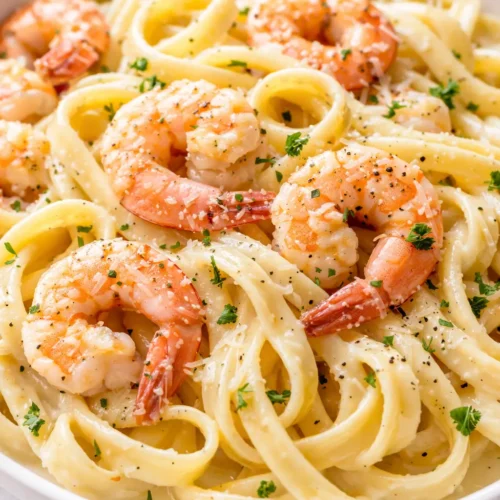
Creamy Shrimp Alfredo That’s Actually Saucy (Not Gloopy)
Equipment
- Large Pot
- 12-inch skillet or large sauté pan
- Colander
- Liquid Measuring Cup
- Box grater or microplane
Ingredients
For the Shrimp and Pasta
- 1 lb large shrimp (21-25 count), peeled and deveined
- 8 oz fettuccine or linguine
- 2 tbsp unsalted butter
- 3 cloves garlic, thinly sliced
For the Alfredo Sauce
- 1 1/2 cups heavy cream
- 3/4 cup freshly grated Parmesan
- 1/2 cup reserved pasta water
- Salt, black pepper, and a pinch of nutmeg
- Fresh parsley for finishing (optional)
Instructions
- Start the pasta water: Fill a large pot with water, season it generously (it should taste like the ocean), and bring it to a boil. While it heats, grate your cheese.
- Sear the shrimp: Pat the shrimp completely dry with paper towels. Season with salt and a pinch of black pepper. Let them rest for 5 minutes after salting – it helps the seasoning penetrate. Heat 1 tbsp of the butter in your skillet over medium-high heat. Add the shrimp in a single layer and cook for 1-2 minutes per side until pink and just opaque. Don’t crowd the pan or they’ll steam instead of sear. Transfer them to a plate.
- Cook the garlic: Reduce the heat to medium. Add the remaining 1 tbsp of butter to the same skillet. Add the sliced garlic and cook for 30–60 seconds until fragrant. Don’t walk away from it. The second it smells fragrant, move on to the next step.
- Make the cream base: Pour in the heavy cream. Stir it into the garlic butter. Let it simmer gently for 2–3 minutes, stirring occasionally, until it thickens just enough to coat the back of a spoon. Season with a pinch of salt, a few cracks of black pepper, and a tiny grating of nutmeg.
- Cook the pasta: By now your pasta water should be boiling. Drop the fettuccine and cook it 1 minute less than the package directions say. Reserve 1 cup of the pasta water before you drain it.
- Finish the sauce: Add the drained pasta directly to the skillet with the cream sauce. Toss it with tongs to coat. Add the Parmesan cheese and 1/2 cup of the reserved pasta water. Toss continuously over low heat for about 2 minutes. The sauce will tighten around the pasta. If it gets too thick, splash in another tablespoon of pasta water.
- Add the shrimp back: Nestle the seared shrimp into the pasta. Toss gently just to warm them through, about 30 seconds.
- Serve immediately: Divide the pasta into warm bowls. Finish with a scattering of fresh parsley, more black pepper, and an extra grating of Parmesan if you’re feeling generous.
Notes
Related Recipes:
 Cheesy Hamburger Casserole Bake That’s Ready in 40 Minutes (No Canned Soup Here)
 Lemon Capellini Salad for Late Summer Evenings: Bright, Tangy, Ready in 20 Minutes
 Creamy Garlic Tagliatelle That Looks Like a Restaurant Dish in 20 Minutes
 Texas Roadhouse Style Baked Salmon with Sweet and Savory Glaze — Ready in Under 30 Minutes
 Easy Italian Meatloaf That’s Actually Juicy (Not Dry) — in 1 Hour
 The Biscuits and Gravy Casserole That’s Actually Crispy on Top (And Ready in 40 Minutes)