
The first time I set this down on the table, someone asked what rum I used. That’s the exact reaction you want from a mocktail — the one where people assume it’s complicated and boozy, when really it’s just three ingredients with a specific layering trick and a piece of fruit that does most of the visual work. My sister, who takes her cocktails seriously, actually said “wait, this doesn’t have alcohol?” and then took a second sip like she needed to confirm the universe wasn’t wrong. That’s the energy this drink brings.
The short version: A layered tropical mocktail that takes 5 minutes, uses ingredients you can find anywhere, and looks like you spent ten times that.
I’ve made this for six different gatherings this summer — brunch, a neighbor’s porch party, a Thursday night where I just wanted something that felt like an occasion — and every time someone asks for the recipe before the glass is empty. The secret isn’t a secret ingredient. It’s the order you pour things and the one garnish decision that makes it read as deliberate.
- Serves: 1 (easily multiplied for a pitcher)
- Hands-On Time: 5 min | Total Time: 5 min
- Difficulty: So easy you’ll memorize it after the first one — just don’t skip the layering order
- Cost per serving: ~$2.50 (less if you already have citrus and sparkling water)
- Calories: ~90 per serving (without added sweetener)
- Dietary Notes: Naturally vegan, gluten-free, dairy-free, no added sugar (depending on juice brand)
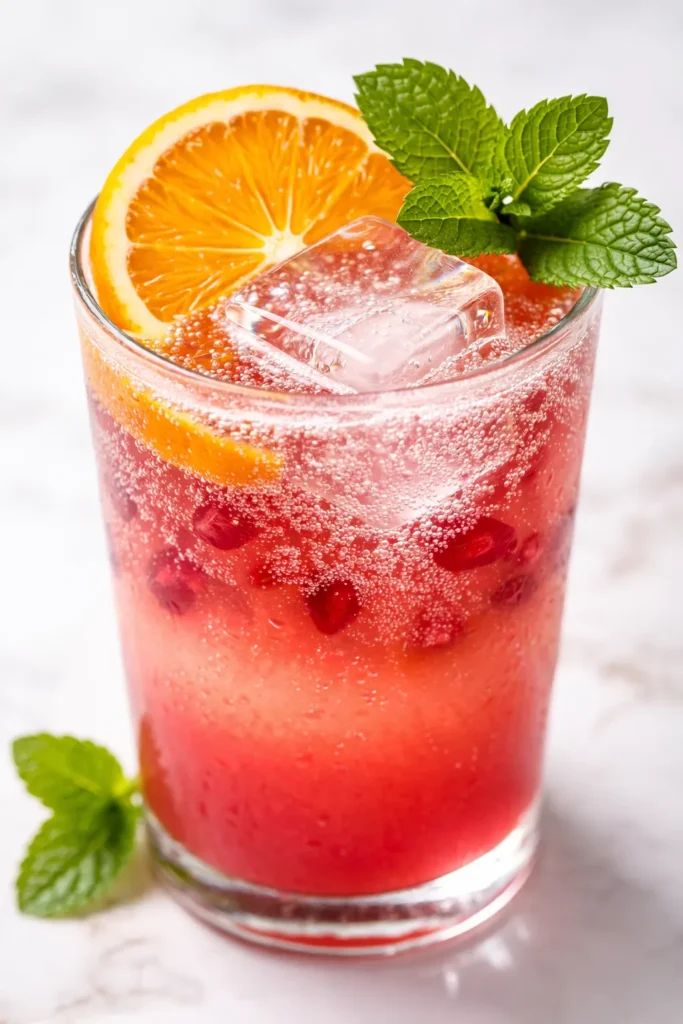
(Photo above: A tall highball glass with a gradient of deep pink at the bottom fading into golden orange at the top, garnished with a thin slice of blood orange and a fresh mint sprig placed neatly against the glass. Natural light from a side window, shot at eye level against a marble countertop.)
What Makes This Different from Every Other Mocktail I’ve Tried
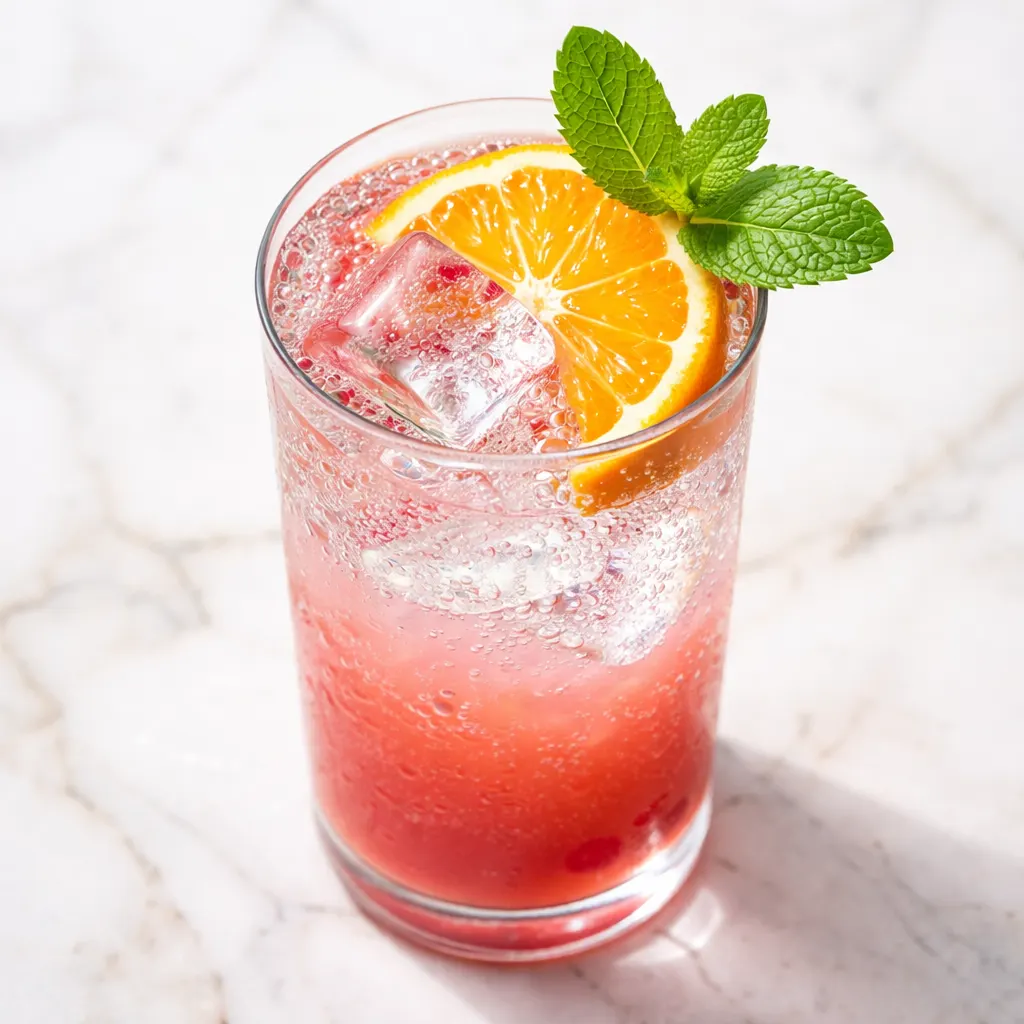
Most mocktails fall into one of two traps: they’re either sugary juice bombs that taste like a kid’s birthday party, or they’re so subtle you forget you’re drinking anything at all. This one avoids both because the structure is built around a simple principle — contrast in density. The guava-pomegranate base is heavier, so it stays on the bottom. The sparkling water floats on top. And the citrus floats right in the middle because it’s lighter than the syrup but heavier than the water. That’s not science I had to look up — it’s just what happens when you pour in the right order. The result is a drink that looks like a sunrise in a glass and tastes layered, not flat.
The other thing most mocktails get wrong is the ice situation. Crushed ice melts fast and dilutes everything. Big cubes or spheres melt slower and keep the layers visible longer. That’s the whole upgrade right there: one big cube instead of a glass full of crushed ice. It changes everything about how the drink looks and how long it stays crisp.
What this produces is a drink that earns its spot next to real cocktails on a table. No one will ask where the alcohol is. They’ll ask where you got the recipe.
Ingredients Worth Talking About
- 3 oz guava nectar or juice (not concentrate if you can help it): This is the base — sweet but not cloying, with a deep pink that gives the drink its color. I’ve tested this with reduced-sugar guava nectar and it works fine; just taste and add a splash of simple syrup if it’s too tart for you.
- 1 oz pomegranate juice (100%, not cocktail blend): Adds color depth and a slight tang that cuts the sweetness. My kid tried it once and said “it’s like a fancy Shirley Temple” — which is exactly the audience this hits.
- 1/2 oz fresh lime juice (always fresh, the bottled stuff changes the pH and the flavor): The acid bridge that keeps everything in balance. Without it, the drink is just sweet. With it, you get that “I can’t stop sipping” thing.
- 3 oz sparkling water or club soda (unflavored — flavored waters work but taste test first): The top layer. Use something with brisk carbonation. If you have a soda maker, this is where it shines — the bubbles stay crisp longer.
- 1 large ice cube (or 2 standard cubes): This is the secret to the visual. Big ice melts slowly, keeps layers distinct, and doesn’t water down the drink. I buy the silicone sphere molds for $8 and use them constantly — worth it just for the way the drink photographs.
- Garnish: 1 thin slice of blood orange or regular orange + 1 fresh mint sprig: The orange adds a visible citrus note that tells your brain “this is fresh.” The mint adds aroma when you bring the glass — your nose gets a hit before your mouth does. Skip the straw; the garnish should be your delivery system.
You’ll also need a highball glass (tall and clear — the whole point is seeing the layers) and a small pitcher or measuring cup for the sparkling water.
The Setup (It’s Minimal, I Promise)
- Highball glass (12–14 oz) — clear glass, no patterns, you want to see the layers
- Small mixing bowl or glass for the pomegranate-lime base
- Bar spoon or chopstick for stirring the bottom layer (optional but helpful)
- Knife and cutting board for the citrus slice
- Measuring spoons — or just eyeball it after you’ve made it once
If you don’t have a bar spoon, a chopstick works. If you don’t have a chopstick, the handle of a regular spoon. The goal is gentle mixing of just the bottom layer without disturbing the whole glass.
Let’s Make It (Step by Step)
This goes fast. Read through once before you start — the order matters more than the timing.
Prep the garnish and ice: Slice your orange into thin rounds (about 1/4 inch). Gently slap the mint sprig between your palms to release the oils. Drop your big ice cube into the glass. Set the garnish nearby.
- Mix the base: In a small glass or bowl, stir together the guava nectar, pomegranate juice, and fresh lime juice. Taste it — it should be sweet-tart, like a really good tropical punch. If it’s too sweet, add a squeeze more lime. Too tart? Tiny pinch of salt (really, it works).
- Pour the base over the ice: Pour the mixture directly over the ice cube. It will settle at the bottom because it’s denser than what comes next. (📸 Photo tip: You should see a deep pink layer about halfway up the glass. If it looks muddy, your ice might be too small — bigger cubes give cleaner lines.)
- Add the sparkling water slowly: Tilt the glass slightly and pour the sparkling water down the side of the glass. Do NOT pour it straight into the center — that’ll mix everything instantly. Pouring down the side keeps the layers separate. Stop when the glass is about 3/4 full. I use a small pitcher for the water so I have more control, but you can pour straight from the bottle if you’re careful.
- Watch the magic happen: The sparkling water should float on top, creating a gradient from dark pink at the bottom to pale golden at the top. Give it a gentle stir with your chopstick or bar spoon — just one or two rotations, just in the bottom third of the glass. Don’t overstir or you’ll lose the gradient. (📸 Photo tip: This is the moment to photograph — the transition zone is soft and looks intentionally ombré.)
- Garnish like you mean it: Float the orange slice on top or slide it onto the rim. Lay the mint sprig across the surface so the leaves are pointing up. The drink should look like a still life. Serve immediately.
How I Batch This for a Party
If I’m making these for a group — say, brunch with my sister and her crew — I multiply the base ingredients (guava, pomegranate, lime) by the number of guests and mix it all in a big pitcher. Then I refrigerate that base until serving time. When people arrive, I fill glasses with ice, pour the base about halfway up, and top each one with sparkling water from a separate bottle. The final garnish per glass is just the citrus and mint. The whole thing takes about 60 seconds per drink, and everyone gets the same gradient effect because I’m pouring in the same order every time. My sister started calling it “the sunrise pitcher” and now I can’t call it anything else.
- Fridge: The base (without ice or sparkling water) keeps for up to 3 days in an airtight container. Give it a good shake before using — the pomegranate settles.
- Freezer: Not recommended — the texture and carbonation suffer. But you can freeze citrus slices in advance to use as ice-cube garnishes.
- Reheat: This is a cold drink, so reheating isn’t a thing. But if your base gets too thick from chilling, leave it out for 10 minutes or add a tiny splash of cold water to thin it.
Things I Wish I’d Known the First Time
- Ice size is non-negotiable: I made this with crushed ice the first time and ended up with a pink puddle within 5 minutes. Big cubes (or one large sphere) keep the visual intact for a full 20 minutes. If you don’t have a mold, use 2–3 standard cubes — just know the layers won’t last as long.
- Don’t skip the fresh lime: The first time I tested this with bottled lime juice, the drink tasted flat and slightly metallic. Fresh lime gives the acidity a brightness that lifts the whole thing. I’ve done it both ways. The difference is real.
- The mint matters more than you think: It’s not just a decoration. When you bring the glass to your face, the mint aroma hits your nose before the liquid hits your tongue. That scent primes your palate for freshness. Without it, the drink is just sweet fruit. With it, it’s complex. My husband thought I was overthinking it until he tried the version without mint and said, “Something’s missing.”
- You can fix a bad pour: If you accidentally stir too much and lose the gradient, don’t panic. Add another small ice cube and pour a tiny bit more sparkling water down the side. It won’t look perfect, but it’ll still taste great. Even if you mess this up a little, it’s still a refreshing drink — I’ve done it.
Swaps That Actually Work
- No guava nectar? Use mango nectar or even a high-quality peach juice. The color will be more golden, so the gradient shifts from pink to amber — still beautiful. Just avoid anything with added sugar; it’ll make the base too thick.
- Make it kid-friendly (even more): My niece is 7 and loves this with a splash of ginger ale instead of plain sparkling water. The ginger adds a little zing that she says “tastes like soda but better.” I’ve also done it with lemon-lime sparkling water for a less sweet version.
- Turn it into a cocktail: If you want the boozy version for adults, add 1.5 oz of white rum or vodka to the base before pouring over ice. It changes the volume slightly — just reduce the guava nectar by 1 ounce to keep the balance. The rum version is my go-to for summer parties.
- Dairy-free, sugar-free, whatever: This drink is already dairy-free and gluten-free. For a lower-sugar version, use diet sparkling water and a sugar-free fruit nectar (if you can find one that doesn’t taste artificial). I’ve had good luck with the Stevia-sweetened guava nectar from my local Latin market — it’s subtle but works.
Questions I Get About This Mocktail All the Time
Q: Why did my layers turn into one murky color instead of staying separate?
A: Ugh, I’ve been there. The most common culprit is ice that’s too small. Crushed ice melts fast and stirs everything up. The other cause is pouring the sparkling water too fast or straight into the center of the glass. Next time, use one big cube and pour the water very slowly down the side of the glass. It takes 5 extra seconds but makes all the difference.
Q: Can I make this with a different fruit nectar — like passion fruit or pineapple?
A: Absolutely. Passion fruit nectar is amazing (and the seeds add texture if you leave them in — I love that version). Pineapple is sweeter, so add an extra squeeze of lime to balance it. I’ve tested both and they work; just be aware that the color will shift. Passion fruit is more yellow-orange, so the gradient becomes golden-to-clear. Still gorgeous.
Q: How long does the base keep? Can I make it ahead?
A: Yes! The base (guava, pomegranate, lime) keeps in the fridge for up to 3 days in a sealed jar. Just shake it before using because the pomegranate can settle. Don’t mix it with the sparkling water until you’re ready to serve — carbonation doesn’t keep. If you’re making a big batch, I’d recommend mixing the base, refrigerating it, and then adding sparking water per glass at serving time.
Q: What do you serve this with?
A: This is my go-to for brunch (alongside something savory like quiche or a breakfast taco spread), for summer barbecues with grilled chicken skewers, or honestly for a solo afternoon when you want to feel fancy. My kids love it with cheese quesadillas — the acidity cuts through the cheese perfectly. For a party, I set out a pitcher of the base and let guests help themselves.
More Recipes My Family Makes on Repeat
If you liked this one, here are a few others that get the same reaction at our table:
- Simple Citrus Vinaigrette — The dressing that uses the same acid trick to keep salads interesting all week.
- Sheet Pan Pineapple Chicken — Sweet and tangy, 30 minutes, and the leftovers are even better the next day.
- No-Bake Lime Tart — The dessert that looks like you spent hours but takes 15 minutes of active time.
This mocktail has become my signature non-alcoholic drink — the one I make when I want something that feels celebratory without the hangover. I hope it becomes yours too.
If you try it, drop a comment below — I love hearing how it goes for you!
📌 This tropical mocktail recipe with layers and citrus garnish looks like a real cocktail but is totally alcohol-free — save it for your next summer party or quiet evening when you want something special.
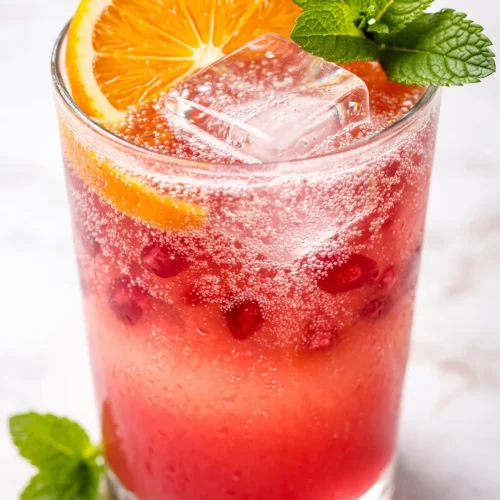
The Tropical Mocktail That Looks Like a Cocktail (Zero Proof, Full Flavor)
Equipment
- Highball Glass (12-14 oz)
- Small Mixing Bowl or Glass
- Bar Spoon or Chopstick
- Knife and Cutting Board
- Measuring spoons
Ingredients
- 3 oz guava nectar or juice (not concentrate if possible)
- 1 oz pomegranate juice (100%, not cocktail blend)
- 0.5 oz fresh lime juice
- 3 oz sparkling water or club soda (unflavored)
- 1 large ice cube (or 2 standard cubes)
Garnish
- 1 thin slice blood orange or regular orange
- 1 sprig fresh mint
Instructions
- Mix the base: In a small glass or bowl, stir together the guava nectar, pomegranate juice, and fresh lime juice. Taste it — it should be sweet-tart. If too sweet, add more lime; too tart, a tiny pinch of salt.
- Pour the base over the ice: Drop your big ice cube into the highball glass. Pour the base mixture directly over the ice. It will settle at the bottom because it’s denser.
- Add the sparkling water slowly: Tilt the glass slightly and pour the sparkling water down the side of the glass. Do NOT pour straight into the center — that will mix everything. Stop when the glass is about 3/4 full.
- Watch the gradient form: The sparkling water should float on top, creating a gradient from dark pink at the bottom to pale golden at the top. Give it a gentle stir with your chopstick or bar spoon — just one or two rotations in the bottom third of the glass. Don’t overstir.
- Garnish like you mean it: Float the orange slice on top or slide it onto the rim. Lay the mint sprig across the surface so the leaves point up. Serve immediately.
Notes
Related Recipes:
 Cheesy Hamburger Casserole Bake That’s Ready in 40 Minutes (No Canned Soup Here)
 Texas Roadhouse Style Baked Salmon with Sweet and Savory Glaze — Ready in Under 30 Minutes
 Moist Lemon Zucchini Bread with a Crunchy Lemon Sugar Top
 Strawberry Shortcake Rice Krispie Treats That Actually Taste Like Shortcake — Ready in 15 Minutes
 Blueberry Oatmeal Cookies That Stay Soft for Days — in Under 30 Minutes
 Air Fryer Chicken and Vegetables That Don’t Taste Like a Regret (30 Minutes, One Pan)