
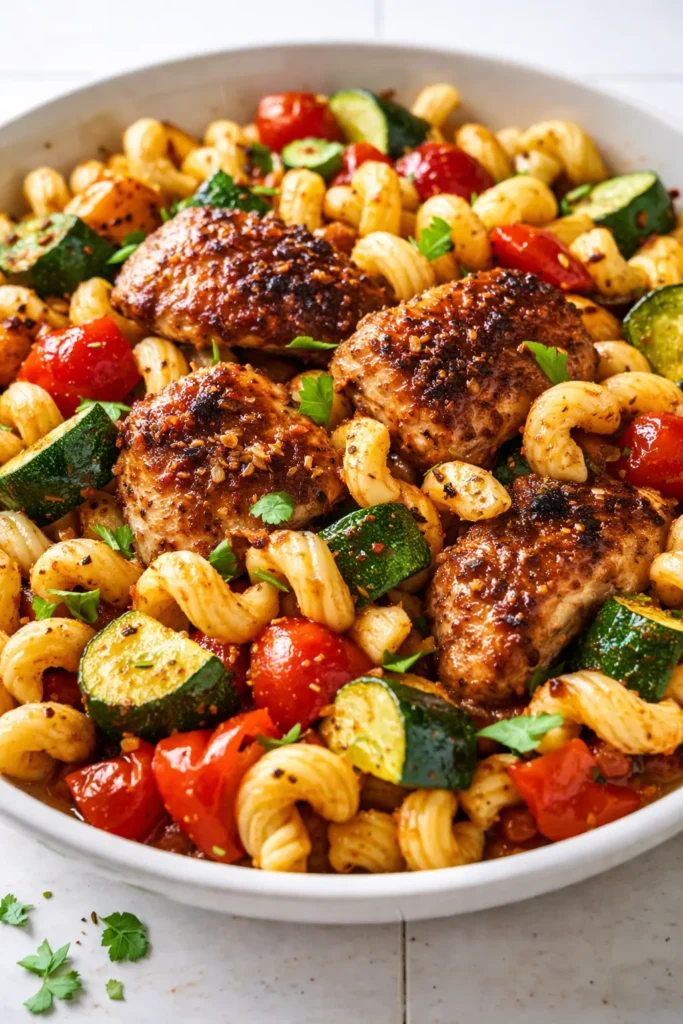
I have made this approximately sixteen times since the first zucchini showed up at the Greenpoint market. Not because I was perfecting it—though I have—but because it is the only thing I want to eat when it is too hot to turn on the oven but I still want a meal that feels like an event. The spicy chicken pasta situation comes together in a single skillet, uses every summer vegetable in your crisper drawer, and plates like something you’d pay $24 for on a restaurant patio.
The short version: Charred zucchini, blistered tomatoes, and spicy chicken thighs tossed with al dente pasta in a pan sauce that takes exactly 8 minutes to build.
My neighbor downstairs texted me for this recipe after she smelled it through the floor. I consider that the highest compliment a home cook can receive.
- Serves: 4 as a main dish
- Hands-On Time: 25 min | Total Time: 45 min
- Difficulty: Easy enough for a Tuesday, impressive enough for a guest
- Cost per serving: ~$4.50
- Calories: ~540 per serving
- Dietary Notes: Adaptable for gluten-free, dairy-free, or nut-free
(Photo above: Overhead shot of the finished pasta twirled into a wide, shallow bowl, with fanned slices of seared chicken on top, fresh basil leaves scattered deliberately, and a final pinch of flaky salt catching the light from a nearby window. A linen napkin and a fork with visible Parmesan dust complete the frame.)
The Thing That Makes This Different from Every Other Summer Pasta
Most summer pastas are watery. The vegetables release their moisture into the pan, and you end up with a diluted sauce that tastes like regret and boiled zucchini. Not this one.
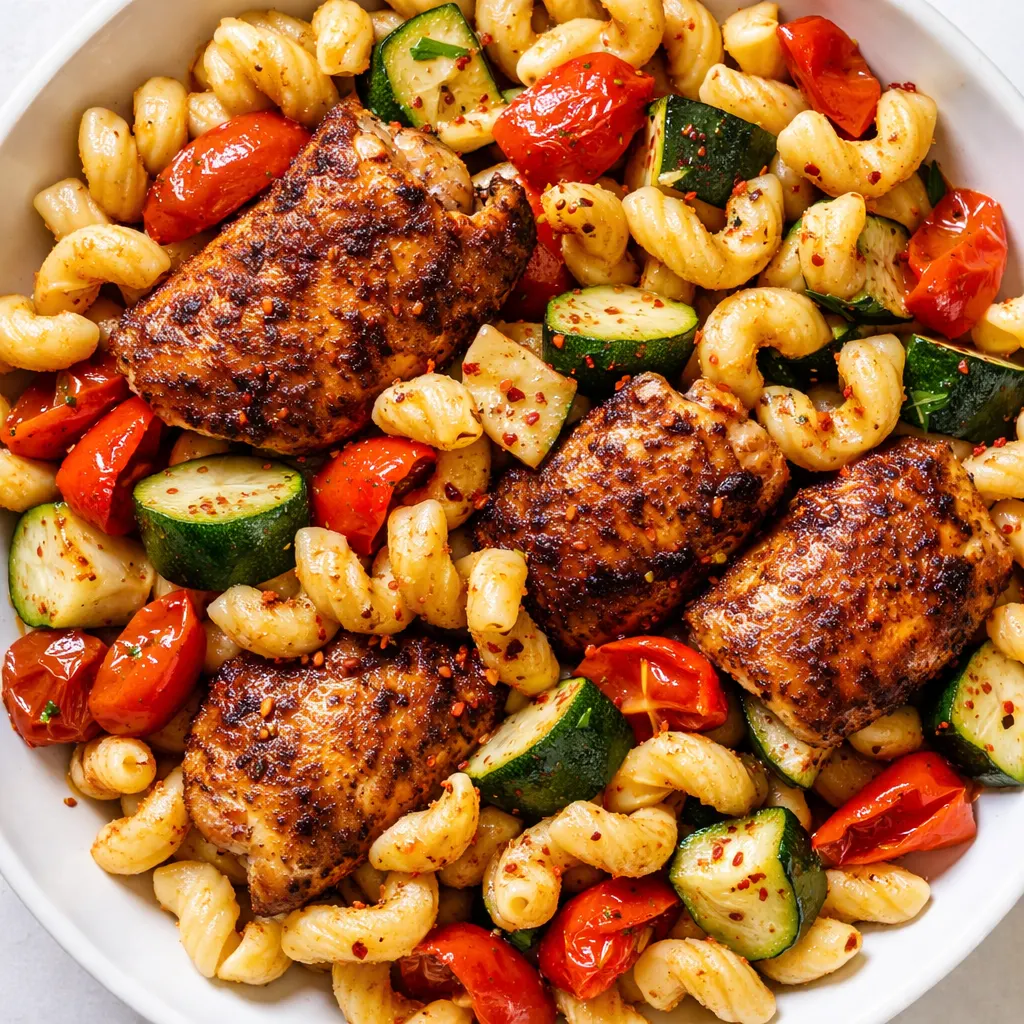
The trick is to char the vegetables in the rendered chicken fat without moving them. You let them sit in the hot pan until they blister and take on color. That char creates a barrier that keeps the interior moisture locked in. It also builds the kind of deep, smoky flavor that makes the whole dish taste like you grilled everything. You didn’t. It took eight minutes.
The second move is reserving a cup of pasta water and using it to emulsify the sauce directly in the pan. The starch in the water binds to the fat and the charred bits, creating a glossy coating that clings to every piece of pasta. No cream, no roux. Just technique and a hot pan.
Ingredients Worth Talking About
- 1 lb boneless, skinless chicken thighs (about 4): Thighs stay juicy when seared hard. Breasts work, but you’ll need to watch them closely so they don’t dry out. I usually buy the package from the farmers market that’s one dollar more and ten times better. It matters here.
- 12 oz short pasta (cavatappi, rigatoni, or fusilli): Short shapes hold onto the chunky sauce better than long strands. Cavatappi is my go-to because the ridges grab every bit of charred tomato. My neighbor asked what kind I used and then bought three boxes.
- 1 medium zucchini, chopped into 1-inch pieces: Summer’s main character. Skip the watery core by salting it lightly and patting it dry before it hits the pan. I learned this after one too many soggy pasta nights.
- 1 red bell pepper, seeded and chopped: Adds sweetness and color contrast. Orange or yellow works too. Green is too bitter here. Just my opinion, but I stand by it.
- 1 pint cherry tomatoes: Please do not use the sad, pale ones. If summer is in full swing, get the ones that smell like a tomato when you walk past the basket. I once used grape tomatoes in a pinch and regretted it. The sweetness is different.
- 3 cloves garlic, thinly sliced: Whole slices toast nicely and don’t burn as quickly as minced. If you mince it, keep a close eye. Burnt garlic is not a flavor profile.
- 1/2 tsp red pepper flakes (or more, if you’re me): The spice is meant to be present but not punishing. It wakes up the vegetables and the chicken. I use Aleppo pepper sometimes for a milder, fruitier heat. Both work.
- 1/4 cup good olive oil: You’re going to cook with it and finish with it. Make it one you’d actually dress a salad with. I keep a separate bottle for cooking and a nicer one for finishing.
- 1 lemon: The acid at the end makes the whole dish snap into focus. A squeeze of lemon at the end is not brightness — it is contrast. It makes the fat taste richer because it gives the palate something to push against.
- 1/2 cup grated Parmesan: Adds saltiness and a nutty note that bridges the char and the acid. Pre-grated plastic cheese will not melt the same way. Grate it yourself. It takes 45 seconds.
- 3 tbsp fresh basil, chiffonaded: The only garnish you need. It adds a peppery, anise-adjacent freshness that stands up to the spice. Place the leaves on the plate deliberately, don’t scatter them from a height like confetti.
- Salt and pepper: Diamond Crystal kosher salt and freshly ground black pepper. Always.
What to Pull Out Before You Start
- 12-inch heavy skillet (cast iron or stainless steel): A non-stick pan won’t get hot enough to char the vegetables properly. Cast iron retains the heat you need to build the fond. If you only have non-stick, crank the heat and don’t overcrowd the pan.
- Large pot for pasta: At least 4 quarts. Pasta needs room to move.
- Chef’s knife and cutting board
- Tongs or a wooden spoon
- Measuring cups and spoons
- Mixing bowls
Let’s Make It (Step by Step)
This goes fast, so read through once before you start. The actual cooking time is about 25 minutes, but everything moves in parallel once the pasta hits the water.
Prep: Take the chicken out of the fridge 15 minutes before you start. Pat it very dry with paper towels. Season generously on all sides with salt and pepper.
- Get your pasta water boiling: Fill a large pot with water and bring it to a rolling boil over high heat. Add a generous handful of salt — it should taste like the ocean. When it boils, add the pasta and cook it 1 minute less than the package directions. Reserve 1 cup of the pasta water before draining. (📸 Photo tip: Right before you drain the pasta, scoop out a mugful of the starchy water. It should look cloudy, not clear — that’s the starch that makes the sauce cling.)
- Sear the chicken thighs: While the pasta is boiling, heat your heavy skillet over medium-high heat. Add 1 tablespoon of the olive oil and swirl to coat. Place the chicken thighs in the pan, smooth side down, and let them sear undisturbed for 5-7 minutes. The bottom should be deep golden brown and release easily from the pan. Flip and cook for another 4-5 minutes, until the internal temperature reads 165°F or the juices run clear. Transfer the chicken to a cutting board and let it rest.
- Char the summer vegetables: This is the most important step. The pan should still be hot with the chicken renderings in it. Add the zucchini and bell pepper in a single layer. Do not stir them. Let them sit for 3-4 minutes until the bottoms are deeply charred. Toss and add the cherry tomatoes. Let them blister for another 2-3 minutes, shaking the pan occasionally. (📸 Photo tip: At this point, the zucchini should have deep brown char marks but still hold its shape. If it’s limp, your heat wasn’t high enough. The tomatoes should look like they’re about to burst but haven’t lost their integrity yet.)
- Build the spicy base: Push the vegetables to the sides of the pan, creating a clearing in the center. Add the sliced garlic and red pepper flakes to the oil in the center. Cook for 30-45 seconds until fragrant, then mix everything together. The fond from the chicken and the charred bits should coat everything.
- Slice the chicken: By now the chicken has rested. Slice it across the grain into 1/2-inch thick strips. If any juices run, pour them into the vegetable pan. That’s pure flavor.
- Toss the pasta into the vegetables: Add the drained pasta directly to the skillet with the charred vegetables. Pour in about 1/2 cup of the reserved pasta water. Toss everything vigorously with tongs for about a minute, until the water emulsifies with the oil and forms a glossy sauce. Add the Parmesan and toss again. Add more pasta water, a splash at a time, if it looks dry.
- Plate with intention: Twirl a serving of pasta into a wide, shallow bowl. Fan several slices of the chicken over the top. Squeeze a wedge of lemon over the whole thing. Scatter the basil leaves deliberately — place them, don’t sprinkle them. Finish with a final crack of black pepper, a pinch of flaky salt, and a very light drizzle of your finishing olive oil.
How I Meal Prep This for the Week
I make a double batch of the vegetables and chicken on Sunday and keep them separate from the pasta until I’m ready to serve. The pasta absorbs the sauce if it sits too long, so store the components in separate containers and toss them with a splash of fresh pasta water (or a drizzle of olive oil and a quick reheat in the microwave) when you’re ready to eat.
- Fridge: Store the components separately in airtight containers for up to 4 days. Reheat the pasta and vegetables together in a hot skillet with a splash of water to revive the sauce.
- Freezer: Not recommended for the pasta itself — it gets mushy. The chicken and charred vegetables freeze well for up to 2 months. Reheat directly in a skillet and toss with fresh pasta.
- Reheat: A hot skillet is better than a microwave here. The microwave will make the vegetables weep water, diluting the sauce. Toss everything in a hot pan with a splash of water for 2 minutes.
Things I Wish I’d Known the First Time
- Don’t skip drying the zucchini: I know it sounds fussy, but salting and patting it dry before it hits the pan is the difference between charred zucchini and steamed zucchini. I learned this the hard way after one too many soggy pasta nights. Even if you mess this part up a little, it’ll still taste good — I’ve done it.
- The pasta water is not optional: It’s not just salty water—it’s liquid gold that binds the sauce to the pasta. Don’t drain it all away. If you do, make sure you have extra hot water from the kettle to add in a pinch.
- High heat is your friend: If your pan isn’t smoking slightly when you add the vegetables, the heat is too low. You want a deep char that happens fast, not a slow, sad sweat.
- Resist the urge to stir constantly: Every time you stir, you lower the temperature of the pan. Let the vegetables sit. Trust the process. The char is where the flavor lives.
Swaps That Actually Work
- Gluten-Free: Use your favorite gluten-free short pasta. Brown rice pasta holds up well here. Just cook it al dente and reserve extra pasta water because gluten-free pasta absorbs sauce faster.
- Dairy-Free: Omit the Parmesan. Add 2 tablespoons of nutritional yeast or a tablespoon of miso paste dissolved in the pasta water for depth. I’ve done this for friends and been told “I didn’t even miss the cheese.”
- Kid-Friendly (Mild Version): Skip the red pepper flakes entirely. Add smoked paprika instead for a subtle warmth without any heat. My friend’s kid asks for it this way every time.
- Fancy Guest Version: Use whole chicken breasts instead of thighs, slice them thinly and fan them out beautifully over the pasta. Arrange the basil leaves in a deliberate pattern. Price it out: it still costs less than half what you’d pay in a restaurant.
- Ingredient Sub — Zucchini: Yellow squash works perfectly. So does eggplant, if you salt it first and let it drain. Just adjust the char time slightly — eggplant cooks faster.
Questions I Get About This Recipe All the Time
Q: Why did my chicken turn out dry?
A: Ugh, I’ve been there. Two things: you either cooked it too long, or you moved it too early. Sear it hard on the first side until it releases naturally from the pan — that’s the sign it’s ready to flip. Pull it off the heat the second it hits 165°F. Resting it is non-negotiable. You’ve got this next time.
Q: Can I make this dairy-free?
A: Yes. Omit the Parmesan and add a tablespoon of nutritional yeast or a dollop of cashew cream at the end. I’ve tested it both ways and the dairy-free version holds its own. The charred vegetables and pasta water emulsion do most of the heavy lifting anyway.
Q: How long does this spicy chicken pasta last in the fridge?
A: Up to 4 days, but store the pasta and the vegetables/chicken separately. If they sit mixed together, the pasta absorbs all the liquid and gets soft. A quick reheat in a hot skillet with a splash of water brings it back to life. The microwave works in a pinch, but the oven or stovetop keeps the texture right.
Q: What do you serve with this pasta?
A: Honestly, it’s a complete meal on its own. But if I’m feeling fancy, I do a simple arugula salad with lemon and shaved Parmesan on the side, and some crusty bread to soak up any leftover pan juices. My neighbor swears by a glass of dry rosé. She’s not wrong.
More Recipes My Family Makes on Repeat
If you liked this one, here are a few others that get the same reaction at our table:
- Crispy Baked Chicken Thighs That Are Juicier Than Fried — in 35 Minutes — The sheet-pan version of this skillet dinner.
- Brown Butter Peach Galette for Sunday Afternoons: Flaky, Jammy, Zero Stress — The perfect end to the meal.
- The Chocolate Lava Cake You’d Never Guess Is Dairy-Free — For when you need dessert but forgot to buy butter.
This is the kind of dinner that makes a Tuesday in August feel like a Saturday in Tuscany. Don’t overthink it. Just use good ingredients and a hot pan.
If you try it, drop a comment below — I love hearing how it goes for you. Tag me on Pinterest or Instagram so I can see yours!
📌 Save this Spicy Chicken Pasta with Summer Veggies recipe for the next time you need a quick, impressive dinner that uses up all the goodness from the farmer’s market.
Spicy Chicken Pasta with Summer Veggies That Tastes Like a Restaurant Dish — in 45 Minutes
Equipment
- 12-inch heavy skillet (cast iron or stainless steel)
- Large pot for pasta (at least 4 quarts)
- Chef’s Knife and Cutting Board
- Tongs or wooden spoon
- Measuring cups and spoons
- Mixing bowls
Ingredients
- 1 lb boneless, skinless chicken thighs (about 4)
- 12 oz short pasta (cavatappi, rigatoni, or fusilli)
- 1 medium zucchini, chopped into 1-inch pieces
- 1 medium red bell pepper, seeded and chopped
- 1 pint cherry tomatoes
- 3 cloves garlic, thinly sliced
- 1/2 tsp red pepper flakes (or more to taste)
- 1/4 cup good olive oil (divided)
- 1 lemon lemon (for finishing)
- 1/2 cup grated Parmesan cheese
- 3 tbsp fresh basil, chiffonaded
- Salt and freshly ground black pepper to taste
- Flaky sea salt for finishing (optional)
Instructions
- Take the chicken out of the fridge 15 minutes before you start. Pat it very dry with paper towels. Season generously on all sides with salt and pepper.
- Fill a large pot with water and bring it to a rolling boil over high heat. Add a generous handful of salt – it should taste like the ocean. When it boils, add the pasta and cook it 1 minute less than the package directions. Reserve 1 cup of the pasta water before draining.
- While the pasta is boiling, heat your heavy skillet over medium-high heat. Add 1 tablespoon of the olive oil and swirl to coat. Place the chicken thighs in the pan, smooth side down, and let them sear undisturbed for 5-7 minutes. The bottom should be deep golden brown and release easily from the pan. Flip and cook for another 4-5 minutes, until the internal temperature reads 165°F or the juices run clear. Transfer the chicken to a cutting board and let it rest.
- Still using the same hot pan with the chicken renderings, add the zucchini and bell pepper in a single layer. Do not stir them. Let them sit for 3-4 minutes until the bottoms are deeply charred. Toss and add the cherry tomatoes. Let them blister for another 2-3 minutes, shaking the pan occasionally.
- Push the vegetables to the sides of the pan, creating a clearing in the center. Add the sliced garlic and red pepper flakes to the oil in the center. Cook for 30-45 seconds until fragrant, then mix everything together.
- By now the chicken has rested. Slice it across the grain into 1/2-inch thick strips. If any juices run, pour them into the vegetable pan. That’s pure flavor.
- Add the drained pasta directly to the skillet with the charred vegetables. Pour in about 1/2 cup of the reserved pasta water. Toss everything vigorously with tongs for about a minute, until the water emulsifies with the oil and forms a glossy sauce. Add the Parmesan and toss again. Add more pasta water, a splash at a time, if it looks dry.
- Twirl a serving of pasta into a wide, shallow bowl. Fan several slices of the chicken over the top. Squeeze a wedge of lemon over the whole thing. Scatter the basil leaves deliberately – place them, don’t sprinkle them. Finish with a final crack of black pepper, a pinch of flaky salt, and a very light drizzle of your finishing olive oil.
Notes
Related Recipes:
 Cheesy Hamburger Casserole Bake That’s Ready in 40 Minutes (No Canned Soup Here)
 Lemon Capellini Salad for Late Summer Evenings: Bright, Tangy, Ready in 20 Minutes
 Creamy Garlic Tagliatelle That Looks Like a Restaurant Dish in 20 Minutes
 Texas Roadhouse Style Baked Salmon with Sweet and Savory Glaze — Ready in Under 30 Minutes
 Grilled Chicken Wraps That Stay Crispy (Even the Next Day) — in 35 Minutes
 Easy Italian Meatloaf That’s Actually Juicy (Not Dry) — in 1 Hour