
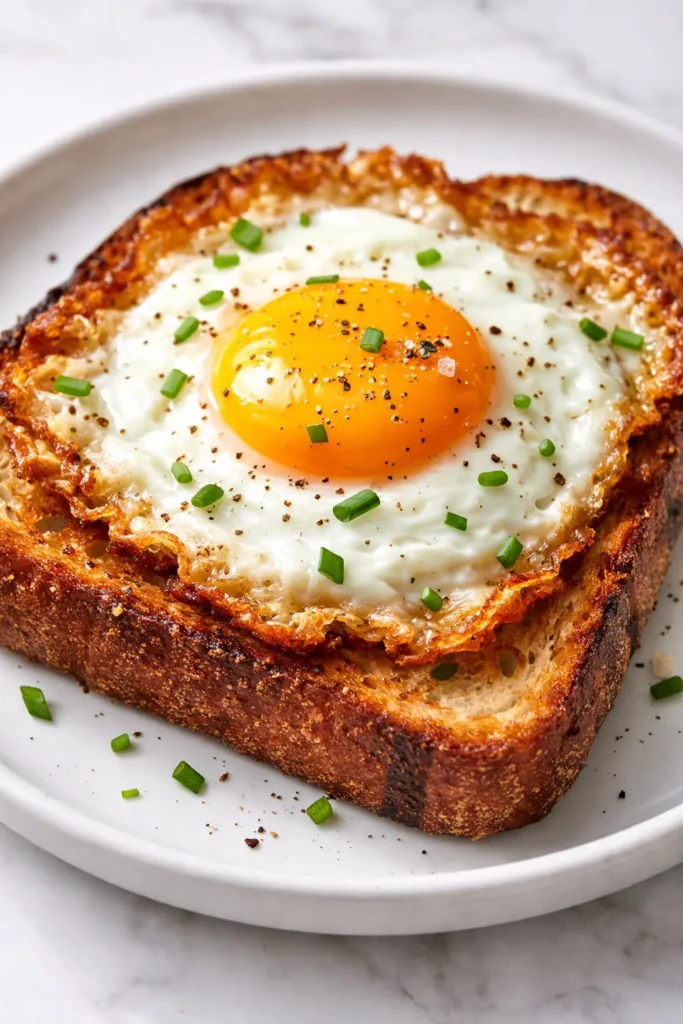
The first time you crack an egg into a hot enough pan and watch the edges turn brown and frilly before the white is even fully set — that’s the moment. That is the literal definition of Leo energy. Golden, dramatic, impossible to ignore. This is the tartine I make when I want breakfast to feel like an event, even if I’m just eating it over the sink in a 30-second window before my coffee kicks in.
The short version: A single fried egg on toast that looks like a fifteen-dollar brunch order and costs about ninety cents to make at home.
I’ve been testing the lacy egg edge for about two years now, and it comes down to one specific pan temperature and a generous hand with the olive oil. Everything else is just assembly.
- Serves: 1 as a generous breakfast or 2 as a light brunch
- Hands-On Time: 8 min | Total Time: 8 min
- Difficulty: So easy you’ll memorize it after the first try
- Cost per serving: ~$1.50 (with good bread and eggs)
- Calories: ~350 per serving
- Dietary Notes: Naturally vegetarian. Easily gluten-free with good GF bread.
(Photo above: overhead shot of a golden egg tartine on a dark slate plate, the yolk perfectly centered, crispy lacy brown edges fringing out over the sourdough, a scattering of flaky salt and fresh tarragon leaves catching the morning light from the upper right.)
What Makes the Edge Go That Frilly-Crisp (It’s Not Magic)
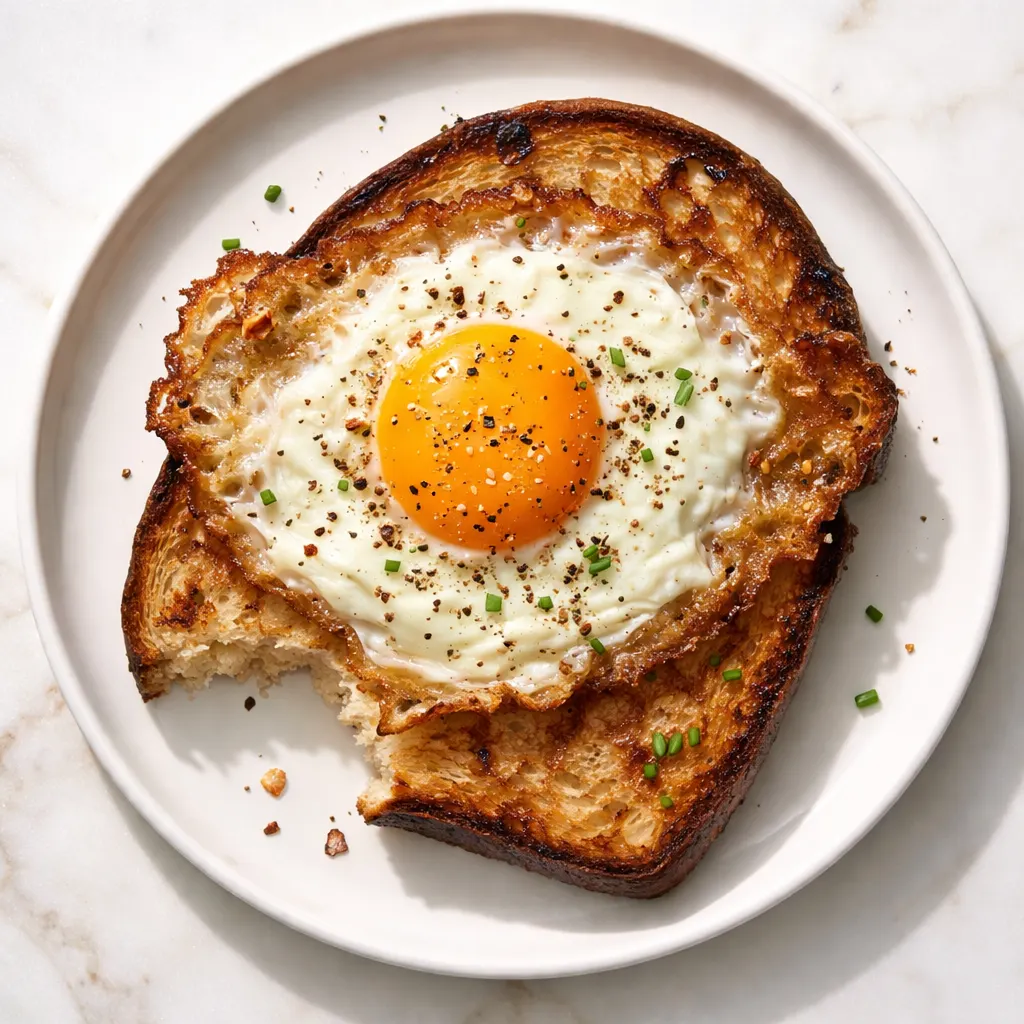
Most fried eggs hit the pan and steam. They cook pale and soft, which has its place. But if you want that golden, crunchy lace that shatters when you bite into it, you need the oil hot enough to instantly frizzle the thin edge of the white as soon as it hits the pan.
The second trick is the egg itself. Older eggs actually spread more in the pan, which gives you more surface area for those lacy edges. If your egg is super fresh and stands up tall, it won’t spread as much. I save my older eggs for this exact purpose.
The result is a texture contrast that makes a simple egg on toast feel genuinely luxurious. The crunch, then the runny yolk, then the chewy bread. It’s a three-act play on one plate.
What Goes In (Plus My Notes on the Good Stuff)
- 1 large egg: The star. Use the freshest you have for flavor, but an older one (3-4 days in the fridge) will give you the lacy edges. I keep a carton specifically for this recipe. I know that sounds insane. It’s not.
- 1 thick slice good sourdough: The vehicle. It needs to be sturdy enough to hold the egg and the yolk without disintegrating. I hate a sad, soggy crumb. Toast it well.
- 2 tbsp extra-virgin olive oil: Non-negotiable for the lace. It needs to be a generous amount, shimmering in the pan. Don’t skimp here or the edges won’t crisp evenly.
- Flaky salt: The finish. Fine salt dissolves. Flaky salt sits on top of the yolk and gives little bursts of saline crunch. Maldon or bust.
- Fresh tarragon (3-4 sprigs): The Leo herb. It has that slight anise edge that cuts through the richness of the yolk and makes the whole thing taste intentional. The tarragon is not optional.
- Black pepper (freshly cracked): A gentle finish to round out the heat.
The Only Pan You Need
- 8-inch non-stick skillet or well-seasoned carbon steel pan. A non-stick is easiest for a clean release. Carbon steel gets hotter and creates an even better lace, but needs to be seasoned. If your non-stick is scratched, get a new one. A scratched pan will grab the lace and tear it.
- Small thin spatula: A fish spatula works best for getting under those delicate edges without breaking them.
Let’s Make It (Step by Step)
This goes fast, so have your bread in the toaster and your egg cracked into a small bowl ready to go before you turn on the heat.
First, heat the oil: Add the olive oil to your cold pan. Swirl it to coat the bottom, then set it over medium-high heat. Let it heat for a full 2 minutes. You want the oil shimmering and almost whispering. If it starts smoking, it’s too hot — pull it off the heat for 30 seconds.
- Toast the bread: While the oil heats, toast your sourdough until deep golden brown. Rub it with a cut clove of garlic if you’re feeling extra. Place it on your plate.
- Crack the egg: Gently slide the egg into the hot oil. It should sizzle immediately and aggressively on contact. The edges should start to bubble and frizzle instantly. Don’t touch it for at least 90 seconds. (📸 Photo tip: You should see the edges turning golden brown and frilly almost immediately. If they’re not, your pan wasn’t hot enough — turn up the heat for the next one.)
- Baste the white: Tilt the pan slightly and use a spoon to baste the hot oil over the top of the white (avoid the yolk). This cooks the top of the white while keeping the yolk completely liquid.
- Watch for the doneness cue: Cook for about 2-3 minutes total, until the white is fully set and the edges are a deep amber. If the edges are dark brown before the white is set, lower your heat next time.
- Transfer and finish: Carefully slide the spatula under the egg. The lace will be fragile, so go slow and support the whole egg. Transfer it onto the toasted sourdough. Sprinkle immediately with flaky salt, a crack of black pepper, and a few fresh tarragon leaves. Serve it the second it hits the plate. This waits for no one. (📸 Photo tip: Place the egg slightly off-center on the toast so the lacy edges drape over the side. It makes the composition feel dynamic, not static.)
Can You Meal Prep a Fried Egg? (Sort Of)
Look, the egg itself needs to be made fresh. That’s non-negotiable. But you can absolutely set yourself up for success. I pre-slice my sourdough and keep it in the freezer, and I keep a little jar of flaky salt and dried tarragon on the counter so I don’t have to dig through the cabinet when I’m half awake.
- Fridge: Store your bread in the freezer. Pre-mix a lemony tarragon aioli (mayo, lemon, tarragon) if you want to slather it on the toast. It keeps for a week.
- Freezer: The bread freezes perfectly. The egg does not. Do not try.
- Reheat: This is a ‘make and eat immediately’ situation. The lacy edges lose their crunch in about 4 minutes. That’s just physics.
Mistakes I’ve Made (So You Don’t Have To)
- The oil temperature is everything. Too cold, and the egg absorbs oil like a sponge and the edges stay white. Too hot, and the edges burn before the white is set. Medium-high heat and a 2-minute warm-up is the sweet spot. I learned this the hard way after a week of sad, greasy eggs.
- Use a generous amount of oil. I know, it feels like a lot. That 2 tablespoons is what lets the egg float slightly and creates those rippled, bubbly edges. If you use non-stick spray or a tiny pat of butter, you’ll get a completely different egg. Still good, but not a Leo egg.
- Crack the egg into a small bowl first. This saves you from a shell disaster at the last moment. It also lets you slide the egg into the pan in one smooth motion, which keeps the white spread even. My husband thought I was being precious until he dropped shell into the pan. Now he does it too.
- Don’t crowd the pan. A single egg in an 8-inch pan is ideal. If you want two, use a 10-inch pan. If the eggs touch, they’ll cook unevenly and you’ll rip the lace trying to separate them.
Make It Yours (For Every Mood)
- Dairy-Free / Vegan: Use a good vegan egg substitute (like JUST Egg) and vegan butter. The technique is the same, though the lace will be slightly less dramatic. It works in a pinch and my vegan friends love it.
- Make it fancy (The Guest Version): Add a slice of crispy prosciutto di Parma under the egg, and a smidge of Calabrian chili paste in the oil before you crack the egg. It looks like a million bucks and takes 30 extra seconds.
- Make it a full meal: Serve with a handful of peppery arugula dressed with lemon on the side. It cuts the richness and turns breakfast into lunch.
- The Herb Swap: Tarragon is classic Leo, but chives, dill, or even finely sliced basil work beautifully. Avoid parsley — it’s too bitter for this delicate structure.
The Questions I Get About This Egg All the Time
Q: Why didn’t my eggs get lacy edges?
A: Ugh, I hate it when that happens. The pan wasn’t hot enough, or you didn’t use enough oil. Next time, let the oil shimmer for a full 2 minutes over medium-high heat. You want the oil to be almost smoking. If it isn’t sizzling the second the egg hits the pan, the lace won’t form. You’ve got this next time.
Q: Can I use butter instead of olive oil?
A: Yes, but the texture will be different. Butter has milk solids that brown and can burn, and it doesn’t get as shatteringly crisp as olive oil. If you use butter, add a splash of oil to it — or use clarified butter. My kids prefer it with butter, so I’m not judging. I just want you to have the right expectations.
Q: How long does this last? Can I freeze it?
A: This is an eat-immediately recipe. The lacy edges start to soften the moment they hit the air. If you absolutely must, you can reheat the egg (separate from the toast) in a hot pan for 30 seconds, but it won’t be the same. Make it fresh. It takes eight minutes.
Q: What do you serve with this?
A: Honestly, it’s a complete meal as-is for me. But if I’m serving it for brunch to friends, I’ll do a big bowl of dressed arugula, some roasted potatoes with rosemary, and a very cold glass of something sparkling. For my family, it’s usually just fruit on the side. Keep it simple.
More Recipes My Friends Always Ask For
If this whole ‘one perfect thing on toast’ vibe is your speed, here are a few others I make constantly:
- Creamy Mushroom Spinach Pasta — Earthy, creamy, and the mushrooms get that same shatteringly good sear.
- Lemon Capellini Salad — Bright, fresh, and exactly the right thing to eat with a runny yolk.
- Fresh Basil Pesto — Make a batch on Sunday, use them all week on exactly this kind of toast.
Next time you want a breakfast that feels like a little victory lap, this is the one. It’s just an egg on toast — but it’s an egg on toast with intention. And that makes all the difference.
Drop a comment below if you try it. I genuinely love hearing about the lacy edge wins (and the near-misses!).
📌 The crispy golden egg tartine that looks like a fifteen-dollar brunch — save this one for the next morning you want to feel totally put together.
Shatteringly Crispy Golden Egg Tartine for Leo Season: Runny Yolk, Lacy Edges, Zero Effort
Equipment
- 8-inch non-stick skillet
- Small thin spatula
Ingredients
- 1 large egg
- 1 slice sourdough bread
- 2 tbsp extra-virgin olive oil
- to taste flaky salt
- 3-4 sprigs fresh tarragon
- to taste black pepper
Instructions
- Heat the olive oil in a cold 8-inch non-stick skillet over medium-high heat. Swirl to coat the bottom and let it heat for 2 minutes until shimmering and almost smoking.
- While the oil heats, toast the sourdough until deep golden brown. Rub with a cut clove of garlic if desired. Place on the serving plate.
- Crack the egg into a small bowl.
- Gently slide the egg into the hot oil. It should sizzle immediately and aggressively. Do not touch it for at least 90 seconds.
- Tilt the pan slightly and use a spoon to baste the hot oil over the top of the white (avoid the yolk). This cooks the top of the white while keeping the yolk liquid.
- Cook for about 2-3 minutes total, until the white is fully set and the edges are a deep amber. If edges darken too quickly, lower the heat next time.
- Carefully slide a thin spatula under the egg, supporting the whole egg. Transfer it onto the toasted sourdough. Immediately sprinkle with flaky salt, a crack of black pepper, and a few fresh tarragon leaves. Serve immediately.
Notes
Related Recipes:
 Cheesy Hamburger Casserole Bake That’s Ready in 40 Minutes (No Canned Soup Here)
 Texas Roadhouse Style Baked Salmon with Sweet and Savory Glaze — Ready in Under 30 Minutes
 Moist Lemon Zucchini Bread with a Crunchy Lemon Sugar Top
 Strawberry Shortcake Rice Krispie Treats That Actually Taste Like Shortcake — Ready in 15 Minutes
 Blueberry Oatmeal Cookies That Stay Soft for Days — in Under 30 Minutes
 Air Fryer Chicken and Vegetables That Don’t Taste Like a Regret (30 Minutes, One Pan)