
That first spoonful — when the cream folds into the tomatoes and the whole pan turns from brick-red to sunset orange — is the moment I knew I’d never go back to jarred ravioli sauce. The kitchen smells like garlic and butter and something that feels like a slow Sunday, and my kids start circling the stove like little sharks. I’m not exaggerating. This is the one.
The short version: One pot, 20 minutes, and a sauce so creamy your people will think you light a candle and simmered for hours — my kids ask for it by name.
I’ve made this exactly 47 times since last fall (I keep a little tally on my recipe card). My nine-year-old, who once announced she “doesn’t do sauces,” requested it three Fridays in a row. Three. If that’s not the highest praise a sauce can get, I don’t know what is.
- Serves: 4 as a main
- Hands-On Time: 15 min | Total Time: 20 min
- Difficulty: Easy enough for a Tuesday night — no fancy skills required
- Cost per serving: ~$1.50
- Calories: ~320 per serving (sauce only)
- Dietary Notes: Vegetarian; dairy-free version in the swaps below
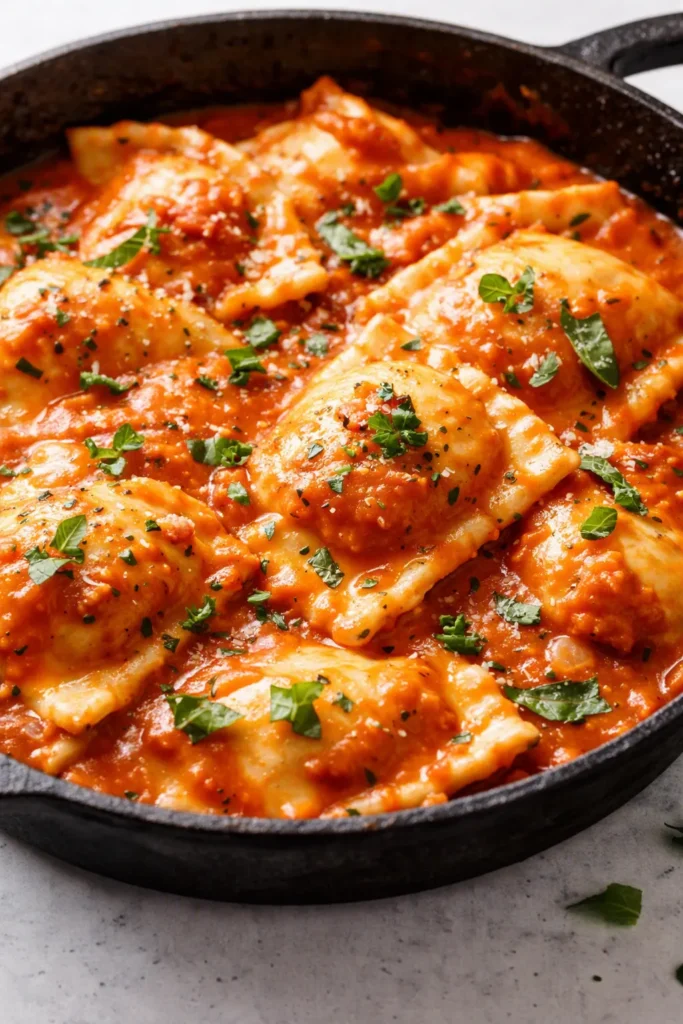
(Photo above: overhead shot of a wide skillet filled with silky orange sauce coating cheese ravioli, a spoon lifting one piece with a slow cream ribbon, fresh basil scattered on top, warm afternoon light from the left hitting the wooden spoon handle.)
The Two Tricks That Make This Taste Like It Simmered All Day
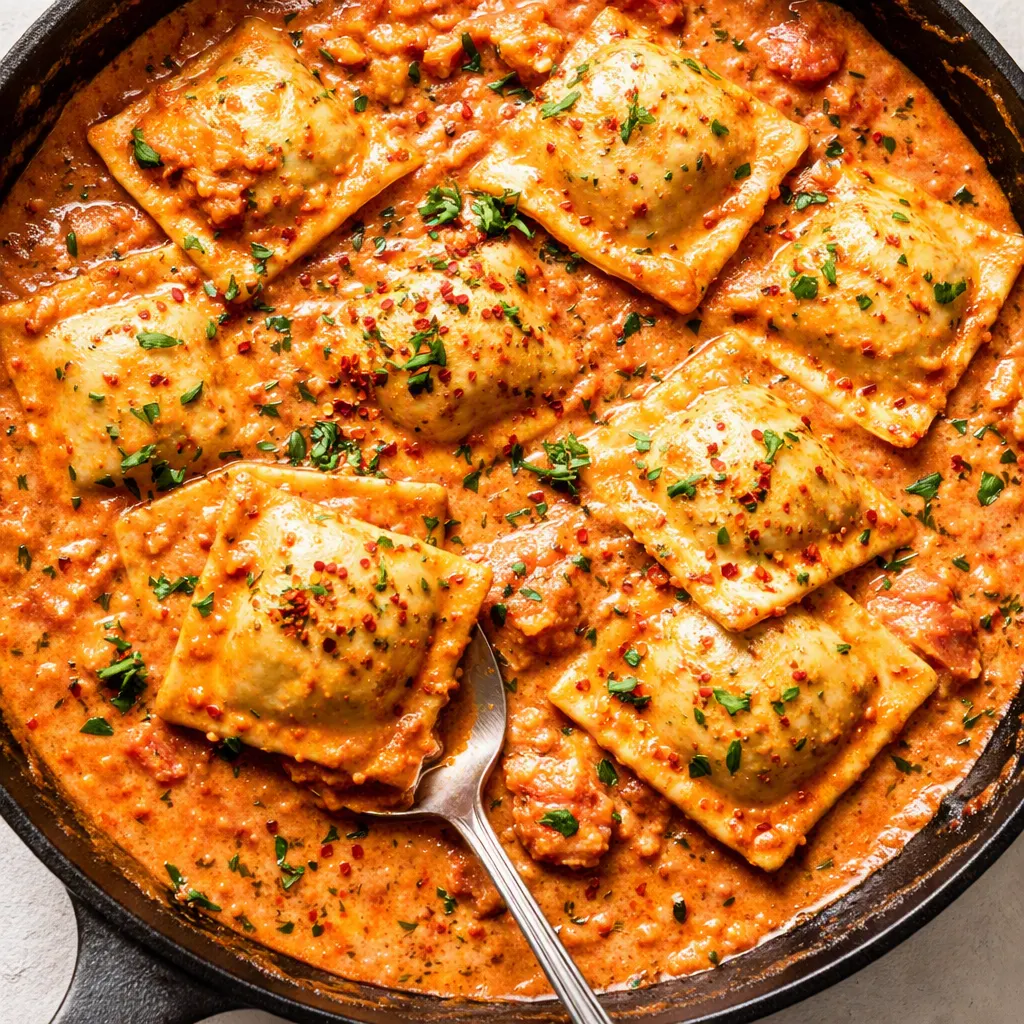
The first trick is browning the butter before anything else goes in the pan. I know it sounds extra, but those two little minutes while the butter sizzles and turns golden are where all the magic starts. The butter gets nutty and almost caramel-y, and that depth carries the whole sauce. The first time I made it, my husband asked if I’d used chicken stock. Nope. Just butter, going one shade further than usual.
The second trick is grating the onion instead of chopping it. A box grater turns that onion into a soft, juicy pulp that melts right into the sauce. Nobody’s fishing out chunks of onion at my house — which is a genuine victory — but you still get that sweet, savory backbone that made you want onion in the first place. Two quiet little tricks, and suddenly your sauce tastes like it spent the afternoon bubbling on the stove. It didn’t. It spent twenty minutes being paid attention to.
What Goes In (Plus My Honest Notes)
- 1 (20-ounce) package refrigerated or frozen ravioli: Any filling you love — my kids like cheese, I like mushroom. No judgement either way. Don’t use the dry shelf-stable kind here; the fresh or frozen ones have that tender, pillowy texture this sauce deserves.
- 1 (28-ounce) can whole peeled tomatoes: San Marzano if you can find them — they’re sweeter and less acidic. My grocery store keeps them on the top shelf and I genuinely climb for them. If you only have crushed tomatoes, that works too; you’ll just lose a little of the rustic texture before blending.
- 4 tablespoons salted butter: The star of the show. Don’t skip browning it. If you only have unsalted, that’s fine — just add a good pinch of salt at the end.
- 1 small yellow onion, grated: This disappears into the sauce like it was never there. My kids have no idea. I’m taking that secret to my grave.
- 3 garlic cloves, thinly sliced: Sliced, not minced, so it softens gently without burning. Burnt garlic is the fastest way to ruin a pan of otherwise-beautiful sauce.
- 1/2 cup heavy cream: Full fat, please. Half-and-half will work in a pinch but the sauce won’t be nearly as velvet-y. This is not the place to diet — it’s the place to make your family think you’re a hero.
- 1/2 cup grated Parmesan cheese, plus more for serving: Freshly grated, not the green can. The pre-shredded stuff has anti-caking powder that keeps it from melting smooth. You deserve the real thing here.
- 1/2 teaspoon red pepper flakes (optional): We do half for the kids and the full amount for the grown-up version after bedtime. A tiny pinch won’t make it spicy, just warm and a little exciting.
- 1 teaspoon sugar (optional): Only if your tomatoes taste extra tangy that day. Tomatoes are a crop, not a factory — some cans just need a little balancing.
- 1/2 cup reserved pasta water: The secret weapon. More on this in the steps below.
- Fresh basil leaves, for finishing: If you have them, it’s so good. If you don’t, the sauce still works. No stress either way.
- Kosher salt, to taste: Start with less than you think — Parmesan brings its own salt.
What to Pull Out Before You Start
- A large skillet — wide is better, because more surface area means the sauce simmers faster. A 12-inch one is perfect. If all you have is a taller saucepan, just add an extra minute or two to the simmer time.
- A box grater, for the onion. You’ll use the big holes.
- A wooden spoon or silicone spatula — something sturdy for crushing the tomatoes.
- A handheld immersion blender — my favorite, because you can blend right in the pan. A regular blender works too; you’ll just have to wash it, and I won’t apologize for being honest about that.
- A measuring cup, for the pasta water. The kind with a spout is ideal, but any measuring cup that can scoop from the pot works.
Let’s Make It (Step by Step)
This goes fast, so read through once before you start. Drop your ravioli into boiling salted water right around Step 5, and everything will land on the table at the same time — like you planned it all along. (You did. Nice work.)
- Melt and brown the butter: Warm the skillet over medium heat and add the butter. Let it melt, then keep going — it’ll foam, then settle, then turn golden-brown and smell nutty, about 2 minutes total. You’re looking for little brown flecks at the bottom of the pan and a smell like toasted hazelnuts. Those flecks are where the flavor lives. (📸 Photo tip: Your butter should look like melted caramel — warm amber, not dark brown, and definitely not black around the edges.)
- Soften the onion: Stir in the grated onion and cook, stirring now and then, until it’s soft and translucent — about 2 minutes. If you’re using the red pepper flakes, toss them in now so they bloom in the butter. This is the step that keeps everything from tasting flat later — worth every second.
- Add the garlic: Stir in the garlic slices and let them get fragrant — about 30 seconds. Don’t let them brown; just soft and happy.
- Add the tomatoes: Pour in the whole tomatoes with all their juice. Crush them with your spoon right in the pan — messy and satisfying. Let everything come up to a lively simmer, the kind with big, lazy bubbles. (📸 Photo tip: At this stage the sauce should be bright brick-red, looking a little jammy around the edges of the pan.)
- Simmer and start the ravioli: Let the sauce simmer for 8–10 minutes, just doing its thing. Meanwhile, bring a big pot of well-salted water to a boil and cook your ravioli according to the package directions — usually 3 to 5 minutes for refrigerated, a minute more for frozen. When it’s done, scoop out that precious pasta water before you drain. Don’t forget. I’ll remind you again below.
- Blend until silky: Blend the sauce right in the pan with your immersion blender until it’s as smooth as you like. I go fully smooth — my kids think it came out of a fancy restaurant. Taste a spoonful and add salt if it needs it. If your tomatoes taste extra tangy, stir in that teaspoon of sugar now.
- Add the cream — off the heat: Take the pan off the stove first. Stir in the heavy cream until it’s fully incorporated and the whole pan turns that gorgeous salmon-orange. Off the heat is the secret — cream that bubbles too hard can separate into greasy little pools. I’ve learned that the hard way twice, and I’m saving you from doing the same. (📸 Photo tip: The color shift is dramatic — from brick-red to sunset orange — with the sauce coating the back of your spoon like a ribbon.)
- Finish with Parmesan and pasta water: Stir in the grated Parmesan until melted, then splash in about 1/2 cup of the reserved pasta water. This is what makes the sauce glossy and silky instead of thick and pasty. The starch in that water is the binder that holds everything together. Two tablespoons at a time, until it looks just right — like it’s meant to coat a pillow of ravioli, not bury it.
- Toss with the ravioli: Gently add the cooked ravioli to the sauce and toss until every piece is well-dressed. Let it sit for a minute in the warm pan so the ravioli soaks up a little flavor. Top with fresh basil and another shower of Parmesan — I always do, no regrets. Serve right away, before the kids hover too close to the pan.
Make-Ahead Notes (Because We’re All Busy)
I make a double batch of this sauce on Sundays and we’re set for two ravioli nights plus one pasta night — it’s so good that nobody in my house gets sick of it. The key is storing the sauce without the ravioli, because pasta will soak up the sauce overnight and turn into sad little balloons. Keep them separate and you’re golden.
- Fridge: Store the sauce in an airtight container for up to 4 days. Reheat gently on the stove over low heat, adding a splash of water or milk to bring back that silky texture.
- Freezer: Absolutely! The sauce freezes beautifully for up to 3 months. I freeze it in single-serving jars — leave about an inch of headroom so it has room to expand — and thaw in the fridge overnight.
- Reheat: Stovetop over medium-low, stirring, until just bubbling. The microwave works in a pinch, but it’s honestly not as creamy — the gentle heat makes such a difference. If you’re microwaving, do 30-second bursts and stir between each one.
Things I Wish I’d Known the First Time
- Brown butter is not burned butter: This is the thin line between “nutty and delicious” and “sad and bitter.” If the butter smells burnt or looks dark brown, scrape it out and start over. It’s 2 minutes — no big deal, and definitely worth doing right.
- Use a splatter guard if you’re blending hot liquid: I have a story. A splatter guard over a tall pot — or blending in the pan with an immersion blender — will save your shirt, your stovetop, and possibly your marriage. Trust me on this one. My husband still jokes about the “tomato incident,” and it was not funny at the time.
- Scoop the pasta water BEFORE you drain: I forget this roughly every third time I make pasta. That starchy water is the difference between a sauce that’s glossy and one that’s gluey. If you do forget, plain hot water works, but the sauce just won’t have quite the same shine.
- Even if you mess this up a little, it’s still good: If the cream separates, or you over-blend and the sauce gets a little sloppy, pour it over the ravioli anyway and add extra Parmesan. I’ve served plenty of “rustic” sauce to my family, and nobody’s ever sent it back. You’ve got this next time.
Swaps That Actually Work
- Dairy-Free: Swap the butter for olive oil — you lose a little nuttiness but gain a peppery kick — and swap the cream for full-fat oat or cashew milk. Coconut milk works in a pinch, but heads up: it makes the sauce slightly sweet, which isn’t my favorite with tomatoes. My dairy-free sister-in-law asked for the recipe after I made it for her, so it passes the family test.
- Spicy: Use a full teaspoon of red pepper flakes plus a pinch of cayenne. My husband and I do this while the kids get the mild base. One pan, two vibes — that’s the dream.
- Extra Veg: Sauté 1 cup of diced mushrooms or sliced zucchini before the onion, and blend them right in with the tomatoes. My kids have genuinely never noticed. That’s a win I count.
- Company’s Coming: Finish with a drizzle of balsamic glaze and some torn fresh mozzarella on top. It turns this into something I’d order at a date-night place, minus the candlelight.
- Out of Heavy Cream: Plain whole-milk Greek yogurt, stirred in off the heat, works better than you’d think — just don’t let it boil, or it’ll break. The sauce will be slightly tangier, but that’s actually lovely with tomato.
Questions I Get About This Recipe All the Time
Q: Why did my sauce turn out greasy?
Ugh, I’ve been there. Greasy usually means the cream got too hot and separated, splitting the butterfat away from the liquid. That’s exactly why I’m such a broken record about adding the cream off the heat — it needs gentle, not aggressive. If it does happen, whisk quickly with a tiny splash of cold cream to coax it back together. Or just pour it over the ravioli anyway and call it rustic — nobody will actually complain.
Q: Can I make this dairy-free?
Yes! I’ve tested this one and it works. Use olive oil instead of butter and full-fat oat milk or cashew milk instead of heavy cream. The sauce will be a little less lush, I won’t lie to you, but it’s still creamy and satisfying. My dairy-free sister-in-law has requested it at family dinners more than once.
Q: How long does this sauce last in the fridge? Can I freeze it?
Four days in an airtight container in the fridge is the sweet spot. And yes — it freezes beautifully for up to 3 months. Store it in a jar with an inch of headroom, thaw it overnight in the fridge, and reheat gently on the stovetop. Do not rush it with rapid boiling; a gentle warm-up keeps it silky. It’ll taste just like Sunday on a Wednesday.
Q: What should I serve with this ravioli sauce?
The obvious answer is ravioli — I love the refrigerated ones with spinach or mushroom filling. But I also pour this over cheese tortellini, spoon it over pan-seared chicken for a quick dinner, or serve it on the side with garlic bread for dunking. My kids’ favorite is the garlic bread version — they call it “dipping night” and act shocked every time I set the table, like it’s a theme park reveal.
More Recipes My Family Makes on Repeat
If this one lands at your house, here are a few more that get the same reaction at ours:
- [INTERNAL LINK PLACEHOLDER: One-Pot Creamy Tomato Pasta] — The pantry-pasta version of this same magic, no blender required.
- [INTERNAL LINK PLACEHOLDER: Cheesy Garlic Bread Pull-Aparts] — The dunking companion that makes my kids request “dipping night” every single week.
- [INTERNAL LINK PLACEHOLDER: My Sunday Marinara with Meatballs] — Slower and richer, for the weekend when you want the full Italian grandmother energy.
That’s it — my lazy-weekend-anytime, enough-for-leftovers, tastes-like-you-tried-harder-than-you-did ravioli sauce. Whether it’s a no-time-for-nothing Tuesday with backpacks on the floor, or a slow Sunday with sweet tea going, I hope this sauce makes your kitchen feel like the best place to be. That’s what it does at mine.
If you try it, drop a comment below and let me know how it went — I love hearing about the “no leftovers” wins and the “my kid asked for seconds” reports. And tag me on Pinterest or Instagram with your skillet, please. I’ll be cheering for you.
📌 This 20-minute creamy tomato ravioli sauce recipe is the one to save for busy weeknights when you still want dinner that feels like a hug.
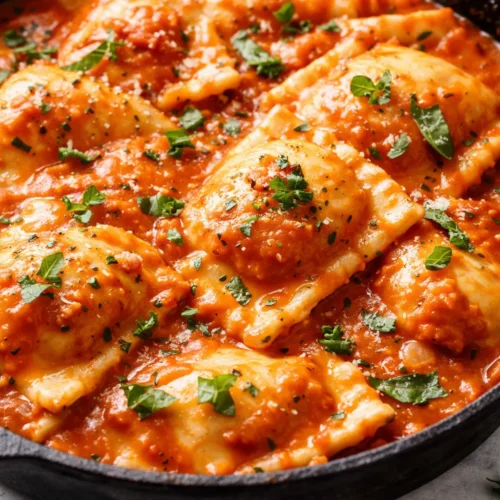
Creamy Tomato Ravioli Sauce That Tastes Slow-Simmered in 20 Minutes
Equipment
- Large Skillet (12-inch)
- Box grater
- Immersion Blender
- Measuring Cup
Ingredients
- 1 package refrigerated or frozen ravioli (20 oz)
- 1 (28-ounce) can whole peeled tomatoes, preferably San Marzano
- 4 tablespoons salted butter
- 1 small yellow onion, grated
- 3 cloves garlic, thinly sliced
- 1/2 cup heavy cream
- 1/2 cup grated Parmesan cheese, plus more for serving
- 1/2 teaspoon red pepper flakes (optional)
- 1 teaspoon sugar (optional, to balance tangy tomatoes)
- 1/2 cup reserved pasta water
- fresh basil leaves, for finishing
- kosher salt, to taste
Instructions
- Melt the butter in a large skillet over medium heat and continue cooking until it foams, then turns golden-brown and smells nutty, about 2 minutes. Watch for little brown flecks.
- Stir in the grated onion and cook until soft and translucent, about 2 minutes. Add the red pepper flakes now if using.
- Add the garlic slices and cook about 30 seconds until fragrant, without browning.
- Pour in the whole tomatoes with their juice, crushing them with a spoon. Bring to a lively simmer.
- Let the sauce simmer for 8 to 10 minutes. Meanwhile, cook the ravioli in well-salted boiling water according to package directions; reserve 1/2 cup pasta water before draining.
- Blend the sauce with an immersion blender until silky. Taste and add salt, plus sugar if the tomatoes are tangy.
- Remove the pan from the heat and stir in the heavy cream until the sauce turns salmon-orange.
- Stir in the Parmesan until melted, then add reserved pasta water a couple tablespoons at a time until the sauce is glossy.
- Add the cooked ravioli and toss gently to coat. Let sit 1 minute, then top with fresh basil and more Parmesan. Serve right away.
Notes
Related Recipes:
 Cheesy Hamburger Casserole Bake That’s Ready in 40 Minutes (No Canned Soup Here)
 Creamy Garlic Tagliatelle That Looks Like a Restaurant Dish in 20 Minutes
 Texas Roadhouse Style Baked Salmon with Sweet and Savory Glaze — Ready in Under 30 Minutes
 Easy Italian Meatloaf That’s Actually Juicy (Not Dry) — in 1 Hour
 The Biscuits and Gravy Casserole That’s Actually Crispy on Top (And Ready in 40 Minutes)
 Air Fryer Chicken and Vegetables That Don’t Taste Like a Regret (30 Minutes, One Pan)