
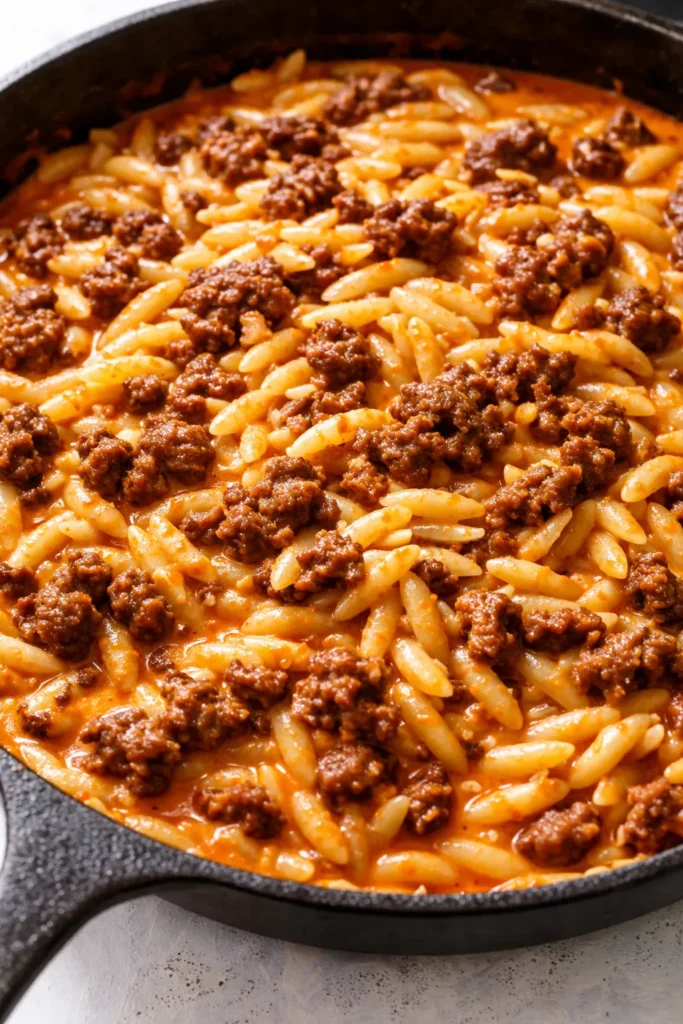
That first bite — when the orzo is just barely holding its shape, the tomato cream is coating every single piece, and the ground beef has browned in a way that makes the whole kitchen smell like a Sunday that landed on a Wednesday — is why this has become my most-requested dinner. Not just from friends who show up hungry, but from the group chat where someone texts “what should I make tonight” and three people send the same recipe link before I can even respond.
The short version: One pot, 30 minutes, ground beef and orzo in a tomato cream sauce that tastes like it cooked all day.
A friend of mine who “doesn’t really cook” has made this four times in the last three weeks. That’s the kind of statistic that matters more than any star rating.
- Serves: 4 as a main
- Hands-On Time: 10 min | Total Time: 30 min
- Difficulty: Easy — if you can brown meat and stir, you’ve got this
- Cost per serving: ~$3.50
- Calories: ~490 per serving
- Dietary Notes: Naturally nut-free; adaptable for gluten-free and dairy-free
(Photo above: overhead shot of a white Dutch oven on a trivet, the orzo visible at the edge of the pot with steam rising — a single fork resting on the rim, warm afternoon light from the right, the sauce clinging to the pasta in that perfect creamy-but-not-thick way.)
The Thing That Makes This Actually Work (Not Just Another Ground Beef Pasta)
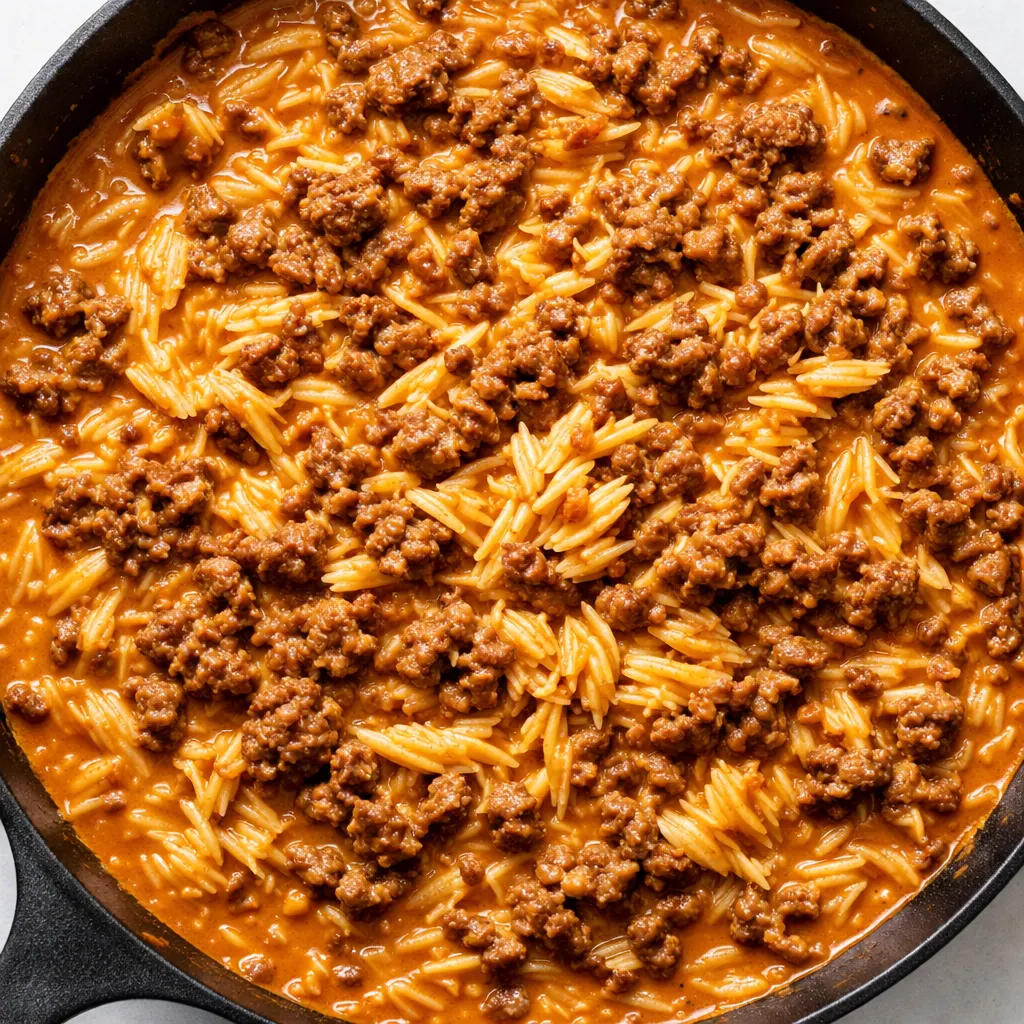
The first time I made orzo this way, the pasta soaked up all the liquid and turned into a mushy mess. Not terrible, but not the version you want to serve someone you’re trying to impress. The fix turned out to be one tiny adjustment: don’t cook the orzo in the sauce. Cook it in broth first, then add the sauce at the end. The orzo stays separate, the sauce stays saucy, and every bite has the right ratio of pasta to cream to tomato.
The other thing that matters more than you think: browning the beef in a single layer and then letting it sit undisturbed for a full 3 minutes before stirring. That gives you actual browned bits on the bottom of the pot — not gray meat that’s been steamed in its own juice. Those browned bits are the flavor foundation. Skip them and the whole dish tastes flat.
What you end up with is a one-pot dinner that feels like it took effort but actually didn’t. The kind of thing you make on a Tuesday when you want to feel like you have your life together, even if the rest of the day suggested otherwise.
Ingredients Worth Talking About
- 1 lb ground beef (85/15): The 85/15 ratio is the sweet spot — enough fat to brown beautifully and keep the meat tender, not so much that the sauce gets greasy. I’ve tried 90/10 and it’s drier than I like; 80/20 works but you’ll want to drain off some fat after browning. My go-to is whatever’s on sale at the butcher counter — I just look for that 85/15 label.
- 1 cup orzo: The shape matters here — orzo’s tiny size means it cooks fast and catches sauce in every nook. Don’t substitute a larger pasta shape without adjusting the liquid and timing. I learned that the hard way one night when I was out of orzo and tried ditalini. It was fine. Not the same.
- 1 can (14.5 oz) crushed tomatoes: Crushed, not diced. Diced tomatoes don’t break down enough in 30 minutes and leave you with uneven chunks. If all you have are whole peeled tomatoes, crush them by hand in a bowl before adding — it takes 30 seconds and works perfectly.
- 1/2 cup heavy cream: This is what turns the tomato sauce from bright and sharp into something velvety and calm. Pour it in at the very end, off the heat, or it might separate. I’ve done it wrong before. It still tastes fine but it looks like a regret.
- 1 small yellow onion, finely diced: The smaller you dice it, the more it melts into the sauce. My trick: grate it on a box grater instead of dicing. You get all the flavor with none of the texture fuss. My friends who hate chunks of onion in things have no idea it’s in there.
- 3 cloves garlic, minced: Don’t skip it and don’t use the jarred stuff. Fresh matters here. I keep a head of garlic on the counter specifically for this recipe.
- 2 cups beef broth: Use a good one — this is the liquid the orzo cooks in and it needs to taste like something. Better Than Bouillon is my lazy-day secret. One jar lives in my fridge door year-round.
- 1 tsp dried oregano: The dried version works better here than fresh. It needs time to soften into the sauce. I add this with the tomatoes so it has a chance to bloom.
- Salt and black pepper: More than you think. I season the beef as it browns, then add a pinch more before the cream goes in. Layers of salt are the difference between a dish that tastes seasoned and one that tastes salted.
- Fresh parsley or basil for finishing: Not optional if you want the dish to look like the photo. Place the leaves, don’t scatter them. I use basil in summer and parsley in winter, but honestly, either works. Just don’t use dried herbs as a garnish — that’s a different thing entirely.
What to Pull Out Before You Start
- A large Dutch oven or heavy pot (5–6 quart): You need the surface area for browning the beef and the depth for simmering the pasta. A wide-bottomed pot works best — the wider the better for getting a good sear on the meat.
- A wooden spoon or spatula: For scraping up the browned bits. A metal spoon can scratch enameled cast iron, so wooden or silicone is safest.
- A box grater: For the onion if you’re using my grate-it trick. Also good for the garlic if you want to save a step.
- A liquid measuring cup: 2-cup size is perfect for the broth.
The only non-negotiable here is the pot. Don’t try this in a shallow skillet — you won’t have enough room for the liquid the orzo needs to cook.
Let’s Make It — My Exact Process
This goes faster than you think, so read through the whole thing once before you start. The active time is minimal, but the order matters.
Prep first: Dice the onion, mince the garlic, measure the broth and crushed tomatoes. Once you start cooking, there won’t be time to stop and chop.
- Brown the beef: Heat 1 tablespoon of olive oil in your Dutch oven over medium-high heat. Add the ground beef in one even layer — don’t pile it. Let it cook undisturbed for 3 minutes until the bottom is deeply browned. Then break it apart with your spoon and cook another 2–3 minutes, stirring occasionally, until the meat is browned throughout. Season with 1/2 teaspoon salt and 1/4 teaspoon pepper. Use a slotted spoon to transfer the beef to a bowl, leaving the fat in the pot. (📸 Photo tip: You should see dark brown bits stuck to the bottom of the pot — that’s what you want. If the pot looks clean, the heat wasn’t high enough or you stirred too soon.)
- Sweat the onion: Reduce heat to medium. Add the diced onion to the pot with the remaining fat and cook 3–4 minutes, stirring occasionally, until softened and translucent. It should smell sweet, not sharp. If the pot looks dry, add a splash of olive oil.
- Bloom the garlic and oregano: Add the minced garlic and dried oregano. Stir constantly for 30 seconds until fragrant. Don’t let the garlic brown — it turns bitter fast. I literally count to 15 Mississippis and move on.
- Deglaze the pot: Pour in about 1/2 cup of the beef broth and scrape the bottom of the pot with your wooden spoon to release all those browned bits. This takes about 30 seconds and is the step people skip, which is why their sauce tastes flat.
- Cook the orzo: Add the remaining 1 1/2 cups broth and the crushed tomatoes to the pot. Stir to combine. Bring to a simmer, then add the orzo. Stir well, reduce heat to medium-low, cover, and cook for 12 minutes. Stir once halfway through to make sure nothing is sticking to the bottom. (📸 Photo tip: After 12 minutes, lift the lid — the orzo should have absorbed most of the liquid and look plump and tender. If there’s still a lot of liquid, cook uncovered for 2 more minutes.)
- Return the beef: Add the browned beef back to the pot. Stir to combine and heat through, about 1 minute. Taste and adjust salt and pepper here — this is your last chance before the cream goes in.
- Finish with cream: Remove the pot from the heat entirely. Pour in the heavy cream and stir gently until the sauce is uniformly pink-orange and velvety. The residual heat will warm it through without curdling. Don’t put the pot back on the heat after adding cream — it can separate and you’ll have a greasy sauce instead of a silky one.
- Rest and serve: Let it sit for 2 minutes off the heat. This lets the sauce settle and thicken slightly. Spoon into bowls, top with fresh basil or parsley that you’ve placed (not scattered), and serve immediately.
How I Meal Prep This for the Week
This recipe is my Sunday reset dinner — I make it on a weeknight when I know the next day will be chaos. The leftovers are genuinely better on day two, which is rare for a pasta dish. The orzo absorbs just a little more sauce overnight and everything gets more cohesive.
- Fridge: Store in an airtight container for up to 4 days. The sauce will thicken as it sits — add a splash of water or broth when reheating to loosen it back up.
- Freezer: Not my favorite for this one. Orzo gets mushy when frozen and thawed. If you must, freeze the sauce and beef separately and cook fresh orzo when you’re ready to serve. But honestly, it’s so quick to make that I’d rather just make it fresh.
- Reheat: In a skillet over medium-low heat with a splash of water or broth, stirring occasionally. The microwave works in a pinch but the skillet does a better job of reviving the texture. Takes about 5 minutes.
Things I Wish I’d Known the First Time
- The orzo-to-liquid ratio is not a suggestion: I tried to “eye it” once and ended up with a pilaf situation. The 1 cup orzo to 2 cups liquid ratio is specific and it works. Trust the measurement.
- Let the beef rest while the orzo cooks: Don’t add the beef back too early or it will overcook and get tough. It’s already fully cooked — it just needs to warm through at the end.
- If the sauce seems thin at the end, don’t panic: The orzo will continue absorbing liquid for the first few minutes off the heat. Give it a 2-minute rest before you decide it needs fixing. If it’s still thin, stir in a teaspoon of tomato paste — it thickens and adds a flavor punch.
- Season every layer: Salt the beef as it browns, salt the onion as it cooks, and taste before the cream goes in. This is the single biggest difference between home-cooked pasta that tastes flat and the version you’d actually order again.
Swaps That Actually Work
- Gluten-Free: Use gluten-free orzo (it exists! I like the DeLallo brand) or substitute with 1 cup of white rice — cook it in the same liquid but give it 15–18 minutes instead of 12. Texture is different but still delicious.
- Dairy-Free: Swap the heavy cream for full-fat coconut cream (the thick part from a can of coconut milk). The flavor shifts slightly — more coconut, less cream — but it still works beautifully. I’ve made this for a friend who can’t do dairy and she asked for the recipe before she even finished eating.
- Lower-Fat: Use ground turkey or chicken instead of beef, and swap the cream for half-and-half. The sauce won’t be as lush but it’s still satisfying. Add an extra tablespoon of olive oil to compensate for the leaner meat.
- Spicy Version: Add 1/2 teaspoon red pepper flakes with the garlic. Or finish with a drizzle of chili crisp before serving. This is how I make it for myself when nobody else is eating — the chili crisp adds crunch and heat and makes the whole thing sing.
- Vegetarian Version: Skip the beef and use 2 cups of cremini mushrooms, finely chopped and browned in the same way. Use vegetable broth instead of beef broth. It’s a completely different dish but one I make often for myself on meatless nights.
Questions I Get About This Recipe All the Time
Q: Why did my orzo come out mushy instead of al dente?
A: Ugh, I hate when that happens. It usually means one of two things: the heat was too high and the liquid cooked off too fast, leaving the orzo to steam instead of simmer — or you stirred too much during cooking and broke the starches loose. Next time, keep it at a gentle simmer (not a boil) and only stir halfway through. Also check your orzo brand — some cook faster than others. Taste at 10 minutes and adjust from there.
Q: Can I make this dairy-free without coconut milk?
A: Yes — use 1/2 cup of unsweetened oat milk or cashew milk mixed with 1 tablespoon of nutritional yeast for a creamy finish. The nutritional yeast adds a savory note that mimics the richness of dairy. I haven’t tested this with almond milk, but I’ve heard from readers that it works if you use the thick kind.
Q: How long does this last in the fridge? Can I freeze it?
A: Fridge — up to 4 days in an airtight container, no question. It’s honestly better on day two when the flavors have settled. Freezer — I don’t recommend it. Orzo gets soft and loses its structure when frozen and thawed. If you want a freezer-friendly version, cook the sauce and beef separately and freeze those, then cook fresh orzo the day you serve it.
Q: What do you serve with this?
A: I keep it simple: a green salad with a lemon vinaigrette (the acid cuts the richness) and crusty bread for sopping up any sauce left in the bowl. If I’m feeling fancy, I’ll do a quick arugula salad with shaved Parmesan and a drizzle of olive oil — the peppery greens and salty cheese are perfect against the creamy tomato sauce. My friends always ask for seconds of the salad too.
More Recipes My Family Makes on Repeat
If you liked this one, here are a few others that get the same reaction at our table:
- One-Pan Lemon Chicken and Rice — The kind of dinner that makes the whole kitchen smell like a Sunday and leaves zero dishes
- Creamy White Bean and Spinach Skillet — Ready in 20 minutes, one pan, and somehow tastes better than anything you’d order in
- Garlic Butter Shrimp with Orzo — When you want the same one-pot energy but something that feels a little more dressed up
This is the kind of dinner I make when I want to feel like I’ve got my act together even though I definitely didn’t meal plan. Set the pot on the table with a ladle and a stack of bowls and let everyone serve themselves. That first scoop — when the steam hits your face and you see the cream and tomato swirling together — is the moment it all makes sense.
If you try it, drop a comment below — I love hearing how it goes for you! Tag me on Pinterest or Instagram so I can see yours.
📌 This creamy ground beef orzo recipe comes together in one pot in 30 minutes — save it for the weeknight when you need dinner that feels like more than it is.
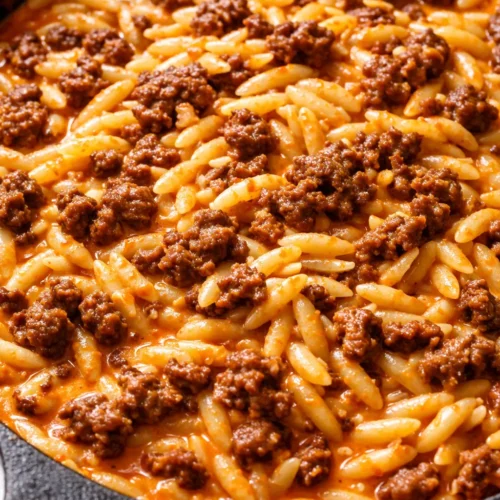
Creamy Ground Beef Orzo That Tastes Like It Simmered for Hours — in 30 Minutes, One Pot
Equipment
- Dutch Oven (5-6 quart)
- Wooden Spoon
- Box grater
- Liquid Measuring Cup
Ingredients
- 1 tablespoon olive oil
- 1 lb ground beef (85/15)
- 1 cup orzo
- 1 can (14.5 oz) crushed tomatoes
- 1/2 cup heavy cream
- 1 small yellow onion, finely diced
- 3 cloves garlic, minced
- 2 cups beef broth
- 1 teaspoon dried oregano
- 1/2 teaspoon salt (plus more to taste)
- 1/4 teaspoon black pepper (plus more to taste)
- fresh basil or parsley for garnish
Instructions
- Brown the beef: Heat 1 tablespoon of olive oil in your Dutch oven over medium-high heat. Add the ground beef in one even layer — don’t pile it. Let it cook undisturbed for 3 minutes until the bottom is deeply browned. Then break it apart with your spoon and cook another 2–3 minutes, stirring occasionally, until the meat is browned throughout. Season with 1/2 teaspoon salt and 1/4 teaspoon pepper. Use a slotted spoon to transfer the beef to a bowl, leaving the fat in the pot. (📸 Photo tip: You should see dark brown bits stuck to the bottom of the pot — that’s what you want. If the pot looks clean, the heat wasn’t high enough or you stirred too soon.)
- Sweat the onion: Reduce heat to medium. Add the diced onion to the pot with the remaining fat and cook 3–4 minutes, stirring occasionally, until softened and translucent. It should smell sweet, not sharp. If the pot looks dry, add a splash of olive oil.
- Bloom the garlic and oregano: Add the minced garlic and dried oregano. Stir constantly for 30 seconds until fragrant. Don’t let the garlic brown — it turns bitter fast. I literally count to 15 Mississippis and move on.
- Deglaze the pot: Pour in about 1/2 cup of the beef broth and scrape the bottom of the pot with your wooden spoon to release all those browned bits. This takes about 30 seconds and is the step people skip, which is why their sauce tastes flat.
- Cook the orzo: Add the remaining 1 1/2 cups broth and the crushed tomatoes to the pot. Stir to combine. Bring to a simmer, then add the orzo. Stir well, reduce heat to medium-low, cover, and cook for 12 minutes. Stir once halfway through to make sure nothing is sticking to the bottom. (📸 Photo tip: After 12 minutes, lift the lid — the orzo should have absorbed most of the liquid and look plump and tender. If there’s still a lot of liquid, cook uncovered for 2 more minutes.)
- Return the beef: Add the browned beef back to the pot. Stir to combine and heat through, about 1 minute. Taste and adjust salt and pepper here — this is your last chance before the cream goes in.
- Finish with cream: Remove the pot from the heat entirely. Pour in the heavy cream and stir gently until the sauce is uniformly pink-orange and velvety. The residual heat will warm it through without curdling. Don’t put the pot back on the heat after adding cream — it can separate and you’ll have a greasy sauce instead of a silky one.
- Rest and serve: Let it sit for 2 minutes off the heat. This lets the sauce settle and thicken slightly. Spoon into bowls, top with fresh basil or parsley that you’ve placed (not scattered), and serve immediately.
Notes
Related Recipes:
 Cheesy Hamburger Casserole Bake That’s Ready in 40 Minutes (No Canned Soup Here)
 Creamy Garlic Tagliatelle That Looks Like a Restaurant Dish in 20 Minutes
 Texas Roadhouse Style Baked Salmon with Sweet and Savory Glaze — Ready in Under 30 Minutes
 Easy Italian Meatloaf That’s Actually Juicy (Not Dry) — in 1 Hour
 The Biscuits and Gravy Casserole That’s Actually Crispy on Top (And Ready in 40 Minutes)
 Creamy Rotel Pasta with Ground Beef That’s Ready in 30 Minutes (No Cans of Soup!)