
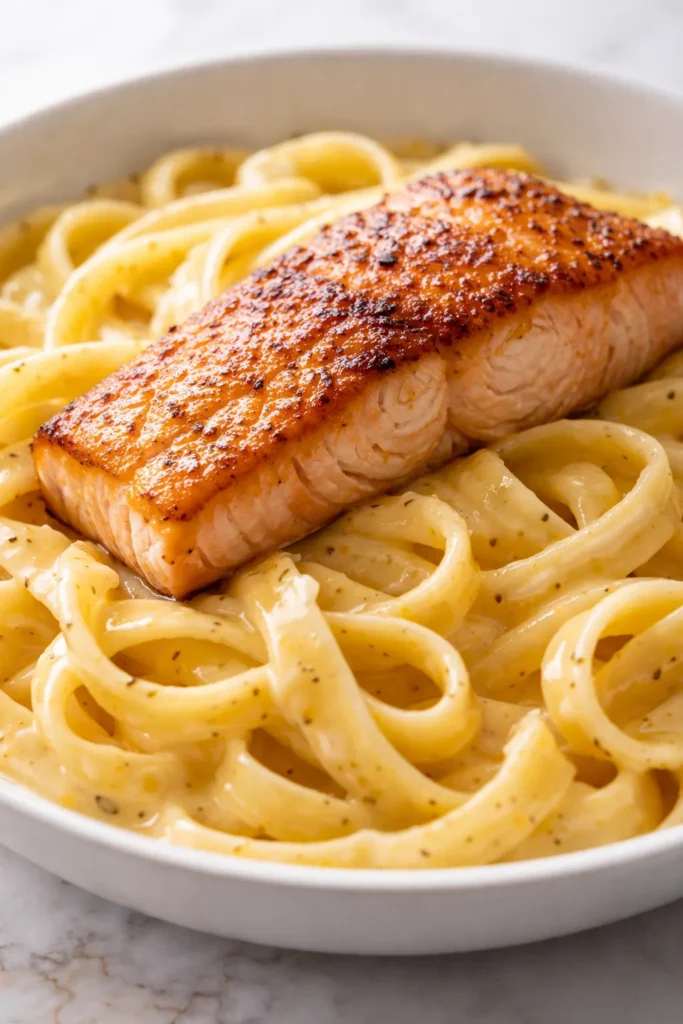
That first bite — when the salmon flakes against the fork and the creamy garlic butter sauce coats every strand of pasta — is the reason I keep coming back to this recipe. It’s the kind of dish that makes you slow down and actually taste what you’re eating, even on a Tuesday when you’ve got a full inbox and the dishwasher needs unloading. The sauce is rich but not heavy, the salmon stays silky in the center, and the whole thing comes together in about the time it takes to watch one episode of something.
The short version: Seared salmon, a luscious garlic butter cream sauce, and al dente pasta — all on the table in 30 minutes, no fancy techniques required.
I’ve made this version for friends who swore they couldn’t cook salmon without drying it out, for a date-night where I wanted to look like I’d spent hours (I hadn’t), and for myself on a random Wednesday when I needed a proper meal. Every time, the bowl comes back clean.
- Serves: 4 as a main
- Hands-On Time: 20 min | Total Time: 30 min
- Difficulty: Easy — the hardest part is not eating the salmon straight out of the pan
- Cost per serving: ~$4.50 (using fresh salmon and pantry staples)
- Calories: ~580 per serving
- Dietary Notes: Naturally gluten-free if you use GF pasta; can be made dairy-free with a swap (see variations)
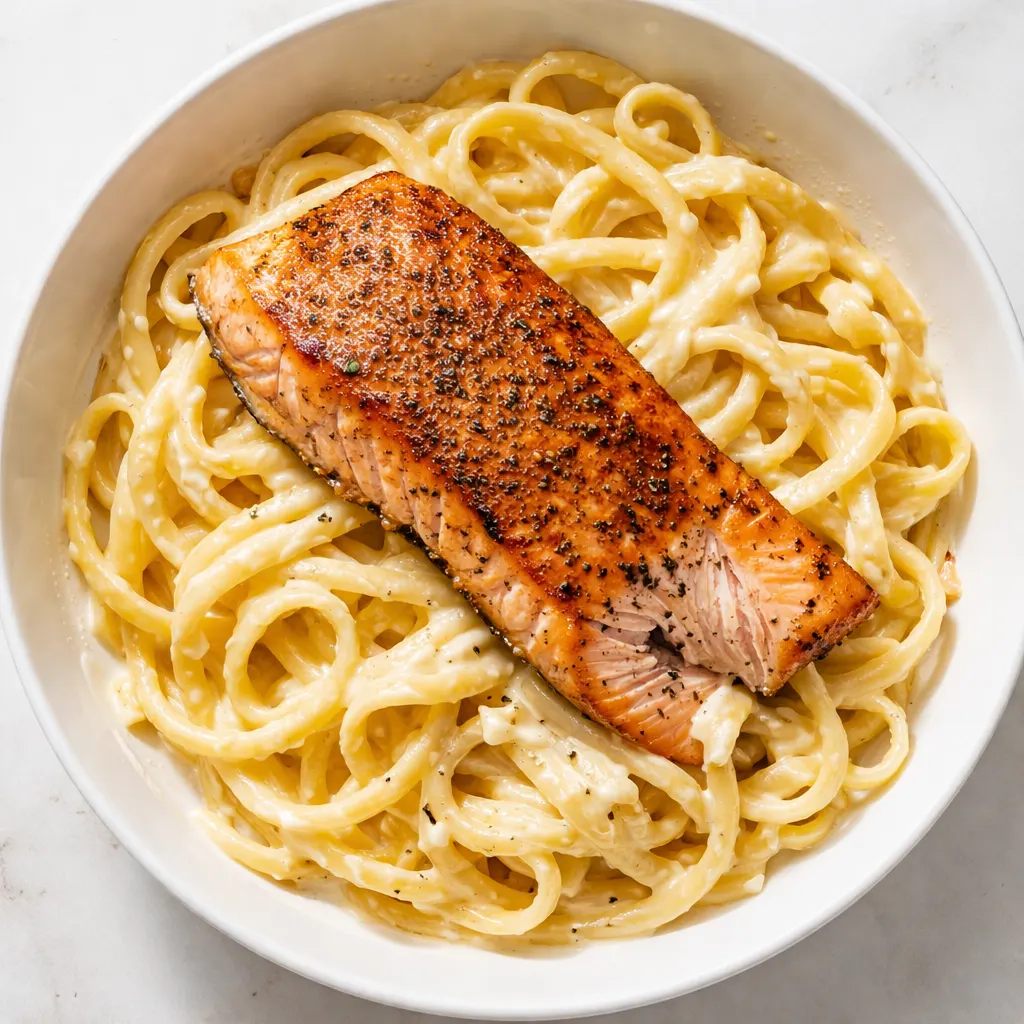
(Photo above: an overhead shot of the finished pasta in a wide shallow bowl — creamy sauce pooled around the edges, a piece of seared salmon resting on top with a crisp golden crust, fresh dill and cracked black pepper scattered intentionally, natural window light from the left highlighting the sheen on the sauce.)
Why This Works Better Than the Takeout Version
The secret isn’t a secret ingredient — it’s the order of operations. Most recipes cook the salmon first, then remove it, then build the sauce in the same pan. That works. But this version takes it a step further by deglazing the pan with a splash of white wine (or broth) after the salmon comes out, scraping up all those browned bits. Those bits are pure flavor — they’re what make the sauce taste like it simmered for an hour, not ten minutes.
And the garlic? You don’t just toss it in raw. You cook it gently in butter until it’s fragrant but not browned — browned garlic turns bitter. That little moment of patience changes the whole sauce from harsh to sweet and savory.
The result is a sauce that clings to the pasta like it belongs there, not a thin, watery cream sauce that slides off. One pan, thirty minutes, and a bowl you’ll want to photograph before you eat it.
Everything You Need (And a Few Notes From Me)
- 12 oz salmon fillet (skin-on or skinless): Look for a center-cut piece about 1 inch thick — it cooks evenly and stays moist. Skin-on gives you that crispy edge if you sear it skin-side down first. I buy one big fillet and slice it into portions after cooking — less risk of overcooking individual pieces.
- 8 oz pasta (fettuccine, linguine, or pappardelle): Long, flat noodles are best — they catch the creamy sauce in every fold. My go-to is fettuccine because it feels fancy but it’s everywhere.
- 3 tbsp unsalted butter: You’ll use some for the salmon and some for the sauce. Don’t substitute margarine — the flavor difference is noticeable.
- 4 cloves garlic, minced: Fresh only — pre-minced jarred garlic has a sour note that ruins the sauce. I keep a garlic rock (one of those ceramic grinders) on my counter just for this recipe.
- 1 cup heavy cream: This is where the richness comes from. Half-and-half works but you’ll get a thinner sauce — still good, just less luxurious.
- ¼ cup grated Parmesan cheese (real Parmigiano-Reggiano, not the green can): It adds saltiness and body to the sauce. The pre-grated stuff has anti-caking agents that make the sauce grainy — grate it yourself, it takes 30 seconds.
- ¼ cup dry white wine or chicken broth: White wine adds acidity that balances the cream; broth works for a non-alcoholic version. I always have a bottle of Sauvignon Blanc open for cooking — it’s also what I drink while I cook.
- Salt, black pepper, red pepper flakes (optional): Season the salmon generously before searing. A pinch of red pepper flakes in the sauce gives a warm finish without heat.
- Fresh dill or parsley for garnish: Dill is classic with salmon — chop it fine and scatter, don’t drop from a height. If you only have parsley, use flat-leaf and add it off the heat so it doesn’t wilt.
What to Pull Out Before You Start
- Large pot for pasta (4-quart or bigger)
- Large skillet (12-inch, nonstick or stainless — cast iron works too but you’ll need a little more butter to prevent sticking)
- Tongs for flipping the salmon
- Wooden spoon or spatula
- Microplane or fine grater for the Parmesan
- Measuring spoons and a liquid measuring cup
That’s it. Nothing weird. If you don’t have a microplane, just grate the Parmesan on the small holes of a box grater — it’s fine.
Let’s Make It (Step by Step)
This goes fast, so read through once before you start. The pasta and sauce cook at the same time, so set a timer for the pasta and don’t wander off.
Prep: Bring a large pot of salted water to a boil. Pat the salmon dry with paper towels — moisture is the enemy of a good sear.
- Cook the pasta: Drop the pasta into the boiling water and cook 1 minute less than the package directions for al dente. Reserve 1 cup of pasta water before draining. (📸 Photo tip: When you lift a strand out and bite it, there should be a tiny white dot in the center — that’s your al dente cue.)
- Season and sear the salmon: While the pasta cooks, season the salmon generously with salt and pepper on both sides. Heat 1 tbsp butter in the skillet over medium-high heat. Place the salmon skin-side down (if skin-on) and cook without moving for 4 minutes — you’ll see the edges turn opaque and a golden crust form. Flip and cook for 2 minutes more for medium (the center will be just warm and slightly translucent). Transfer the salmon to a plate and tent with foil. Don’t rinse the pan — those browned bits are gold.
- Build the garlic butter base: Reduce heat to medium. Add remaining 2 tbsp butter to the same pan. Once it melts, add the minced garlic and a pinch of red pepper flakes if using. Cook for 30 seconds, stirring constantly, until fragrant. If the garlic starts to brown, pull the pan off the heat briefly — we want golden, not burnt. (📸 Photo tip: At this point you should see the butter foam and the garlic just start to sizzle — that’s the sweet spot.)
- Deglaze and build the sauce: Pour in the white wine (or broth) and scrape up any browned bits from the bottom with your wooden spoon. Let it bubble for 1 minute until reduced by half. Add the heavy cream and bring to a gentle simmer — don’t let it boil hard or the cream may separate. Let it cook for 2 minutes, stirring occasionally, until slightly thickened.
- Finish the sauce: Turn off the heat. Stir in the grated Parmesan and a generous pinch of black pepper. If the sauce seems too thick, add a splash of the reserved pasta water — the starch in the water helps the sauce cling to the pasta.
- Combine pasta and sauce: Add the drained pasta to the skillet and toss with tongs until every strand is coated. If it looks dry, add a little more pasta water. Taste and add salt if needed — the Parmesan is salty, so go easy.
- Plate the salmon: Use two forks to gently break the salmon into large flakes (or leave it whole if you prefer a dramatic presentation). Place the flakes on top of the pasta. I arrange them so each serving gets a piece with the seared crust.
- Garnish and serve: Scatter fresh dill (or parsley) over the top and finish with a crack of black pepper and flaky salt. Serve immediately — this pasta waits for no one.
How I Meal Prep This for the Week
This dish is best fresh, but if you’re planning ahead, here’s how to handle it. I make a double batch on Sundays and we get two dinners out of it (plus a lunch for me). The key is to store the pasta and salmon separately — otherwise the pasta soaks up all the sauce and turns into a dense clump by day two.
- Fridge: Store the pasta and sauce together in an airtight container, and the salmon in a separate container (flaked or whole). Keeps for up to 3 days. To reheat, warm the pasta in a skillet with a splash of water or cream over medium-low heat, then add the salmon for the last minute.
- Freezer: Not recommended — the cream sauce can separate upon thawing and the salmon gets dry. If you must freeze, do so before adding the Parmesan and reheat gently with fresh cream.
- Reheat: Skillet is best. Microwave works in a pinch but the sauce will be thinner — stir in a spoonful of Greek yogurt or cream cheese to bring back the body.
Things I Wish I’d Known the First Time
- Don’t skip drying the salmon. I know it’s tempting to just season and drop it in the pan, but patting it dry with paper towels is the difference between a beautiful golden crust and a steamed, pale fillet. Even if you’re in a hurry — really, take the 10 seconds.
- Reserve more pasta water than you think you need. I always save a full cup, even though I rarely use more than half. The starch in that water is what makes the sauce cling — plain tap water will make it slide right off. And if you over-reduce the sauce, the pasta water saves it every time.
- Undercook the pasta by a minute. The pasta continues to cook as it sits in the hot sauce. If you cook it to al dente in the pot, it’ll be mushy by the time you sit down. That extra minute in the sauce makes it perfectly tender with a little bite.
- Season in layers, not all at once. Salt the pasta water until it tastes like the sea, season the salmon before searing, then taste the sauce at the end before adding more salt. The Parmesan adds salt, so wait until after you’ve stirred it in to decide. I’ve ruined a batch by over-salting early — trust me on this one.
Swaps That Actually Work
- Dairy-Free: Use full-fat canned coconut milk instead of heavy cream, and a dairy-free butter alternative (I like Miyoko’s). The sauce will be slightly thinner and have a hint of coconut, but it’s still delicious. Skip the Parmesan or use a vegan parm — the sauce won’t be as thick, so let it simmer a minute longer.
- Gluten-Free: Use any gluten-free long pasta — brown rice or chickpea-based work best. Cook them according to package directions; they tend to be more forgiving with a minute less cook time.
- Kid-Friendly (mild version): Omit the red pepper flakes and use only a hint of black pepper. My friend’s kids devour this without the spice — they call it “pink pasta” because of the creamy salmon color after tossing.
- Fancy Guest Version: Top with toasted pine nuts and a squeeze of lemon before serving. The nuttiness and acid cut through the richness beautifully. Also, use pappardelle — the wide ribbons look extra special on the plate.
- Protein Swap: Cooked shrimp or shredded rotisserie chicken work in place of salmon. Add them in the last minute of the sauce to warm through.
Questions I Get About This Recipe All the Time
Q: Why did my sauce turn out grainy?
A: Ugh, I’ve been there. The culprit is usually the Parmesan — pre-grated stuff contains cellulose (wood pulp, basically) that won’t melt smoothly. Grate your own from a block of Parmigiano-Reggiano. Also, make sure you added the cheese off the heat — if the sauce is still bubbling, the high heat can make the cheese seize. You’ve got this next time — just use a microplane.
Q: Can I make this without wine? I don’t drink alcohol.
A: Yes, absolutely. Substitute an equal amount of low-sodium chicken broth or vegetable broth. Add a squeeze of lemon juice (about a teaspoon) at the end to mimic the bit of acidity the wine provides. I’ve tested this and it works — it’s a little less complex, but still creamy and delicious.
Q: How long does this last in the fridge? Can I freeze it?
A: It keeps in the fridge for up to 3 days in an airtight container. Store the salmon separately from the pasta and sauce for best texture. Freezing? I don’t recommend it — the cream sauce breaks when thawed, and the salmon gets dry and flaky in a bad way. But if you’re determined, freeze the sauce alone (before adding Parmesan) and cook fresh salmon and pasta when you’re ready to eat.
Q: What do you serve with this pasta?
A: A simple green salad with lemon vinaigrette is my go-to — the acid cuts the richness. Also, crusty bread to soak up any remaining sauce (because there will be sauce). For a veggie side, I love roasted asparagus with salt and olive oil — it takes the same 15 minutes as the pasta cooks. My friends always ask for a glass of the same white wine I used in the sauce — a crisp Sauvignon Blanc or Pinot Grigio.
More Recipes My Family Makes on Repeat
If you liked this one, here are a few others that get the same reaction at our table:
- One-Pan Lemon Herb Chicken Thighs with Orzo — Juicy chicken and tender orzo in a single skillet, ready in 35 minutes with minimal cleanup.
- Creamy Sun-Dried Tomato and Spinach Pasta — A vegetarian cousin to this salmon dish, with the same luscious sauce and even more flavor depth from the sun-dried tomatoes.
- Garlic Butter Shrimp with Zucchini Noodles — Low-carb, fast (15 minutes), and that same garlic butter magic — perfect for busy weeknights.
I’ve made this creamy garlic butter salmon pasta on nights when I needed to impress someone and on nights when the only audience was me, a fork, and a good podcast. Every time, the bowl goes back clean. That’s the sign of a recipe worth keeping — one that delivers exactly what it promises, no effort hidden, no shortcuts that matter.
If you try it, drop a comment below — I love hearing how it goes for you! And tag me on Pinterest so I can see yours — nothing makes my day like a photo of someone else’s beautiful dinner.
📌 Creamy garlic butter salmon pasta recipe that comes together in 30 minutes with one pan — save it for your next weeknight dinner when you want restaurant quality without the reservation.
Creamy Garlic Butter Salmon Pasta
Equipment
- Large pot (4-quart or bigger)
- Large Skillet (12-inch)
- Tongs
- Wooden spoon or spatula
- Microplane or box grater
- Measuring spoons
- Liquid Measuring Cup
Ingredients
For the Pasta
- 8 oz fettuccine, linguine, or pappardelle
For the Salmon
- 12 oz salmon fillet (skin-on or skinless)
- 1 tbsp unsalted butter
For the Sauce
- 2 tbsp unsalted butter
- 4 cloves garlic, minced
- 1/4 cup dry white wine or chicken broth
- 1 cup heavy cream
- 1/4 cup grated Parmesan cheese (Parmigiano-Reggiano)
Seasoning
- Salt and black pepper, to taste
- Red pepper flakes (optional)
For Garnish
- Fresh dill or parsley, chopped
- Flaky salt, for finishing
Instructions
- Cook the pasta: Drop the pasta into boiling water and cook 1 minute less than package directions for al dente. Reserve 1 cup of pasta water before draining.
- Season and sear the salmon: Season salmon generously with salt and pepper. Heat 1 tbsp butter in skillet over medium-high heat. Place salmon skin-side down and cook without moving for 4 minutes. Flip and cook 2 minutes more for medium. Transfer to a plate.
- Build the garlic butter base: Reduce heat to medium. Add remaining 2 tbsp butter to the pan. Once melted, add minced garlic and a pinch of red pepper flakes; cook for 30 seconds, stirring constantly, until fragrant.
- Deglaze and build the sauce: Pour in white wine or broth and scrape up any browned bits from the bottom. Let it bubble for 1 minute until reduced by half. Add heavy cream and bring to a gentle simmer; cook for 2 minutes until slightly thickened.
- Finish the sauce: Turn off heat. Stir in grated Parmesan and black pepper. If sauce seems too thick, add a splash of reserved pasta water.
- Combine pasta and sauce: Add drained pasta to the skillet and toss with tongs until every strand is coated. Taste and adjust salt.
- Plate the salmon: Gently flake the salmon into large pieces using two forks. Place the flakes on top of the pasta.
- Garnish and serve: Scatter fresh dill or parsley over the top. Finish with cracked black pepper and flaky salt. Serve immediately.
Notes
Related Recipes:
 Cheesy Hamburger Casserole Bake That’s Ready in 40 Minutes (No Canned Soup Here)
 Lemon Capellini Salad for Late Summer Evenings: Bright, Tangy, Ready in 20 Minutes
 Creamed Cabbage and Ground Beef Casserole That’s Rich, Tender, and Done in 45 Minutes
 Creamy Garlic Tagliatelle That Looks Like a Restaurant Dish in 20 Minutes
 The Creamy Green Sauce Pasta That Looks Like You Made It for Instagram (But Tastes Even Better)
 Cucumber Shrimp Salad That Doesn’t Get Soggy — Finally