
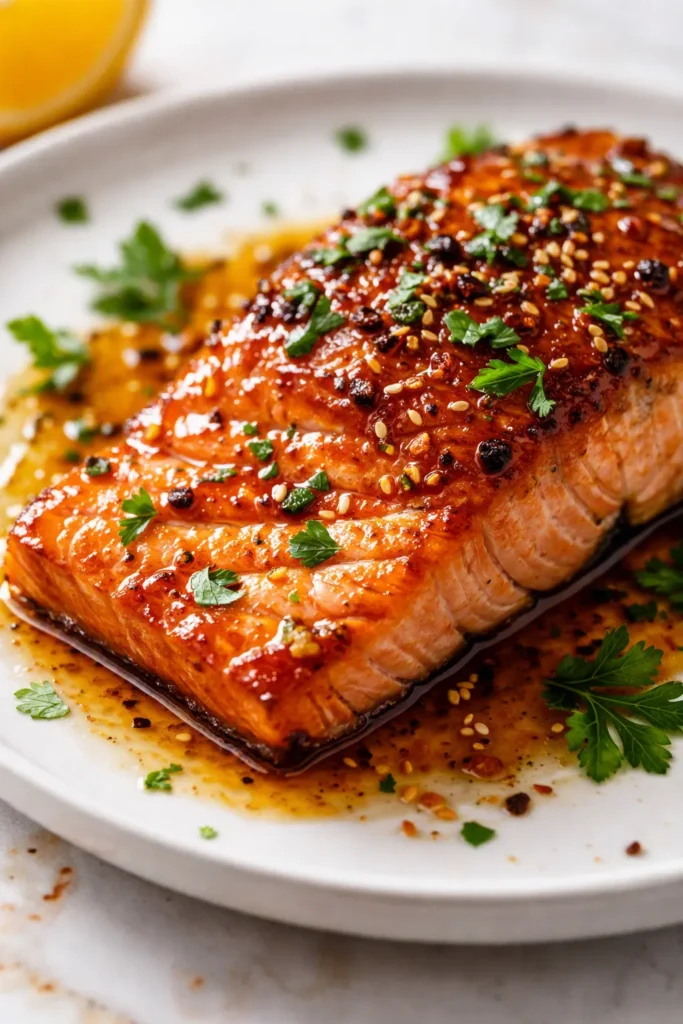
That first pull — where the glossy orange glaze stretches into sticky golden ribbons and the salmon flakes into big, tender bites — is exactly why this orange glazed salmon has become my family’s favorite “fancy but secretly easy” dinner. I’ve cooked a lot of salmon over the years, and most glazed versions let me down: too sweet, too watery, or burned right in the pan. This one finally got it right.
The short version: One skillet, one little saucepan, and 25 minutes stand between you and the best orange glazed salmon you’ll make at home.
I’ve made this exact recipe thirty-plus times since I figured out the two small tricks that make it work, and my husband now requests it whenever we need a weeknight win. My kids, who normally side-eye anything with a visible sauce, eat every single bite — one of them even asked for seconds of the crispy skin, which made my whole week.
- Serves: 4 as a main dish
- Hands-On Time: 10 min | Total Time: 25 min
- Difficulty: Easy, even on a school night
- Cost per serving: About $4.50
- Calories: ~330 per serving
- Dietary Notes: Dairy-free; gluten-free when made with tamari; easily made low-sodium
(Photo above: overhead shot of the finished orange glazed salmon on a wide white platter, the fillets lacquered in a glossy amber glaze with slightly caramelized edges, topped with fresh orange zest, sesame seeds, and sliced green onions, a small bowl of jasmine rice beside it, soft natural light from the left.)
The Two Little Tricks That Make the Glaze Actually Stick
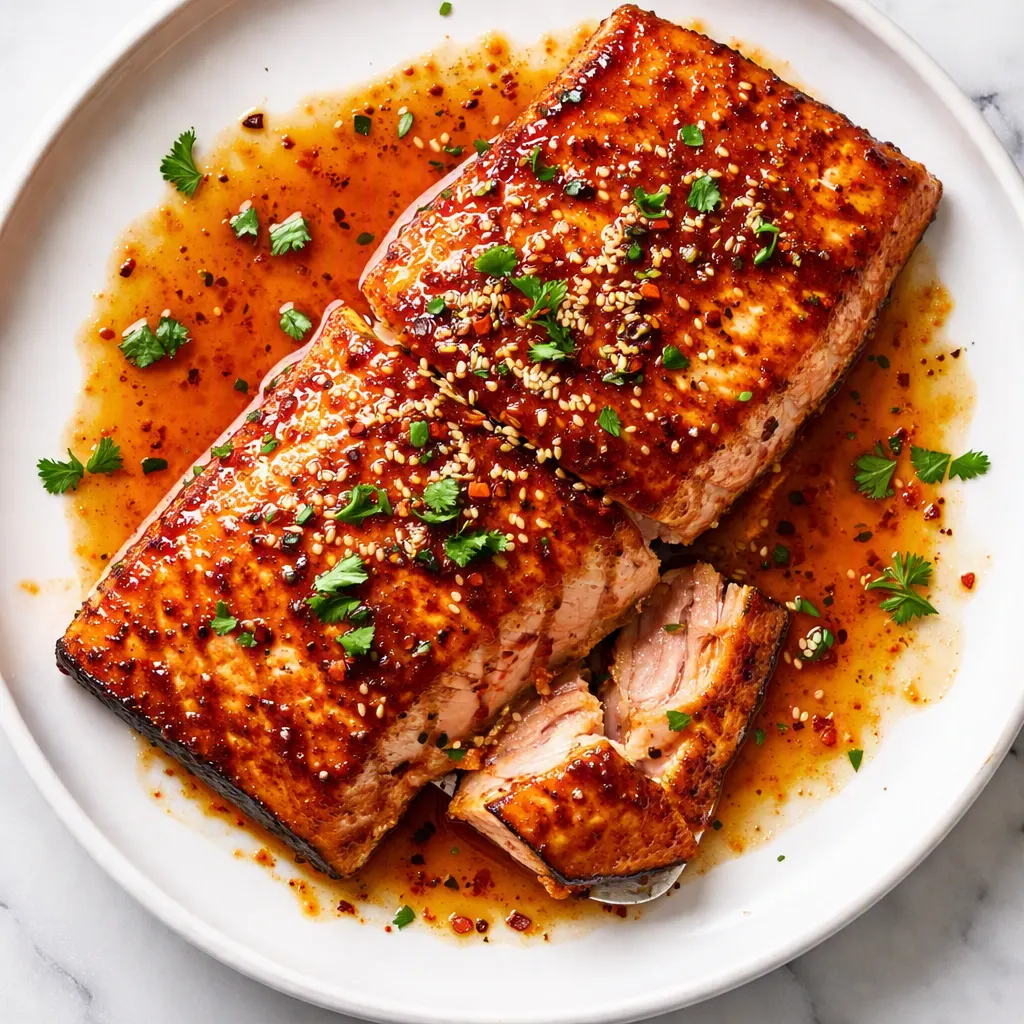
The biggest mistake I made for years? Brushing a thin, watery glaze onto the salmon at the very start. It ran right off, pooled in the pan, and burned before the fish was even close to done. The fix was embarrassingly simple: reduce the glaze down until it’s syrupy in a separate saucepan before it ever touches the salmon. Once it’s thick, it clings to the fish like a good lacquer instead of sliding off.
The second thing? Wait until the very end of cooking to glaze. The sugar in the honey and orange needs just a minute or two of gentle heat to caramelize — too long and it turns bitter and scorched. The first time I got it right, I actually made my husband come into the kitchen to look at the pan. The color was this deep, shiny amber, exactly like something off a restaurant menu.
Do those two things and you get that thick, sticky, pull-apart glaze everyone’s after — with edges that are just slightly caramelized and dark in the best way.
Everything You Need (Plus a Few Notes From Me)
- 4 salmon fillets (about 6 ounces each), skin on: Skin-on fillets give you that crispy texture contrast, and they’re more forgiving to cook. Ask for center-cut fillets if you can — they cook more evenly. My kids are obsessed with the crispy skin, so I never peel it off. If your family prefers skinless, just shave a minute or two off the cooking time.
- 1/2 cup fresh orange juice (about 2 oranges): This is the heart of the glaze, and fresh-squeezed makes a huge difference. Bottled juice tastes flat and a little dull. Navel or Cara Cara oranges are my favorites here. The first time I used a random juice carton, my husband asked if I changed the recipe.
- 2 tablespoons honey: Adds that sticky sweetness and helps the glaze caramelize. Maple syrup or brown sugar both work in a pinch. If your honey is thick and crystallized, microwave it for 10 seconds before measuring so it mixes into the glaze smoothly.
- 2 tablespoons soy sauce (or tamari for gluten-free): The salty balance that keeps the whole thing from tasting like a melted popsicle. This one’s non-negotiable for me — without it, the glaze is way too sweet.
- 1 tablespoon rice vinegar: A tiny hit of acidity that brightens everything and cuts through the richness of the salmon. Apple cider vinegar works in a real pinch, but rice vinegar is milder and cleaner.
- 2 cloves garlic, minced (about 1 teaspoon): For that savory depth in the background. I use jarred minced garlic on tired nights, and honestly, nobody can tell.
- 1 tablespoon fresh ginger, grated: Bright, warming, and kind of the secret flavor hero here. Freeze your ginger and grate it straight from the freezer — it grates like a dream and keeps for months.
- 1 teaspoon orange zest, plus more for garnish: You need the zest to really bring the orange flavor forward. It’s like perfume for the whole dish. Zest first, then juice — trust me.
- 1 tablespoon olive oil or avocado oil: Just for searing the salmon. Avocado oil has a higher smoke point, but olive oil works great too. Don’t use butter alone here — it burns at the heat we need for crispy skin.
- Optional extras: Red pepper flakes for heat, sesame seeds and sliced green onions for topping. My husband sprinkles on extra red pepper; the kids like a heavy shower of sesame seeds.
The Setup (It’s Minimal, I Promise)
- A 12-inch skillet: Cast iron or a good non-stick pan both work. Cast iron gives you the crispiest skin; non-stick is more forgiving if you’re new to searing fish.
- A small saucepan: For reducing the glaze. Any small pot works.
- A citrus zester and juicer: Or a fine grater and your hands — no fancy gadgets needed.
- Tongs and a thin spatula: A fish spatula is worth having if you cook fish often — it’s flexible and perfect for flipping delicate fillets without breaking them.
Let’s Make It (My Exact Process)
Everything moves fast once you start searing, so read through the steps once before you begin. It’s not hard — it just helps to know where you’re headed.
Make the glaze before the fish goes near the pan: This is the step that keeps everything from going sideways later.
- Zest and juice the orange: Zest it first, before juicing — so much easier. You need about 1 teaspoon of zest and 1/2 cup of juice. Set both aside.
- Simmer the glaze: In a small saucepan, whisk together the orange juice, honey, soy sauce, rice vinegar, garlic, ginger, and the teaspoon of orange zest. Bring it to a gentle simmer over medium heat, then let it bubble away for 6–8 minutes, stirring occasionally, until it’s reduced by about half and coats the back of a spoon like thin syrup. (📸 Photo tip: tilt the spoon — the glaze should coat it slowly and run off in a thick, lazy ribbon instead of watery drips.)
- Dry and season the salmon: Pat the fillets dry with paper towels — really press down and get every bit of moisture off the skin. Season both sides with a pinch of salt and pepper.
- Sear the salmon, skin-side down: Heat the olive oil in your 12-inch skillet over medium-high until it shimmers. Lay the fillets in the pan, skin side down, and press gently with your spatula for 5 seconds so they don’t curl. Cook 4–5 minutes without touching them — this is how the skin gets that crackly, golden edge. (📸 Photo tip: watch the flesh turn opaque from the bottom up and the edges of the skin deepen to a rich golden brown — that’s your cue.)
- Flip and finish cooking: Carefully flip each fillet with your thin spatula. Cook for 2–3 minutes on the flesh side, until the salmon is almost done — the center should still look slightly translucent.
- Glaze and baste: Turn the heat down to medium-low. Brush a generous layer of the reduced glaze over each fillet, then spoon more on top as it bubbles. Let it cook for 1–2 minutes, spooning the glaze over the fish the whole time, until it’s sticky and lightly caramelized. The salmon is done when it hits 135°F in the thickest part or flakes easily with a fork. (📸 Photo tip: you want the top to look like it’s wearing a shiny amber jacket — glossy, not charred or dark brown.)
- Rest and serve: Take the pan off the heat and let the salmon rest for 2 minutes. Sprinkle with fresh orange zest, sesame seeds, and sliced green onions before serving. Spoon any extra glaze from the pan over the top.
On my most wiped-out weeknights, I skip the garnish entirely and nobody complains — but the green onions and sesame seeds really do make it look like you tried, and they take about 30 seconds.
How I Meal Prep These for the Week
I’m a big believer in doing the work once and eating well all week. On Sundays, I’ll double the glaze and keep it in a jar, then cook the salmon fresh when we want it. If I’m really organized (it happens… sometimes), I’ll cook two extra fillets for lunches.
- Fridge: Cooked salmon keeps in an airtight container for up to 3 days. Keep any extra glaze in a separate jar — it thickens as it sits, so add a tiny splash of water or orange juice when you reheat it.
- Freezer: Yes, cooked salmon freezes well for up to 2 months. Wrap each fillet individually so you can grab one at a time. The glaze alone will keep in the freezer for 3 months.
- Reheat: Your best bet is a skillet over medium-low for a few minutes, or a 350°F oven for about 8 minutes. The microwave works in a pinch, but it can make the glaze sticky-soggy and the fish a little sad, so I avoid it when I can.
Things I Wish I’d Known the First Time
- Pat the salmon dry — really dry: Moisture is the enemy of crispy skin. If you skip this, the skin steams instead of crisping, and you lose that crackly texture that makes the whole dish. Trust me on this one.
- Reduce the glaze before it hits the pan: If you brush a thin, unreduced glaze on too early, the sugar burns before the salmon cooks through, and you end up with a bitter, dark mess. I learned this the hard way on a Tuesday night, smoke alarm and all.
- Don’t move the salmon in the first few minutes: Let it sit and sear. It releases from the pan when it’s ready. If you try to flip too early, it sticks and tears — and then you’re eating ugly salmon that’s still delicious, but still.
- Use a good orange: A navel or Cara Cara orange gives you that sweet, bright juice. The bottled stuff tastes flat, and you can really tell here. And always zest before juicing — squeezing an already-naked orange is genuinely agonizing.
- Even if you overcook it a little, the glaze saves you: I’ve definitely left mine on the heat two minutes too long, and the sticky, flavorful glaze still made it taste great. Don’t stress perfection. Salmon is forgiving when it’s dressed well.
Make It Yours: Easy Variations
- Gluten-free: Swap the soy sauce for tamari or coconut aminos. I use tamari at home and nobody notices the difference.
- Low-sodium: Use low-sodium soy sauce and go light on extra salt when seasoning the fish. The orange and honey carry plenty of flavor on their own.
- Spicy: Add 1/2 teaspoon of red pepper flakes, or a squirt of sriracha, to the glaze while it simmers. My husband loves this version; the kids stick to the original.
- No honey: Maple syrup or brown sugar both work beautifully. I’ve made it with maple on a whim, and it leans a little more autumnal — in the best way.
- Extra bright: Add a splash of fresh lemon juice at the very end for a citrus pop that cuts through the sweetness. You can also swap the orange for tangerine or mandarin juice for a softer, sweeter glaze.
Questions People Always Ask Me About This Salmon
Q: Why did my glaze turn bitter and dark?
A: Ugh, I’ve been there. That happens when the sugar hits high heat before it’s properly reduced — it burns. Make sure you simmer the glaze down gently first, lower the heat before brushing it onto the fish, and don’t walk away during that last couple of minutes. The good news: even a slightly-toasted glaze still tastes decent if you catch it early.
Q: Can I use frozen salmon?
A: Yes! Thaw it in the fridge overnight, then pat it really dry before searing. I don’t recommend cooking it straight from frozen for this one — the glaze will finish before the inside is even close to done. If you’re in a hurry, thaw it in a bowl of cold water for about 20 minutes.
Q: How long do leftovers last, and can I freeze them?
A: Leftovers keep for up to 3 days in the fridge in an airtight container. You can absolutely freeze cooked fillets for up to 2 months — just wrap each one individually so you can pull out a single serving. Reheat gently in a skillet or a 350°F oven, and if there’s extra glaze, spoon it on before reheating to bring the moisture back.
Q: What do you serve with this orange glazed salmon?
A: In our house, it’s usually jasmine rice (or garlic butter rice) and roasted broccoli or green beans. The glaze does something magical to rice when it pools at the bottom of the bowl. On weekends, I add a simple cucumber salad with rice vinegar and sesame seeds for crunch. My kids call the whole thing “sushi night,” even though there’s zero sushi in sight.
More Recipes My Family Makes on Repeat
If this one’s a hit at your table, here are a few others that get the same reaction at mine:
- [INTERNAL LINK PLACEHOLDER: Garlic Butter Rice] — the dreamiest side dish that soaks up every last drop of that glaze.
- [INTERNAL LINK PLACEHOLDER: Crispy Roasted Green Beans with Lemon] — the bright, snappy side that balances all that sweetness.
- [INTERNAL LINK PLACEHOLDER: Miso Butter Chicken Thighs] — another 25-minute favorite that tastes like it took way longer.
So whether it’s a crazy Thursday night or a slow Sunday, I hope this orange glazed salmon becomes your family’s favorite too. It genuinely feels like a little win every time I put that glossy plate down in front of them — like we managed to make something special in the middle of an ordinary week.
If you make it, drop a comment below and let me know how it went! And tag me on Pinterest or Instagram — I absolutely love seeing your photos.
📌 This orange glazed salmon recipe is sticky, bright, and on the table in 25 minutes — save it for your next busy weeknight dinner that still feels fancy.
Orange Glazed Salmon That’s Sticky, Caramelized, and Ready in 25 Minutes
Equipment
- 12-inch skillet
- Small saucepan
- Citrus Zester or Fine Grater
- Tongs and Thin Spatula
Ingredients
- 4 fillets salmon, skin on (about 6 ounces each)
For the Glaze
- 1/2 cup fresh orange juice (about 2 oranges)
- 2 tablespoons honey
- 2 tablespoons soy sauce or tamari for gluten-free
- 1 tablespoon rice vinegar
- 2 cloves garlic, minced (about 1 teaspoon)
- 1 tablespoon fresh ginger, grated
- 1 teaspoon orange zest, plus more for garnish
For Cooking and Serving
- 1 tablespoon olive oil or avocado oil
- Optional: red pepper flakes, sesame seeds, and sliced green onions for serving
Instructions
- Zest and juice the orange. Zest first, then juice. Set both aside.
- In a small saucepan, whisk together orange juice, honey, soy sauce, rice vinegar, garlic, ginger, and orange zest. Simmer over medium heat for 6 to 8 minutes until reduced by half and coats a spoon like thin syrup.
- Pat salmon fillets very dry with paper towels and season both sides with salt and pepper.
- Heat oil in a 12-inch skillet over medium-high until shimmering. Place salmon skin-side down and press gently for 5 seconds. Cook 4 to 5 minutes without moving, until the skin is golden and crisp.
- Flip carefully and cook 2 to 3 minutes on the flesh side until nearly done, with the center still slightly translucent.
- Reduce heat to medium-low. Brush a generous layer of glaze over each fillet, then spoon more on top as it bubbles. Cook 1 to 2 minutes, spooning glaze over the fish until sticky and caramelized. Salmon is done at 135°F or flakes easily with a fork.
- Rest 2 minutes off the heat. Sprinkle with fresh orange zest, sesame seeds, and sliced green onions. Spoon extra glaze from the pan over the top before serving.
Notes
Related Recipes:
 Cheesy Hamburger Casserole Bake That’s Ready in 40 Minutes (No Canned Soup Here)
 Creamy Garlic Tagliatelle That Looks Like a Restaurant Dish in 20 Minutes
 Texas Roadhouse Style Baked Salmon with Sweet and Savory Glaze — Ready in Under 30 Minutes
 Easy Italian Meatloaf That’s Actually Juicy (Not Dry) — in 1 Hour
 The Biscuits and Gravy Casserole That’s Actually Crispy on Top (And Ready in 40 Minutes)
 Air Fryer Chicken and Vegetables That Don’t Taste Like a Regret (30 Minutes, One Pan)