
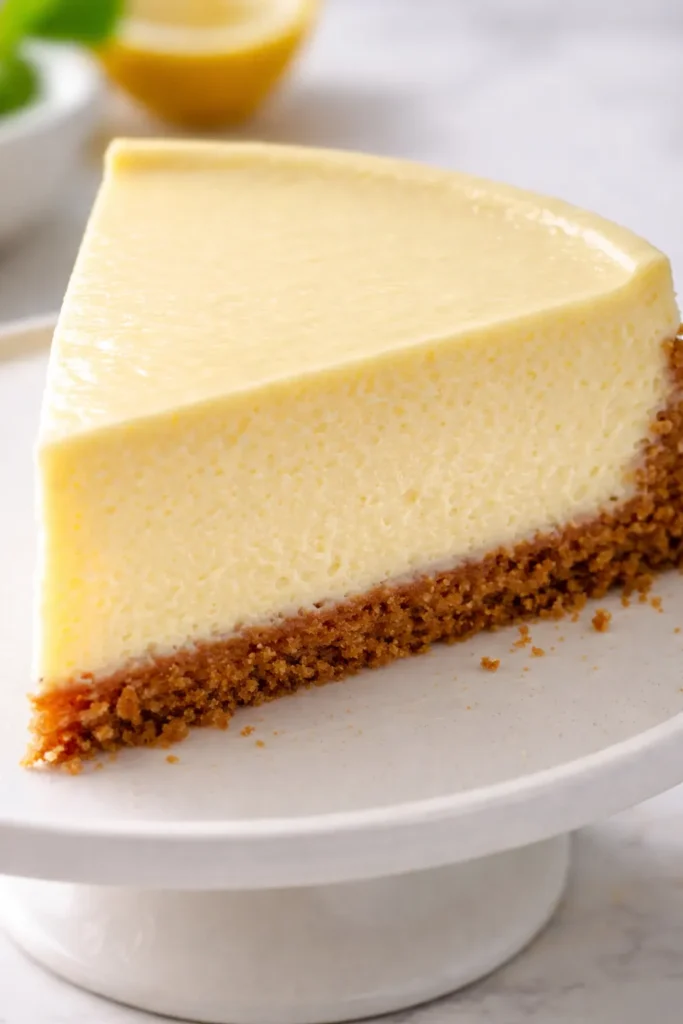
The first slice is the proof. A clean cut. A crust that doesn’t crumble into a million pieces on the plate. That glossy lemon curd on top, giving way to a center so creamy it’s almost pourable. This isn’t the cheesecake you settle for. This is the one you plan the whole dinner around. And for how intimidating it looks, it’s surprisingly unbothered by the whole affair. The texture is the whole point here — dense but somehow light, rich but brightened by the lemon, stable enough for a clean slice but silky on the tongue. Most cheesecakes aim for one of these qualities. This one demands all of them.
The short version: A brown butter graham crust, a silky no-crack filling, and a bright lemon curd topping that makes everything look intentional. Total hands-on time is 40 minutes. The rest is just chilling.
I’ve tested this one about a dozen times — through a few cracked tops, one soggy crust situation, and a lemon curd that refused to set. This version is the one I keep coming back to. It looks like a pastry case centerpiece, but it’s just patience and a few specific choices that do the heavy lifting.
- Serves: 12 as dessert
- Hands-On Time: 40 min | Total Time: 8 hrs (includes overnight chill)
- Difficulty: Ambitious beginner — the water bath is the only “tricky” part, and I’ll talk you through it
- Cost per serving: ~$3.50
- Calories: ~480 per serving
- Dietary Notes: Vegetarian; easily adaptable for gluten-free
(Photo above: Straight-on shot of a tall, flawless cheesecake slice on a white ceramic plate, the lemon curd gleaming under soft window light, a single fork resting next to it. The crust is visibly toasted and clean-edged — no crumbs on the plate.)
The Two Details That Make This One Different
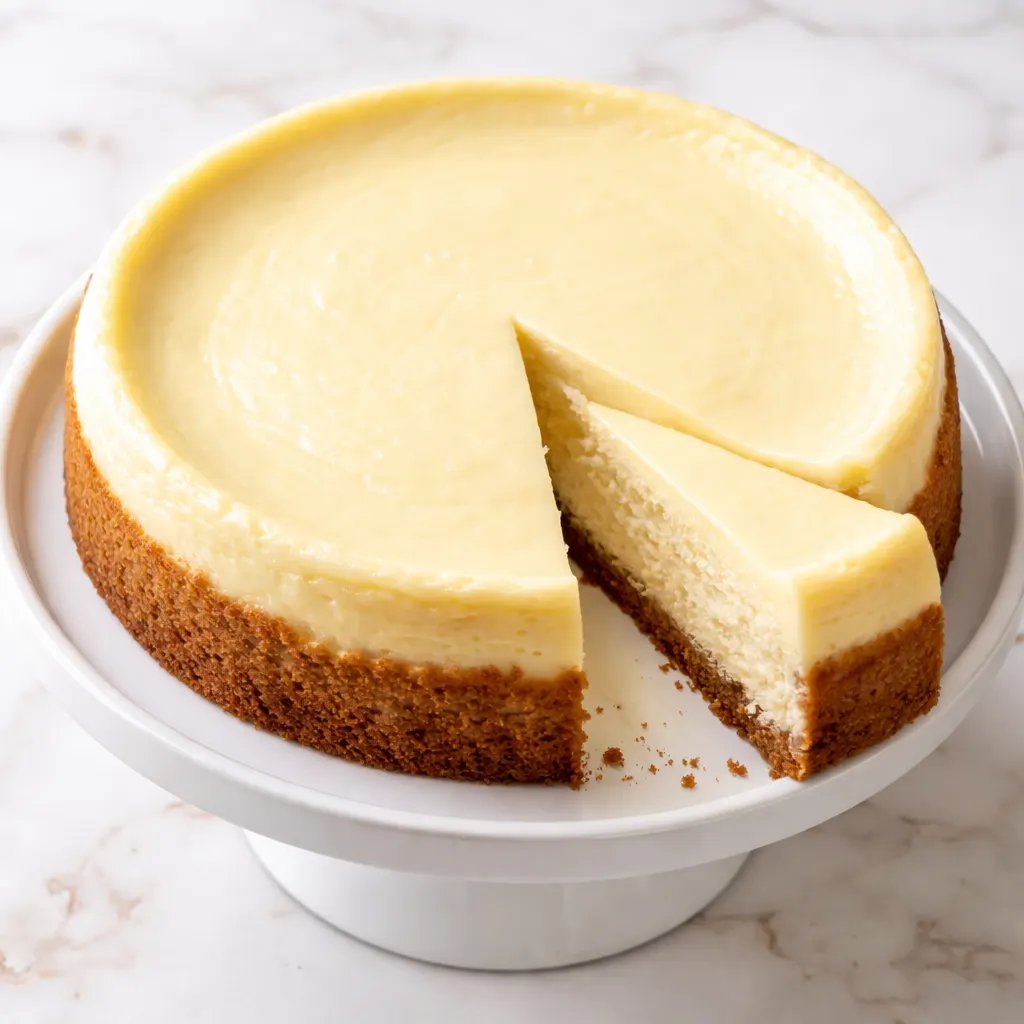
Toasted brown butter in the crust. Most cheesecake crusts are just an afterthought — a sweet, sandy base that gets soggy by day two. Browning the butter first adds a toasted, nutty dimension that plays off the lemon’s brightness. It also helps the crust hold its structure, so it doesn’t get weepy from the fridge. This isn’t a decorative choice — it’s doing real structural and flavor work.
The slow water bath. A water bath isn’t just about preventing cracks (though it absolutely does that). It’s about creating a gentle, even heat that allows the center of the cheesecake to stay soft and creamy while the edges set. Without it, you get a dense, dry cheesecake. With it, you get something that feels almost mousse-like. Worth the extra five minutes of setup.
Everything You Need (And a Few Notes From Me)
- 10 graham crackers (about 1 ½ cups crumbs): The foundation. Honey Maid is my go-to — the store brands tend to have a shorter crumb and don’t pack as well, which leads to a crumbly crust. I tried making this with GF graham crackers and it works perfectly, so don’t stress if you need that swap.
- 5 tablespoons unsalted butter: You’ll brown this for the crust. This is not a place for margarine or coconut oil. The browning is doing real work here, and the flavor payoff is worth the extra minute.
- 32 oz (4 blocks) full-fat cream cheese: Philadelphia is the standard for a reason. Low-fat or Neufchâtel will make the filling loose and weepy. Let it come to room temperature completely — about 2 hours on the counter. I know it’s a wait, but cold cream cheese is the #1 reason for a lumpy cheesecake, and lumps don’t bake out.
- 1 cup granulated sugar: Standard white sugar. No substitutions here — brown sugar would compete with the lemon and change the color of the filling.
- 1 tablespoon cornstarch: This is the secret to a clean slice. It stabilizes the filling without adding weight or changing the texture.
- 4 large eggs, room temp: Cold eggs will seize the cream cheese mixture and create lumps. Set them out with the cream cheese. My trick: if I forget, I put them in a bowl of warm water for 10 minutes.
- 1 cup heavy cream: Adds richness and helps the filling set up silky. Don’t sub milk or half-and-half — the fat content matters here for texture.
- ¼ cup fresh lemon juice + 2 tablespoons zest: From about 3 lemons. Meyer lemons if you can find them — they’re sweeter and more floral. Regular Eureka lemons are perfectly sharp and classic. Both work.
- For the curd topping: ⅓ cup lemon juice, 3 egg yolks, ¼ cup sugar, 2 tbsp butter. This makes a thick, glossy layer that sets on top of the chilled cheesecake. It’s a small batch that comes together in about 5 minutes.
What to Pull Out Before You Start
- 9-inch springform pan: A good-quality one. Cheap springform pans can leak during the water bath, and that’s a disaster you don’t want. I use an OXO or Nordic Ware — they seal properly.
- Electric hand mixer or stand mixer: A whisk and some elbow grease won’t get you the right texture here. You need gentle, consistent mixing.
- Large roasting pan or baking dish: Big enough to hold the springform pan for the water bath. A lasagna pan works perfectly.
- Heavy-duty aluminum foil: For wrapping the pan. Don’t use regular foil — it tears too easily.
- Small saucepan: For the lemon curd.
Making the Cheesecake (My Exact Process)
Don’t let the number of steps scare you — most of these are 30 seconds each. The real work is just waiting for it to chill.
Prep: Preheat your oven to 350°F. Wrap the outside of your springform pan with a triple layer of heavy-duty foil, making sure it comes up high enough to cover the sides. Set the pan in the roasting pan you’ll use for the water bath.
- Make the browned butter crust: Melt the butter in a small saucepan over medium heat, swirling constantly. It will foam, then the milk solids will turn golden brown and smell nutty — about 3-4 minutes. Pour it immediately over the graham cracker crumbs and sugar. Mix until it looks like wet sand. Press it firmly into the bottom of the springform pan — flat, not up the sides. (📸 Photo tip: Press the crust down with the flat bottom of a measuring cup. Even pressure = no crumbly edges later.) Bake for 10 minutes. Let it cool while you make the filling.
- Begin the filling: In a large bowl, beat the room-temperature cream cheese on medium speed until smooth and pliable — about 2 minutes. Scrape the bowl well. This step is non-negotiable — a smooth base means a smooth finished cheesecake.
- Add sugar and cornstarch: With the mixer on low, add the sugar and cornstarch in a steady stream. Mix just until combined — 30 seconds. Scrape the bowl again.
- Add eggs one at a time: Crack each egg into a small bowl, then add it to the mixture. Mix on low just until the yolk disappears. Overmixing at this stage incorporates too much air and leads to cracks. You want a silky batter, not a fluffy one.
- Add cream, lemon juice, and zest: Stir them in by hand with a spatula. This is your final chance to avoid over-aerating the batter. The mixture should be silky, smooth, and look like a thick custard. (📸 Photo tip: The batter should flow like a ribbon off the spatula — not too thick, not too runny. That’s the ideal texture.)
- Pour and prepare the water bath: Pour the filling over the cooled crust. Smooth the top with a spatula. Place the roasting pan with the cheesecake on the oven rack. Carefully pour boiling water into the roasting pan until it reaches halfway up the sides of the springform pan. Close the oven door immediately.
- Bake low and slow: Bake at 325°F for 60-70 minutes. The edges should be set and slightly puffed, but the center should still wobble like Jell-O when you gently shake the pan. If it’s completely firm, it’s overbaked — pull it out right at that wobbly stage.
- Cool in the oven: Turn the oven off and crack the door open. Let the cheesecake sit in the warm oven for 1 hour. This prevents the sudden temperature change that causes cracks. I know it’s tempting to pull it out and speed things up — don’t. This step is your insurance policy.
- Chill overnight: Remove the cheesecake from the water bath, unwrap the foil, and let it cool completely on a wire rack. Then refrigerate, uncovered, for at least 6 hours, preferably overnight. The texture sets and the flavors meld during this time.
- Make the lemon curd (when ready to serve): Whisk together egg yolks, sugar, and lemon juice in a small saucepan. Cook over low heat, stirring constantly, until thickened — about 5 minutes. It should coat the back of a spoon. Remove from heat, stir in butter until melted, and let cool slightly.
- Top and serve: Pour the warm curd over the chilled cheesecake, spreading it into an even layer. Refrigerate for 30 minutes to set the curd. Run a hot knife around the edge of the pan before releasing the springform. Slice with a hot, clean knife for perfect edges.
Make-Ahead Notes (Because It’s Actually Better This Way)
This is a dream make-ahead dessert. The cheesecake itself needs at least 6 hours to set, but 24-48 hours in the fridge actually improves the texture — it firms up perfectly and the flavors settle. I make this on a Thursday for a Saturday dinner and it’s always the best version.
- Fridge: Store the cheesecake (without curd) wrapped tightly in plastic for up to 4 days. Add the curd on the day you’re serving it for the best visual.
- Freezer: Yes, whole cheesecake or individual slices. Wrap in plastic, then foil, for up to 2 months. Thaw overnight in the fridge. I do this all the time for holiday prep — it thaws perfectly.
- Reheat: Serve cold or at room temperature. Let it sit out for 15 minutes before slicing for the cleanest cuts.
Mistakes I’ve Made So You Don’t Have To
- Room temperature is not a suggestion, it’s a rule. Cold cream cheese creates lumps that no amount of beating will fix. Set it out 2 hours ahead. Same for the eggs. I learned this the hard way on a Thanksgiving cheesecake that looked like cottage cheese before baking.
- Don’t overmix the batter. Overmixing incorporates too much air, which expands in the oven and creates cracks. Mix just until each ingredient is incorporated. The final batter should be silky, not fluffy.
- Wrap the pan right the first time. Use a triple layer of heavy-duty foil and make sure it comes up high enough. A single tear will let water into your crust. (I’ve had a springform fail on me once. It is not a fun discovery when you pull it out of the oven.)
- Let it cool completely before chilling. A sudden temperature shock is what causes a cheesecake to crack. The “cool in the oven” step is a lifesaver. It’s not extra work — it’s just patience.
Swaps That Actually Work
- Gluten-Free: Use high-quality GF graham crackers or a shortbread cookie. The rest of the ingredients are naturally GF. My sister is GF and she brings her own crust for this — it works beautifully.
- Lemon-Blueberry: Swirl ½ cup of blueberry compote into the top of the cheesecake before baking, then omit the curd or use it on top. My kids beg for this version — the berries turn into little jam pockets.
- Lime or Orange: Swap the lemon zest and juice 1:1 for lime or orange. A key lime cheesecake is a crowd-pleaser. The curd works with any citrus.
- No Curd Topping: The cheesecake is genuinely stunning on its own if you want to save a step. Just dust with powdered sugar and serve with fresh berries. I do this 50% of the time when I’m feeling minimal.
Questions I Always Get About This Cheesecake
Q: Why did my cheesecake crack?
A: Ugh, I’ve been there. It usually means one of three things: overmixing (too much air in the batter), overbaking (the center should still wobble), or a sudden temperature change (skip the cool-in-oven step at your own risk). It’s still edible — just cover it with curd and no one will know. Seriously, curd fixes everything.
Q: Can I use a water bath with a regular cake pan?
A: I don’t recommend it. A springform pan is designed to release the sides cleanly. A regular pan will stick and the water might seep in. If you don’t have a springform, use a deep cake pan lined with parchment paper, and don’t expect perfect edges.
Q: How long does it keep in the fridge?
A: Wrapped tightly, a whole cheesecake (without curd) keeps beautifully for up to 4 days. The curd is best added the day you serve it, but leftovers with curd are still great for 2-3 days. I’ve never had it last longer than that at my house, to be honest.
Q: What’s the best way to get a clean slice?
A: Hot knife, every time. Run a long, thin knife under hot water, dry it quickly, and make one smooth cut. Wipe the blade clean between slices. This is the trick for those perfect bakery-style slices that look like they belong in a magazine.
More Desserts My Family Makes on Repeat
If you liked this one, here are a few others that get the same reaction at our table:
- Brown Butter Peach Galette — Flaky, jammy, and zero stress. The perfect summer dessert.
- Chocolate Lava Cake You’d Never Guess Is Dairy-Free — Rich, molten, and actually works for every occasion.
- My Go-To Key Lime Pie — Tangy, creamy, and done in 15 minutes flat. No water bath required.
This is the cheesecake you bring to the dinner where you want to hear “where did you get that?” or the one you make on a Sunday just to have a slice waiting for you on a random Tuesday with a cup of coffee. Either way, it looks like you spent the whole day doing it. (You didn’t. It was 40 minutes.)
If you try it, drop a comment below — I love hearing how it goes for you. Tag me on Pinterest or Instagram so I can see yours!
📌 This creamy lemon cheesecake recipe with toasted graham crust is the only one you’ll ever need — save it for your next spring dinner party or holiday gathering when you want a dessert that looks like a million bucks.
The Ultimate Creamy Lemon Cheesecake You’d Never Guess Is This Straightforward
Equipment
- 9-inch springform pan
- Large roasting pan or baking dish
- Electric hand mixer or stand mixer
- Small saucepan
- Heavy-duty aluminum foil
- Wire Rack
Ingredients
For the Crust
- 10 whole graham crackers (about 1 1/2 cups crumbs)
- 5 tablespoons unsalted butter
- 2 tablespoons granulated sugar
For the Filling
- 32 oz full-fat cream cheese, room temperature (4 blocks)
- 1 cup granulated sugar
- 1 tablespoon cornstarch
- 4 large eggs, room temperature
- 1 cup heavy cream
- 1/4 cup fresh lemon juice (from about 2 lemons)
- 2 tablespoons lemon zest
For the Lemon Curd Topping
- 1/3 cup fresh lemon juice
- 3 large egg yolks
- 1/4 cup granulated sugar
- 2 tablespoons unsalted butter, cut into pieces
Instructions
- Preheat oven to 350°F. Wrap the outside of a 9-inch springform pan with a triple layer of heavy-duty foil, making sure it comes up high enough to cover the sides. Set the pan in a large roasting pan or baking dish.
- Make the browned butter crust: Melt 5 tablespoons butter in a small saucepan over medium heat, swirling constantly, until it foams and the milk solids turn golden brown and smell nutty (about 3-4 minutes). Immediately pour over graham cracker crumbs and 2 tablespoons sugar. Mix until it resembles wet sand. Press firmly into the bottom of the springform pan (use a flat measuring cup for even pressure). Bake for 10 minutes. Let cool while making filling.
- Begin the filling: In a large bowl, beat the room-temperature cream cheese on medium speed until smooth and pliable (about 2 minutes). Scrape bowl well.
- With mixer on low, add 1 cup sugar and cornstarch in a steady stream. Mix just until combined (about 30 seconds). Scrape bowl again.
- Add eggs one at a time, mixing on low just until each yolk disappears. Do not overmix – you want a silky batter, not a fluffy one.
- Stir in heavy cream, lemon juice, and lemon zest by hand with a spatula until just combined. The batter should be silky and flow like a ribbon off the spatula.
- Pour filling over cooled crust and smooth top. Place roasting pan with cheesecake on oven rack. Carefully pour boiling water into the roasting pan until it reaches halfway up the sides of the springform pan. Close oven door.
- Bake at 325°F for 60-70 minutes, until edges are set and slightly puffed but center still wobbles like Jell-O when shaken.
- Turn oven off and crack door open. Let cheesecake sit in warm oven for 1 hour (this prevents cracks from sudden temperature change).
- Remove from water bath, unwrap foil, and cool completely on a wire rack. Refrigerate uncovered for at least 6 hours, preferably overnight.
- Make the lemon curd topping (when ready to serve): In a small saucepan, whisk together egg yolks, 1/4 cup sugar, and 1/3 cup lemon juice. Cook over low heat, stirring constantly, until thickened (about 5 minutes). It should coat the back of a spoon. Remove from heat, stir in 2 tablespoons butter until melted. Let cool slightly.
- Pour warm curd over chilled cheesecake and spread into an even layer. Refrigerate for 30 minutes to set. Run a hot knife around the edge before releasing springform. Slice with a hot, clean knife for perfect edges.
Notes
Related Recipes:
 The Perfectly Pillowy Chocolate Chip Milk Buns (Tangzhong Method)
 Bagel Breakfast Sliders That Taste Like a Diner Breakfast — in 25 Minutes
 Cheesy Hamburger Casserole Bake That’s Ready in 40 Minutes (No Canned Soup Here)
 Creamy Garlic Tagliatelle That Looks Like a Restaurant Dish in 20 Minutes
 Texas Roadhouse Style Baked Salmon with Sweet and Savory Glaze — Ready in Under 30 Minutes
 Easy Italian Meatloaf That’s Actually Juicy (Not Dry) — in 1 Hour