
The first time I made this, I didn’t tell my family it was “healthy” until after they’d polished off their bowls. That’s my official test. If a veggie-packed dinner passes the quiet-bowl-with-seconds threshold, it stays in the rotation. This one has been in heavy rotation for two years straight.
The short version: One pot, 30 minutes, sharp cheddar, and a whole head of broccoli you barely have to think about.
My daughter, who once rejected a pasta salad because it had a “green thing” in it, asks for this by name. I’m not saying it’s a miracle. I’m saying the technique does the heavy lifting.
- Serves: 4 as a main, 6 as a side
- Hands-On Time: 15 min | Total Time: 30 min
- Difficulty: Easy enough for a Tuesday, even if you’re tired
- Cost per serving: ~$2.50
- Calories: ~420 per serving
- Dietary Notes: Naturally vegetarian. Easily gluten-free with a pasta swap.
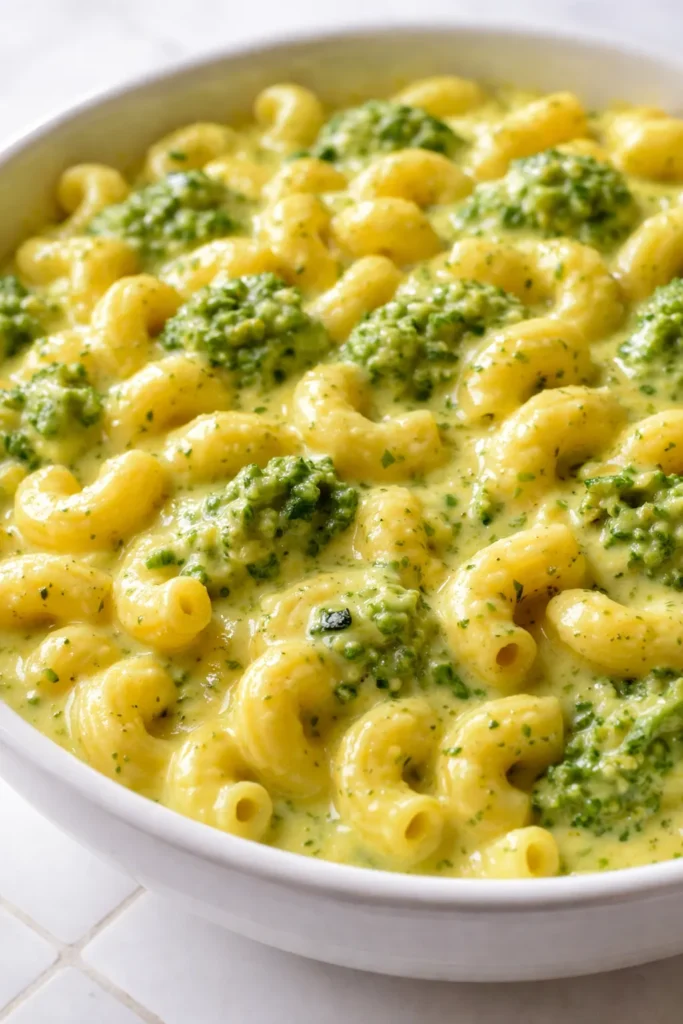
(Photo above: overhead shot of the creamy mac and cheese in a light-colored Dutch oven, broccoli florets scattered throughout, a fork twirling a cheesy bite in the center frame, natural morning light from the left.)
The 3-Step Trick That Keeps It Creamy (Not Gluey)
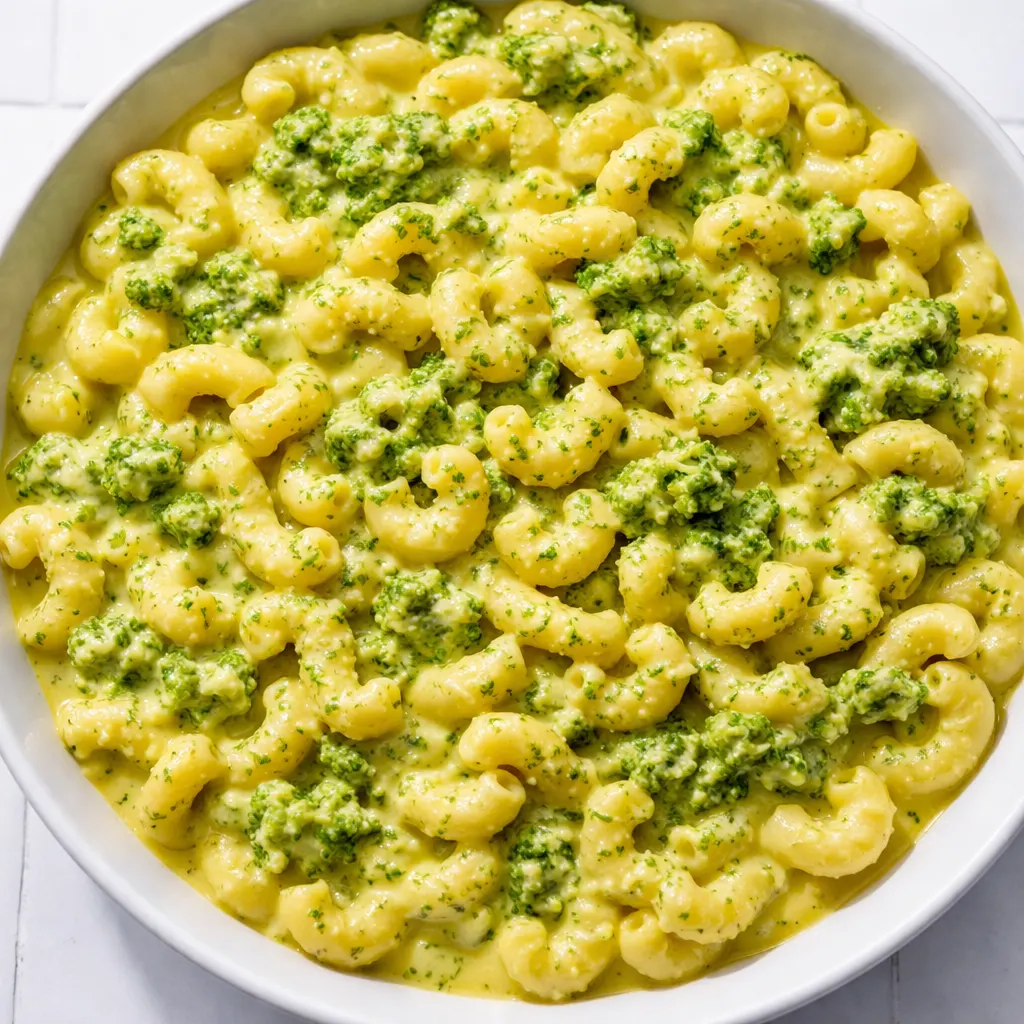
Most “healthy” mac and cheese recipes go one of two ways: a sad, watery sauce made with skim milk and regret, or a heavy cashew cream that requires planning ahead and a high-powered blender. This is neither.
The first trick is cooking the broccoli right in the pasta water. It infuses the pasta with a subtle sweetness and softens the broccoli so much that it melts into the cheese sauce later. Nobody is chewing on woody florets here.
The second trick is using the starchy pasta water as the base of the sauce instead of heavy cream. It creates the same silky texture without the fat. The starch molecules do the emulsifying work for you.
The third trick is shredding your own cheddar. Pre-shredded cheese is coated in cellulose and potato starch to stop it from clumping in the bag — but those same additives stop it from melting into a smooth sauce. Grate it yourself. Takes two minutes. Worth every second.
What You Need (Plus Why I Specifically Chose These)
- 1 lb small pasta (elbow, shells, or cavatappi): Small shapes catch the sauce in their nooks. My kids do a “scoop test” on shape night — shells always win.
- 1 large head of broccoli (about 1 lb): Chop the stems small so they cook as fast as the florets. Zero waste, maximum nutrition. I used to toss the stems until I realized they’re the sweetest part.
- 4 tbsp unsalted butter: The base of the roux. Don’t substitute oil here — the butter flavor is part of the whole point.
- 3 tbsp all-purpose flour: Just enough to thicken without making the sauce gluey. Whole wheat flour works in a pinch but makes the sauce slightly grainy — I stick with white for this one.
- 2 ½ cups whole milk or 2%: Skim milk will give you a watery sauce. Save it for your cereal. Oat milk works surprisingly well here if you’re dairy-free, but add an extra tablespoon of butter.
- 1 tsp Dijon mustard: It doesn’t taste like mustard. It tastes like “something’s in here” and wakes the whole dish up. My husband hates mustard and has never once noticed it.
- 8 oz sharp cheddar, freshly grated: Sharp means you taste the cheese immediately with less of it. Extra-sharp or white cheddar both work beautifully.
- ¼ tsp fresh-grated nutmeg: Sounds weird. I know. It makes the broccoli taste sweeter and the cheddar taste sharper. It’s a magic trick. Don’t skip it — I learned this the hard way.
- Salt and black pepper to finish: Flaky salt at the end adds a little crunch. Maldon is my go-to for this finish.
The Gear (It’s a Short List)
- A 4- to 5-quart Dutch oven or heavy pot: If your pot is too small, the broccoli won’t fit before it wilts down. I use my 5.5-quart Le Creuset — the heavy bottom keeps the milk from scorching.
- A box grater or microplane: For the cheese and nutmeg. Pre-shredded cheese is the enemy of a smooth sauce — do not bring that bag into this kitchen.
- A wooden spoon or silicone spatula: For stirring the roux without scratching your pot. That’s it. Minimal cleanup.
One note on the pot: a straight-sided sauté pan works too, but a Dutch oven’s wider surface area helps the milk reduce faster. Just don’t use a thin-bottomed stockpot — the milk will scorch before the roux thickens.
Let’s Make It (Start to Finish)
This moves fast, so read through once before you start. Most of the work happens in the last five minutes.
First: Boil and reserve.
- Fill the pot with water and salt it generously: It should taste like the sea. Bring it to a rolling boil. Add the pasta and cook it 2 minutes short of the package directions. (📸 Photo tip: you’re looking for pasta that’s still white in the center — it’ll finish cooking in the sauce.)
- Add the broccoli in the last 3 minutes: Dump the chopped florets and stems right into the boiling pot. The residual heat from the pasta water softens them perfectly. My favorite shortcut — one less pot to wash.
- Reserve 1 cup of the starchy water: Scoop it out with a heatproof measuring cup before draining. Then drain the pasta and broccoli together in a colander. Set aside. (📸 Photo tip: the water should look cloudy, almost milky — that’s the good starch.)
Second: Build the sauce.
- Melt the butter in the same pot over medium heat: Swirl it until it’s foamy but not browned. Add the flour and whisk constantly for 1 minute. This is called a roux. It sounds fancy but it’s just butter and flour. Do not walk away — it burns fast.
- Slowly pour in the milk while whisking: Keep whisking until the mixture thickens enough to coat the back of a spoon, about 3-4 minutes. If it lumps, whisk harder. It’ll smooth out.
- Turn the heat to low and stir in the mustard, nutmeg, and ¾ of the cheese: Stir until the cheese is fully melted and the sauce is glossy. Reserve the remaining cheese for the top — it makes a golden crust under the broiler if you’re feeling extra.
Third: Bring it together.
- Add the drained pasta and broccoli back to the pot: Fold everything together gently. The broccoli should be tender enough that some of it breaks apart and melts into the sauce — that’s the good stuff.
- Thin the sauce with the reserved pasta water: Add it ¼ cup at a time until the sauce is loose enough to pool at the bottom of the pot but thick enough to cling to the pasta. You might not need all of it — trust your eyes.
- Taste it: Add salt and a generous amount of black pepper. A final grating of nutmeg if you’re feeling fancy. Even if you mess this part up a little, it’ll still taste good. I’ve done it.
How to Meal Prep This for the Week
I make a double batch on Sundays and we’re set for lunches and quick dinners until Wednesday. The broccoli keeps its texture better than most leafy greens, so leftovers actually work.
- Fridge: Store in an airtight container for up to 4 days. It thickens as it sits, so add a splash of milk when reheating to bring the sauce back to life.
- Freezer: Honestly, pasta changes texture in the freezer — it gets soft. If you must, undercook the pasta by 1 minute initially and freeze the sauce separately. Combine when reheating. I’ve done it in a pinch. It’s fine, not great.
- Reheat: Skillet is best (add a splash of milk, stir over medium heat for 3 minutes). Microwave works in a pinch — just do 30-second intervals and stir between each. My kids reheat their leftovers in the microwave without complaint, so it passes the kid test.
Small Things That Make a Big Difference
- Don’t skip the mustard and nutmeg: They don’t scream their presence. They quietly make the cheese taste cheesier and the broccoli taste sweeter. My husband thought I was overthinking it until I served him a batch without them. He noticed immediately. “What’s different?” Everything.
- Shred your own cheese, full stop: Pre-shredded cheese is tossed in anti-caking agents that turn your sauce into a grainy mess. I know it’s more work. Do it anyway. One block of cheddar, four minutes on a box grater, and you will taste the difference.
- Reserve extra pasta water: You think you won’t need it, and then you do. The sauce thickens as it sits, and a splash of that starchy water brings it right back to silky. My biggest rookie mistake was dumping all the water. Never again.
- Let it rest for 2 minutes off the heat: The sauce thickens slightly as it cools, achieving that perfect “cling” to the pasta. If you serve it immediately, it’s still loose. Two minutes of patience changes the whole texture.
Ways to Change It Up (Without Ruining It)
- Add protein: Diced rotisserie chicken or crispy bacon on top makes it a full meal. My husband adds leftover chicken meatballs from Tuesday night — it’s his favorite version.
- Gluten-free: Use your favorite gluten-free pasta (I like brown rice pasta for this) and a 1:1 gluten-free flour blend. Increase the milk slightly as GF pasta absorbs more liquid.
- Extra veggies: Cauliflower florets or frozen peas work beautifully. Add them with the broccoli. This is the version I make when I need to clean out the produce drawer.
- Spicy: Add ¼ tsp red pepper flakes to the butter before the flour, or finish with a drizzle of chili crisp. I do the spicy version for myself after the kids are in bed — it’s a whole different vibe.
- Dairy-free: Use a good plant-based butter, oat milk, and your favorite dairy-free cheddar. Nutritional yeast (1 tbsp) can help boost the cheesy flavor. I’ve tested this with my dairy-free sister-in-law and she gave it a solid 8/10.
The Questions I Get About This One
Q: Why did my sauce turn out grainy?
A: Ugh, I’ve been there. Two most likely culprits: the heat was too high (scorched the milk proteins), or you used pre-shredded cheese with anti-caking agents. Keep the heat on medium-low when you add the cheese, and grate it yourself. You’ve got this next time — it’s an easy fix.
Q: Can I use frozen broccoli?
A: Yes! Thaw it completely and drain it well on paper towels before adding it to the pasta water. Frozen broccoli holds more water than fresh, and that extra water will thin your sauce. I do this on Thursdays when my fresh broccoli has gone sad in the drawer.
Q: How long does this last in the fridge? Can I freeze it?
A: 4 days in an airtight container in the fridge. Freezing is not my favorite — pasta gets mushy and the sauce can separate. If you’re set on freezing it, undercook the pasta by 1 minute and freeze the sauce separately. Reheat gently with a splash of milk. I’ve done it, it works, but fresh is always better.
Q: What do you serve with this?
A: A crisp green salad with a lemon vinaigrette (the acid cuts the richness perfectly). Sometimes roasted chicken thighs if I’m feeding a crowd. For my kids, a handful of baby carrots on the side and they’re happy. The leftovers are amazing cold straight from the container — that’s a private opinion I stand behind.
More Recipes My Family Eats on Repeat
If you liked this one, here are a few others that get the same reaction at our table:
- One Pot Tomato Basil Pasta — The summer staple that uses up all the garden tomatoes, and my kids ask for it every July.
- [INTERNAL LINK PLACEHOLDER: My Go-To 30 Minute Chicken and Rice Soup] — The cold-weather equivalent of this mac and cheese: one pot, zero fuss, everyone eats it.
- [INTERNAL LINK PLACEHOLDER: Sheet Pan Lemon Salmon and Broccoli] — For the nights when you want the healthy dinner to be fancy without any extra dishes.
I make this on Sundays when I know the week is going to be ugly. It’s the kind of dinner that takes care of everyone without taking care of the cook. No separate pots, no soaking beans overnight, no cashew cream that requires a degree in food science.
If you try it, drop a comment below — I love hearing how it goes for your family. Tell me if your kids notice the broccoli. Mine still pretend they don’t see it, even as they ask for seconds.
📌 Save this healthy one pot broccoli mac & cheese for your next busy weeknight when you need a creamy, cheesy dinner in 30 minutes flat — it’s the meal prep hero you didn’t know you were missing.
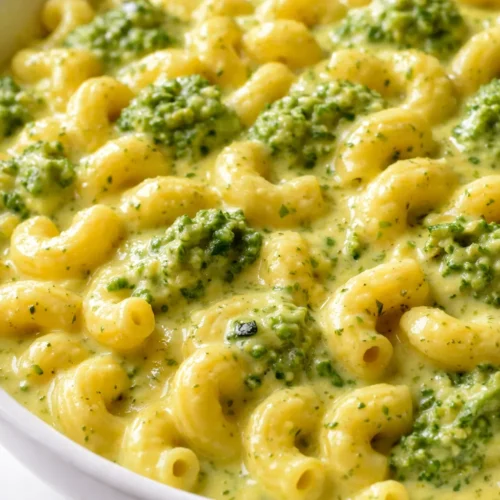
Healthy One Pot Broccoli Mac & Cheese
Equipment
- 4- to 5-quart Dutch oven or heavy pot
- Box grater or microplane
- Wooden spoon or silicone spatula
- Measuring cups and spoons
Ingredients
- 1 lb small pasta (elbow, shells, or cavatappi)
- 1 large head broccoli (about 1 lb)
- 4 tbsp unsalted butter
- 3 tbsp all-purpose flour
- 2.5 cups whole milk or 2%
- 1 tsp Dijon mustard
- 8 oz sharp cheddar, freshly grated
- 0.25 tsp fresh-grated nutmeg
- Salt and black pepper to taste
Instructions
- Fill the pot with water and salt it generously. Bring to a rolling boil. Add the pasta and cook it 2 minutes short of the package directions (until still white in the center).
- Add the chopped broccoli in the last 3 minutes. The residual heat from the pasta water softens it perfectly.
- Reserve 1 cup of the starchy pasta water, then drain the pasta and broccoli together in a colander. Set aside.
- Melt the butter in the same pot over medium heat until foamy but not browned. Add the flour and whisk constantly for 1 minute to make a roux.
- Slowly pour in the milk while whisking. Continue whisking until the mixture thickens enough to coat the back of a spoon, about 3-4 minutes.
- Turn the heat to low and stir in the mustard, nutmeg, and 3/4 of the cheese. Stir until the cheese is fully melted and the sauce is glossy.
- Add the drained pasta and broccoli back to the pot. Fold gently until combined. The broccoli should be tender enough that some melts into the sauce.
- Thin the sauce with the reserved pasta water, adding 1/4 cup at a time, until the sauce is loose enough to pool but thick enough to cling to the pasta.
- Taste and season with salt and a generous amount of black pepper. Add a final grating of nutmeg if desired. Let rest 2 minutes off heat before serving.
Notes
Don’t skip: Shred your own cheese and add the mustard and nutmeg – they make the sauce taste more complex.
For gluten-free: Use GF pasta and flour blend, increase milk slightly.
Pro tip: Reserve extra pasta water – the sauce thickens as it sits, and a splash brings it back to silky.
Related Recipes:
 Cheesy Hamburger Casserole Bake That’s Ready in 40 Minutes (No Canned Soup Here)
 Lemon Capellini Salad for Late Summer Evenings: Bright, Tangy, Ready in 20 Minutes
 Creamed Cabbage and Ground Beef Casserole That’s Rich, Tender, and Done in 45 Minutes
 Grilled Peach Burrata Salad That Tastes Like a Fancy Restaurant — at Home in 20 Minutes
 Creamy Garlic Tagliatelle That Looks Like a Restaurant Dish in 20 Minutes
 The Creamy Green Sauce Pasta That Looks Like You Made It for Instagram (But Tastes Even Better)