
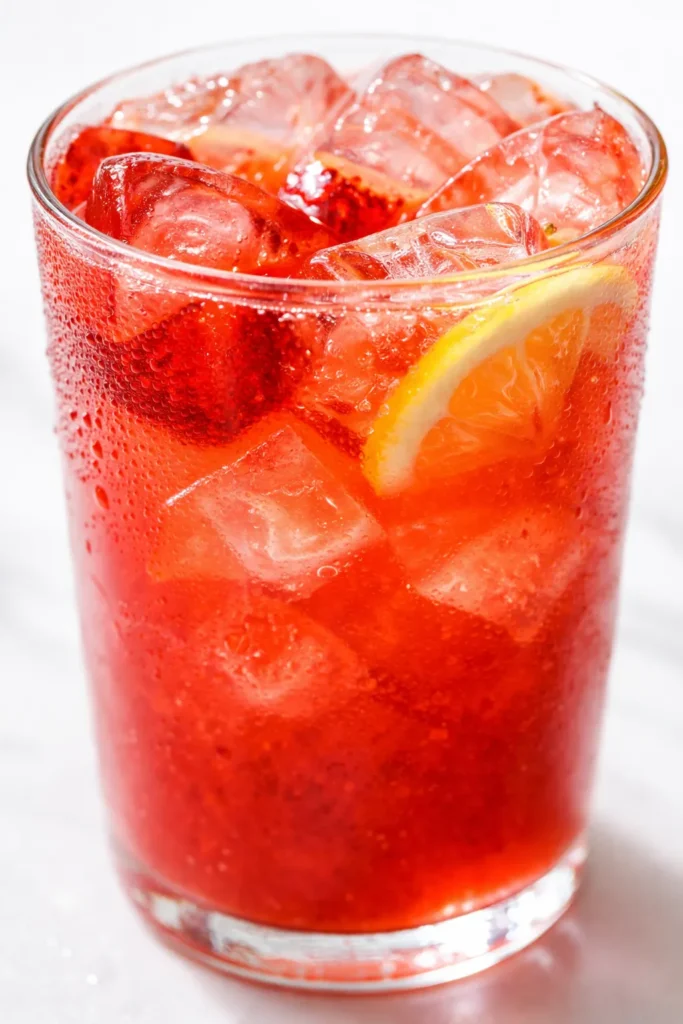
The color alone stops people. A deep, jewel-toned red that settles into a sunset gradient against the ice. It tastes like summer without the sugar hangover — bright, tart, exactly sweet enough to keep you reaching for another pour. I make this for the kind of gathering where people drink it out of wine glasses and ask if it’s spiked before they’ve finished the first one.
The short version: A strawberry syrup made by macerating the berries draws out maximum color and flavor without heat, so the lemonade stays tasting like fruit, not jam.
I’ve tested this through two full strawberry seasons. The version where you boil the berries makes mud. This one — where you let sugar and time do the work — makes a syrup so brilliant it looks like it has something to hide. It doesn’t. Just strawberries, sugar, and a little patience.
- Serves: 8 as a drink
- Hands-On Time: 15 min | Total Time: 45 min (plus 2 hrs maceration time)
- Difficulty: Easy — the hardest part is waiting for the syrup to steep
- Cost per serving: ~$0.85
- Calories: ~120 per 8oz serving
- Dietary Notes: Naturally vegan, gluten-free, dairy-free
(Photo above: A highball glass filled with ice and deep red lemonade, a thin lemon wheel wedged into the side, a single mint leaf resting on the rim. Late afternoon sun coming from the right, catching the condensation on the glass.)
The Maceration Method (Why Heat Is the Enemy of a Good Strawberry Syrup)
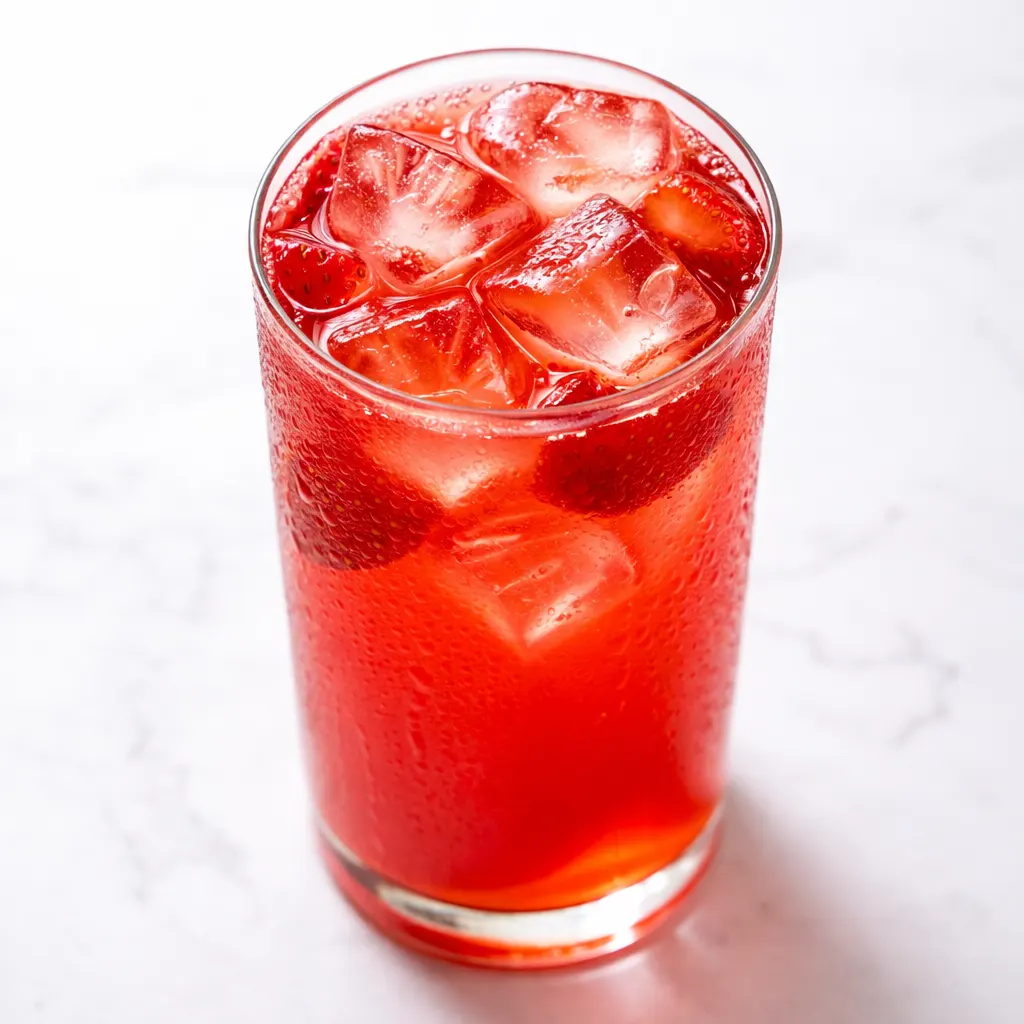
Boiling strawberries does two things: it dilutes their flavor and turns their color a murky brown-red. Not what you want in a drink meant to look like a gemstone. Maceration — letting sugar pull the liquid out of the fruit slowly at room temperature — gives you a syrup that tastes intensely of fresh strawberries and looks the color of a ruby.
The other thing maceration does is preserve that bright, slightly tart edge that makes a strawberry taste like a strawberry. Heat flattens it. Time intensifies it. Let the berries sit for two hours and you get a syrup that tastes like the best strawberry you ate all summer, concentrated into suspension.
Skip this step and you end up with pink sugar water. Follow it and you get the kind of lemonade people text you about the next day.
Ingredients: The Short List (With a Few Strong Opinions)
- 1 lb fresh strawberries, hulled and quartered: Fresh and in-season are non-negotiable here. The flavor concentrates in the syrup, so off-season berries make for sad syrup. If it’s January, use frozen strawberries that were frozen at peak ripeness. I’ve tested this with frozen and it works well — the freezing and thawing actually helps break down the cell walls and extract color.
- 1 cup granulated sugar: White sugar gives the cleanest flavor and lets the strawberries be the star. Brown sugar or honey would muddy the color and add flavors that compete with the lemon. This is one of those times where plain white sugar is the right choice.
- 1 ½ cups fresh lemon juice (from about 8–10 lemons): Not the bottled stuff. The bright, clean acid is what makes this refreshing instead of cloying. Roll the lemons on the counter before juicing to get more juice out. I learned this from a bartender friend and it actually works.
- 4 cups cold water: The water matters for dilution. Use filtered water if your tap water has a strong taste. My tap water in Brooklyn is fine, but if yours tastes like minerals, use filtered.
- Ice and garnishes: Large ice cubes melt slower and dilute the drink less. For garnish — a thin lemon wheel, a single mint leaf placed on the rim, or a whole strawberry with the hull on. Place the garnish deliberately. Don’t just drop it in.
What You’ll Need (Minimal, Standard Kitchen Things)
- A medium bowl for macerating the strawberries
- A fine-mesh sieve or cheesecloth for straining
- A pitcher (glass is best — it shows off the color)
- A citrus juicer or reamer (if you have one, if not, a fork and some muscle)
- A wooden spoon or spatula for pressing the berries
A blender or food processor? Not needed. The goal is clear syrup, not puree. Pressing the berries through a sieve extracts the color and flavor while leaving behind the seeds and fiber that make the drink cloudy and texturally weird.
Let’s Make It (Start to Finish)
This is the kind of recipe where the hands-on time is short but the waiting time does the actual work. Plan for it.
Macerate: In a medium bowl, combine the quartered strawberries and sugar. Toss them together until every berry piece is coated. Cover the bowl with plastic wrap and let it sit at room temperature for 2 hours. (📸 Photo cue: The strawberries should look wet and glossy, sitting in a pool of bright red syrup that’s formed at the bottom of the bowl. That’s the good stuff.)
Strain: After 2 hours, pour the contents of the bowl into a fine-mesh sieve set over a measuring cup or bowl. Use the back of a wooden spoon to press the berries gently against the sieve, extracting every bit of syrup. Discard the solids. Do not rush this pressing step — there’s a lot of syrup hiding in those berries.
Juice: Juice your lemons until you have 1 ½ cups. Strain the juice to remove seeds and pulp if you want a perfectly clear lemonade. (📸 Photo cue: The bright yellow juice against the deep red syrup — color contrast at its most satisfying.)
Combine: In a large pitcher, combine the strawberry syrup, lemon juice, and 4 cups of cold water. Stir well. Taste it. Add a bit more water if it feels too intense, a bit more sugar dissolved in warm water if it needs sweetness.
Chill: Refrigerate the lemonade for at least 30 minutes before serving. Cold lemonade is better than lemonade poured over ice immediately — the ice dilutes it more slowly if the base is already cold.
Serve: Fill glasses with large ice cubes. Pour the lemonade over the ice. Garnish with a lemon wheel placed on the rim and a single mint leaf. Serve immediately.
Make-Ahead Notes (Perfect for a Gathering)
This recipe is built for making ahead. The syrup keeps beautifully in the fridge, and the lemonade base (without ice) can be made a day in advance. Don’t add ice until you’re ready to serve — it dilutes the flavor over time.
- Fridge: The finished lemonade (without ice) keeps in an airtight pitcher for up to 4 days. Give it a stir before serving.
- Freezer: The syrup freezes well for up to 3 months. Pour it into an ice cube tray for single-serve portions. Thaw in the fridge overnight.
- Reheat: Not applicable here — serve cold.
Lessons Learned From a Lot of Pitchers
- Don’t rush the maceration: The first time I made this, I let the strawberries sit for 45 minutes. The syrup was pink and weak. The full 2 hours produces a syrup that’s almost black-red and intensely flavored. Set a timer and let it ride.
- Press, don’t push: When straining, use a steady pressure with the spoon. Don’t mash aggressively or you’ll push strawberry seeds and pulp through the sieve, clouding the syrup. Gentle and thorough.
- Taste and adjust: Strawberries and lemons vary in intensity. Taste the lemonade before serving. It should be tart enough to make your mouth water slightly, sweet enough to balance it. Adjust with a little more lemon juice or sugar syrup as needed.
- Garnish isn’t optional: I know it sounds fussy, but a lemon wheel and a mint leaf change how the drink reads. It goes from “kids’ lemonade” to “a proper beverage.” The garnish takes 30 seconds. Use it.
Ways to Make It Your Own
- Herb-Infused: Add 4–5 sprigs of basil or mint to the macerating berries. It infuses the syrup with a subtle herbal note that pairs beautifully with the lemon.
- Sparkling Version: Replace the 4 cups of still water with sparkling water or club soda. Add it just before serving to keep the fizz. It makes it feel like a fancy soda.
- Boozy Add-In: A shot of vodka or gin in each glass turns this into an excellent cocktail. The floral notes in gin complement the strawberries especially well.
- Low-Sugar Version: Use ½ cup of a granulated monk fruit sweetener or allulose instead of the sugar. The texture will be slightly thinner, and it won’t keep as long in the fridge, so make it and drink it within a day.
The Questions People Always Ask About This Strawberry Lemonade
Q: Why did my syrup turn out brown instead of red?
A: You likely overheated the strawberries. Heat degrades the red pigment. The maceration method avoids heat entirely, preserving that bright red color. If you boiled them, next time just let the sugar do the work.
Q: Can I use frozen strawberries?
A: Yes, and they actually work really well. Frozen berries release more liquid when they thaw, which means you get a lot of syrup. Use 1 lb frozen, hulled, and let them thaw completely before macerating. The flavor is slightly less bright than peak-season fresh, but still very good.
Q: How long does the strawberry syrup last in the fridge?
A: The syrup alone keeps for up to 2 weeks in a sealed container in the fridge. The finished lemonade is best within 4 days. Don’t freeze the finished lemonade — it separates and gets watery.
Q: What do you serve with this?
A: It’s perfect alongside salty snacks — think marcona almonds, a cheese board with sharp cheddar and crackers, or even a simple green salad with vinaigrette. It also stands beautifully on its own as a welcome drink.
More Drinks I Keep Coming Back To
If this one’s your speed, here are a few other things I make all summer long:
- [INTERNAL LINK PLACEHOLDER: Cucumber Mint Agua Fresca] — The most refreshing thing you can drink on a hot day. No sugar, just blended cucumber, lime, and a little mint.
- [INTERNAL LINK PLACEHOLDER: Classic Limeade with Salted Rim] — Tart, salty, cold. It hits every single note a summer drink should hit.
- [INTERNAL LINK PLACEHOLDER: Cherry Vanilla Shrub] — A drinking vinegar that sounds weird and tastes incredible. Sweet cherries and vanilla bean steeped in apple cider vinegar. It’s fizzy, tangy, and addictive.
This is the drink I make for the first warm weekend of the year, when everyone is just desperate for something that tastes like summer. It comes together in 15 minutes of active work and disappears in about 15 minutes of active drinking. Make it for your next small gathering and watch people hold their glasses up to the light.
If you try it, leave a comment and let me know what you thought. I’m genuinely curious which variations people reach for.
📌 Vibrant strawberry lemonade recipe that gets its brilliant red color from a no-heat maceration method — save this for your next summer brunch or backyard get-together.
Vibrant Strawberry Lemonade
Equipment
- Medium Bowl
- Fine-Mesh Sieve
- Pitcher
- Citrus Juicer
- Wooden Spoon
Ingredients
Strawberry Syrup
- 1 lb fresh strawberries, hulled and quartered
- 1 cup granulated sugar
Lemonade Base
- 1 ½ cups fresh lemon juice (from about 8–10 lemons)
- 4 cups cold water (filtered if tap has strong taste)
For Serving
- as needed ice cubes (large cubes recommended)
- for serving garnishes: thin lemon wheels and mint leaves
Instructions
- Macerate: In a medium bowl, combine the quartered strawberries and sugar. Toss until every piece is coated. Cover with plastic wrap and let sit at room temperature for 2 hours. The berries should look wet and glossy, sitting in a pool of bright red syrup.
- Strain: Pour the contents into a fine-mesh sieve set over a measuring cup or bowl. Use the back of a wooden spoon to press the berries gently against the sieve, extracting every bit of syrup. Discard the solids.
- Juice: Juice the lemons until you have 1½ cups. Strain to remove seeds and pulp for a clear lemonade.
- Combine: In a large pitcher, combine the strawberry syrup, lemon juice, and 4 cups cold water. Stir well. Taste and adjust with more water if too intense, or a little sugar dissolved in warm water if needed.
- Chill: Refrigerate the lemonade for at least 30 minutes before serving. Cold base dilutes more slowly over ice.
- Serve: Fill glasses with large ice cubes. Pour lemonade over ice. Garnish with a lemon wheel on the rim and a single mint leaf. Serve immediately.
Notes
Related Recipes:
 Twice Baked Breakfast Potatoes for a Lazy Sunday: The Only Brunch Dish You Actually Want to Make
 The Starbucks Pink Drink Recipe with the Perfect Coconut Milk Float
 Starbucks Vanilla Bean Copycat Recipe That Costs a Fraction of the Drive-Thru — and Tastes Better
 The Crispiest Breakfast Egg Sandwich You’ll Make at Home (No Soggy Bread)
 Caramel Ribbon Crunch Bars That Look Like a Bakery Item (But You Made in 35 Minutes)
 Frozen Whipped Coffee That’s Creamy, Dreamy, and Ready Whenever You Are