
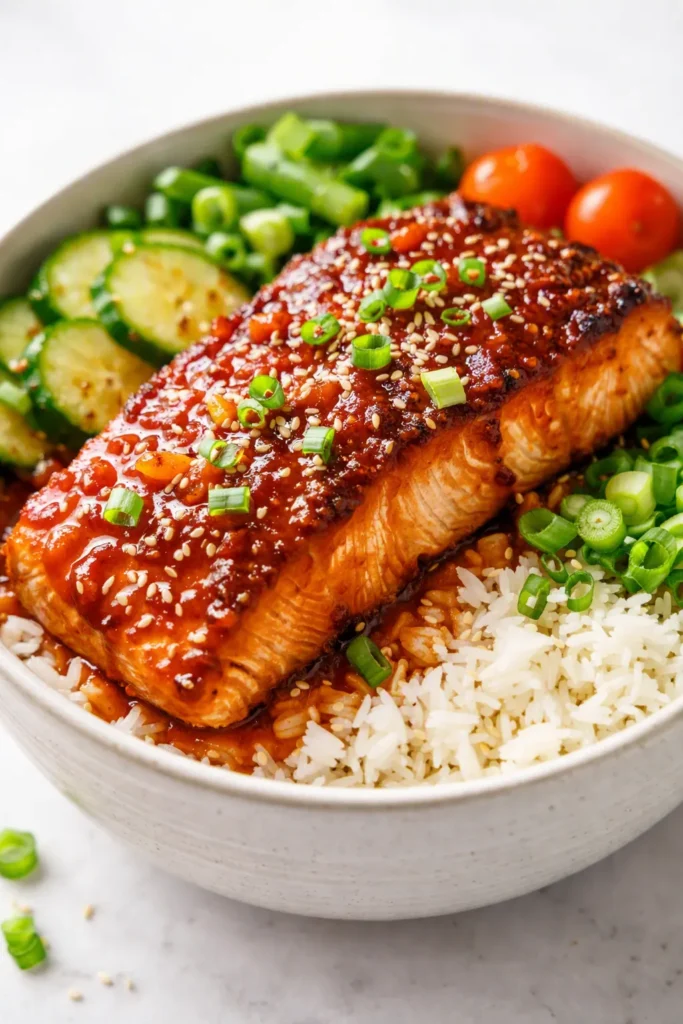
That first bite — where the sticky-sweet caramelized edges of the salmon hit the cool crunch of cucumber and the steam from the rice rises up — is genuinely the reason my family begs for these honey sriracha salmon bowls every single week. The sauce does that thing where it’s glossy and thick, clinging to every flake of fish, and the whole thing tastes like something you’d pay eighteen dollars for at a fancy fast-casual spot. But it’s on our dinner table in thirty minutes, and the only takeout container involved is the one I’m using to pack my husband’s lunch for tomorrow.
The short version: Sticky, spicy-sweet salmon over rice with quick-pickled cucumbers — and it’s genuinely faster than waiting for delivery.
I’ve made this exact honey sriracha salmon bowl recipe at least forty times since I first threw it together on a desperate Tuesday night. My pickiest eater, my eight-year-old, has asked for it three weeks in a row, and that is basically a miracle in our house.
- Serves: 4 as a main dish
- Hands-On Time: 20 min | Total Time: 30 min
- Difficulty: Easy enough for a weeknight, impressive enough for guests
- Cost per serving: About $5, depending on where you get your salmon
- Calories: ~540 per bowl
- Dietary Notes: Naturally dairy-free; easily gluten-free with tamari. Adaptable for low-carb by swapping the rice for cauliflower rice.
(Photo above: Overhead shot of the finished honey sriracha salmon bowls in shallow ceramic bowls — the salmon glistens with dark caramelized edges, topped with sesame seeds and scallions. There’s a small bowl of quick-pickled cucumbers on the side, and a pair of chopsticks resting casually across the rim. Warm, natural light from a kitchen window on the left makes the rice look fluffy and the sauce look glossy.)
The Trick That Keeps the Salmon Sticky (Not Soggy)
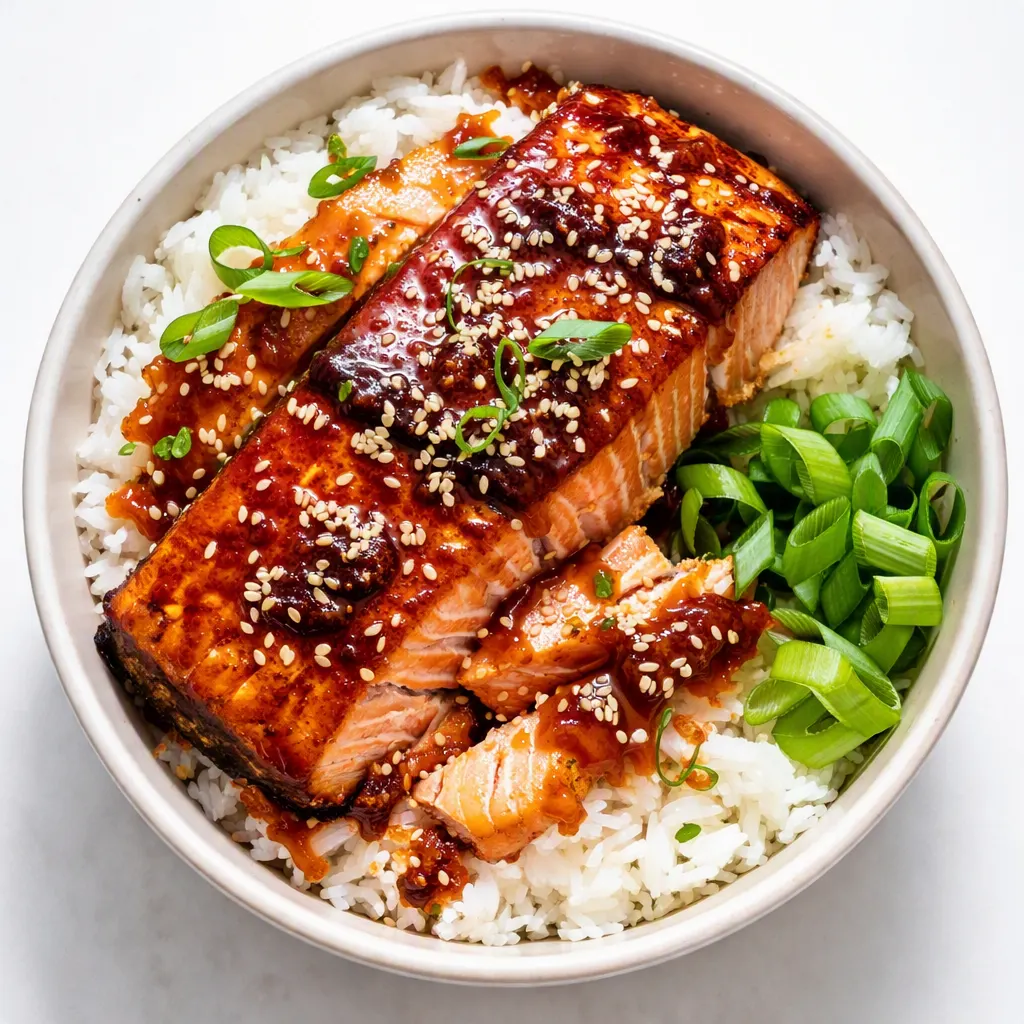
The secret to the best honey sriracha salmon bowls is not some complicated marinade — it’s how you treat the sauce when you add it to the pan. If you just pour the raw sauce over the fish and let it simmer, you end up with a watery glaze that clings to nothing and leaves you licking your plate for flavor that should’ve been on the salmon in the first place. I learned this the hard way after way too many sad, pale fillets.
What actually works is a two-part approach. The salmon gets a quick sear first so the surface starts to caramelize and develop that golden-brown crust that traps the flavor. Then — and this is the part everyone skips — you pull the salmon out of the pan, add the honey sriracha mixture, and let it bubble and reduce into a thick, syrupy glaze before you ever put the fish back in. That reduction step is everything. It’s what makes the sauce cling to the salmon like it’s been married to it for years instead of just sliding off into the bottom of the bowl.
When you do it right, the edges of the salmon get almost sticky-chewy in the best way, and every single grain of rice underneath ends up wearing a little bit of that sweet-spicy jacket. That’s the moment this goes from “pretty good dinner” to “please make this every week” territory.
Everything You Need for Honey Sriracha Salmon Bowls (Plus Real Talk)
- 1.5 pounds salmon fillet, cut into 4 portions: Look for fillets that are about the same thickness so they cook evenly. I buy the wild-caught when it’s on sale and farm-raised when it’s not — it honestly doesn’t matter much here because the sauce is the star. Pro tip from my kitchen: leave the skin on while cooking! It gets crispy in the pan and peels off easily after. My kids actually fight over crispy salmon skin, can you believe it?
- 1/4 cup honey: The real stuff, not the bear-shaped corn syrup. Local honey adds a floral note that’s gorgeous, but any honey works. If your honey is crystallized, micro-wave it for 10 seconds before mixing — trust me, I’ve ruined enough batches trying to whisk lumpy honey.
- 2-3 tablespoons sriracha: This is the adjustable part. I use 3 tablespoons because we like it with a real kick. My kids get the 2-tablespoon version and they handle it fine. Start with less if you’re nervous — you can always add more heat but you can’t take it out. My husband thinks he’s tough with hot sauce and he never does the full 3.
- 3 tablespoons soy sauce (or tamari for gluten-free): The salt backbone that balances all that honey. Low-sodium soy sauce is your friend here — the sauce reduces and concentrates, and full-salt soy sauce can get too salty.
- 2 cloves garlic, grated: Not minced, grated. It melts into the sauce and you don’t get weird garlic chunks. A microplane is the move, but a fine box grater works too. I’ve done this with garlic paste in a tube and it’s fine — just use a little less.
- 2 tablespoons rice vinegar: A splash of acid brightens everything and keeps the sauce from being cloying. Apple cider vinegar works in a pinch, but rice vinegar is gentler.
- 1 tablespoon cornstarch mixed with 2 tablespoons water: The thickening agent that takes the sauce from watery to glossy. Don’t skip the cornstarch slurry! I did once and the sauce was so thin it soaked into the rice and the salmon had no glaze at all. Sad day in our kitchen.
- 2 cups cooked jasmine rice (or your favorite grain): Standard white jasmine is my go-to but brown rice, quinoa, or even cauliflower rice works beautifully. Day-old rice from the fridge is perfect here because it’s slightly drier and soaks up the sauce without turning to mush.
- 1 English cucumber, thinly sliced: This is the cool, crunchy counterpoint to all that sweet-spicy heat. English cucumbers are worth it — they don’t get watery or bitter. Regular cucumbers work but you’ll want to seed them.
- 2 tablespoons rice vinegar + 1 teaspoon sugar (for the cucumber quick-pickle): A mini two-minute pickling situation that’s genuinely life-changing for the bowl. Don’t skip this quick-pickle situation. It adds a brightness that makes the whole thing sing.
- Sesame seeds, scallions, and cilantro for topping: Not optional in my house. The scallions add sharpness, the cilantro adds freshness, and the sesame seeds add that toasty, nutty thing. My daughter calls the sesame seeds “sprinkles for dinner” and she is absolutely right.
What to Pull Out Before You Start
- A 12-inch non-stick skillet or well-seasoned cast iron: This is important. The honey sauce is sticky business, and a regular stainless steel pan will make you fight the salmon every time. If you only have stainless, add a little extra oil and be patient when flipping — it’ll release when it’s ready.
- A small mixing bowl for the sauce.
- A medium bowl for the cucumber pickle.
- A measuring cup for the rice — I use the good rice cooker and we have zero regrets.
- Tongs: For flipping the salmon without breaking it apart.
That’s it. No blender, no food processor, no fancy equipment. This one’s about technique, not tools.
Let’s Make the Best Salmon Bowls (Step by Step)
This goes fast, so read through once before you start. The actual hands-on time is only about twenty minutes — the rest is just the rice and the glaze doing their thing.
Get the rice going: Start your rice first because it takes the longest. If you’re using a rice cooker, set it and forget it. If you’re making it on the stove, get it simmering before you touch the salmon.
- Mix the sauce: In a small bowl, whisk together the honey, sriracha, soy sauce, grated garlic, rice vinegar, and the cornstarch slurry. Set it aside. Give it a good stir right before you use it because the cornstarch settles at the bottom like a lazy teenager. (📸 Photo tip: This is a good shot of the raw sauce — glossy reddish-orange in a little ceramic bowl with the whisk resting in it. Good light really makes that color pop.)
- Pat the salmon dry: Use paper towels to pat those fillets completely dry. Moisture is the enemy of crispy skin. If you skip this step, your salmon will steam, not sear, and you’ll miss out on that golden crust. This is the 90-second step nobody wants to do but everybody needs to do. My husband used to skip it every single time until I proved it side-by-side one night. He’s a believer now.
- Season the salmon: Sprinkle both sides with a pinch of salt and pepper. Keep it light — the sauce has plenty of flavor. Don’t overthink this part. If you’re feeling fancy, a tiny pinch of garlic powder on the flesh side never hurt anybody.
- Sear the salmon: Heat the skillet over medium-high heat and add about a tablespoon of neutral oil — avocado or canola works great. When the oil just starts to shimmer (that’s your visual cue), place the salmon in the pan skin-side down. Press down gently with a spatula for 5 seconds to make full contact with the pan. Cook for 4-5 minutes without moving it. You’ll see the edges turning opaque and the skin getting crispy. (📸 Photo tip: This is the money shot of the searing — golden-brown crispy edges, deeply colored on the flesh side, and the skin side releasing from the pan naturally. Side angle works best to show the caramelization.)
- Flip and cook briefly: Flip the salmon using your tongs and cook the flesh side for 2-3 minutes. You want the salmon to be just cooked through — it should flake easily with a fork but still be moist in the center. If you’re using a thermometer, you’re looking for 125-130°F at the thickest part. I’m a fork-flake gal. If it resists your fork, give it another minute. If it’s already flaking, pull it out — carryover cooking will finish the job.
- Remove the salmon and reduce the glaze: Transfer the salmon to a plate and pour the sauce mixture into the still-hot pan. It’ll immediately start bubbling and sizzling — that’s what we want. Stir constantly as it cooks for 1-2 minutes. Watch for the transformation: it’ll change from liquid to something glossy and thick that coats the back of your spoon. This is the step that makes the difference. Don’t walk away! The sauce can go from perfect to scorched faster than you can check your phone.
- Sauce the salmon: Turn the heat down to low, add the salmon back to the pan, and spoon the thick syrup over each fillet a few times. Don’t let it simmer for more than a minute here — we’re just coating, not poaching. The salmon’s already cooked, so we just want it glazed and beautiful. I do this right in the pan with a spoon, letting the excess sauce pool in the bottom. Then I pour that extra sauce over the rice when I build the bowls. No wasted sauce in this house.
- Quick-pickle the cucumbers while everything cooks: This usually happens before step 6 or even earlier if I’m efficient. Toss the sliced cucumbers with 2 tablespoons rice vinegar and 1 teaspoon sugar in a medium bowl. Let them sit while everything else cooks. Stir them once or twice. They’ll get that tangy, slightly softened texture that’s so good on a bowl. My kids like these cucumbers so much they’ll eat them straight from the bowl with a fork while I’m trying to assemble dinner.
- Build the bowls: Divide the rice between four bowls, top each with a glazed salmon fillet, and add a generous handful of the quick-pickled cucumbers. Sprinkle with sesame seeds, scallions, and cilantro. Drizzle any remaining sauce from the pan over the top. (📸 Photo tip: This is the hero shot. Overhead angle works best — the salmon front and center with the sticky glaze visible, colorful toppings scattered, and steam rising from the rice. Show that beautiful cross-section of the salmon if you can.)
That’s it. Ten steps, but most of them are 30 seconds each. Total time is about 30 minutes from the moment I hit the rice cooker button to the moment bowls hit our table.
How I Meal Prep These for the Week
This honey sriracha salmon bowl recipe is absolutely perfect for meal prep, which is honestly half the reason it’s in our weekly rotation. I make a double batch on Sundays and we’re set until Wednesday. The secret is storing the components separately so nothing gets sad or soggy — especially that crispy salmon skin.
- Fridge: Store the rice and salmon in separate airtight containers in the fridge for up to 3 days. Keep the pickled cucumbers in their own little jar — they stay crisp for about 5 days. When you’re ready to eat, microwave the rice with a splash of water (keeps it fluffy) and reheat the salmon gently.
- Freezer: The salmon freezes okay for up to 2 months, but I’m going to be honest — the texture suffers a little. The sauce loses that sticky-coating magic after a freeze-and-reheat round. If you do freeze it, wrap the salmon tightly and reheat it in a pan with a tiny splash of water to help the sauce loosen up. We usually just cook fresh salmon on Sunday and don’t freeze, but that’s the honest answer.
- Reheat: For the salmon, the microwave works in a pinch but it will make the sauce runnier and the skin soggy. That’s just physics, I’m sorry to say. The best way is to gently reheat in a skillet over medium-low heat, skin-side down first, for about 2 minutes per side. Add a splash of water to the pan to help the sauce rehydrate without burning. My “I’m really tired” move is microwaving it at 50% power for 60 seconds, which works way better than full power.
Things I Wish I’d Known the First Time
- Sriracha brands are not created equal: The most well-known brand in the green bottle is the classic — it’s got a garlicky kick that works perfectly here. But some generic store brands are sweeter and milder. If you’re using a different brand, taste your sauce before adding the honey, and adjust from there. I learned this the hard way when I bought a store brand that made our sauce taste like barbecue. We ate it anyway, but it wasn’t the same.
- Don’t crowd the pan: If you double the recipe and your skillet can’t comfortably fit all four fillets, do it in two batches. When salmon is squeezed together, it steams instead of sears, and you lose all that beautiful caramelization. If you only have one pan and need to do two batches, that’s totally fine — just keep the first batch warm in a 200°F oven while you sear the second.
- The sauce thickens as it cools: Don’t panic if your glaze looks loose in the pan — that sticky-thick texture comes as the sauce coats the fish. If you reduce it too much while the salmon’s in the pan, it’ll turn into something closer to candy and get that burnt-sugar edge. Pull the sauce a touch earlier than you think you need to and let it keep thickening on the salmon as it rests. Honestly, even if you mess this part up a little and the sauce gets too thick, it’ll still taste good. I’ve done it. Time to learn from me.
- Use your freezer for ginger: Fresh grated ginger adds an incredible warmth to this dish. I keep peeled whole ginger roots in a zip-top bag in the freezer and grate it directly from frozen. Frozen ginger doesn’t get stringy and you never waste a weird shriveled knob in the produce drawer. I learned this trick from my mother-in-law and I’m convinced it’s actual witchcraft. For this recipe, grate in about a tablespoon of frozen ginger along with the garlic for the sauce if you want an extra layer of complexity.
- Sesame oil is a finishing move, not a cooking oil: A tiny drizzle of toasted sesame oil at the very end — just over the finished bowls — adds this nutty fragrance that makes the whole thing taste way more complex. Don’t cook with it, or it loses its personality. I’ll drizzle it right over the top or mix it into the sauce at the very end. This is a game changer.
Swaps That Actually Work
- Dairy-Free: This is already dairy-free! The sauce and everything in the bowl is naturally dairy-free. My friend with a dairy allergy is always thrilled when I make this because she can eat literally everything without any changes.
- Gluten-Free: Just swap the soy sauce for tamari or coconut aminos. I tested this with tamari, and I honestly can’t tell the difference. For my nephew who’s celiac, I make the whole batch with tamari now so everyone eats the same thing.
- Low-Carb/Keto: Serve it over cauliflower rice or even just a bed of sautéed greens. The salmon and sauce are already keto-friendly. I do this version for myself a few days a week and I genuinely prefer it sometimes — the sauce is so intense that you don’t miss the rice.
- A little less sweet: Cut the honey back to 3 tablespoons and add an extra tablespoon of rice vinegar. This is the version I make when I want it more savory than sweet. My mom likes this version better — she says the honey is “too much” for her. I tell her the sweetness is the point, but we each cook our own batch our own way.
- Fancy guest version: Add a sprinkle of fresh jalapeño slices and a few sesame seeds, serve it in beautiful bowls with a wedge of lime on the side. The lime juice squeezed over the top is genuinely incredible — that extra pop of acid cuts through the sticky sweetness. We did this for my in-laws’ anniversary dinner and my father-in-law had seconds of the salmon even though he “never eats fish at home.”
- Extra-crunchy topping: Toast some panko breadcrumbs in a little sesame oil until golden and sprinkle them over the bowl right before serving. It’s a textural contrast that will blow your mind. My kids love this version, but I rarely do it because it’s one more dirty pan. So this is a “when I feel fancy” move.
Questions I Get About This Recipe All the Time
Q: Why did my salmon turn out soggy when I added the sauce?
A: Ugh, I’ve been there. It’s almost always one of two things: the sauce wasn’t reduced enough before you added the salmon back, or the salmon didn’t get a proper sear. The glaze needs to be thick enough to cling, so let it bubble and reduce until it coats the back of a spoon. And on that sear — make sure the pan is genuinely hot and don’t crowd the fillets. If the salmon isn’t sizzling when it hits the pan, pull it out, wait a minute, and let the pan get hotter. You’ve got this next time!
Q: Can I make this with a different fish?
A: Yes! Shrimp works beautifully — just reduce the searing time to 2-3 minutes total since shrimp cooks so fast. Halibut is also a good choice but it’s pricey. Honestly, my absolute favorite swap is chicken thighs — the sauce turns them into something sticky-sweet and caramelized that’s almost like takeout. The only fish I’d avoid is something super delicate like tilapia — it falls apart too easily.
Q: How long does the honey sriracha salmon last in the fridge? Can I freeze it?
A: You can keep cooked salmon in an airtight container in the fridge for up to 3 days. Freezing is an option, but it changes the texture — the sauce gets a bit runny and the fish can get dry. If you do freeze it, wrap those fillets individually in plastic wrap and store them in a zip-top bag. To reheat, thaw in the fridge overnight, then warm it gently in a skillet with a splash of water — not a microwave if you can help it, since that makes the fish rubbery.
Q: What do you serve with these salmon bowls?
A: In our house, the bowl itself is the whole meal — rice, salmon, pickled cucumbers, and plenty of scallions. But sometimes I add a side of simple steamed broccoli or edamame dusted with salt and sesame seeds. On weekends, a soft-boiled egg perched on top is genuinely superb. And honestly, a cold glass of something crisp to balance the sweet-spicy thing is always a good call — we pour a little Sauvignon Blanc for the adults and sparkling water with lime for the kids.
Q: Can I double the sauce?
A: Definitely! Just keep the same proportions and double everything. The only thing to watch is the reduction time might take a little longer with a larger volume. But more sauce means more happy people, so I’m never mad about it.
More Recipes My Family Makes on Repeat
If you liked this one, here are a few others that get the same reaction at our table — people asking for the recipe before they’ve even finished eating:
- [INTERNAL LINK PLACEHOLDER: Crispy Baked Chicken Thighs That Are Juicier Than Fried] — My kids legitimately think these are from a restaurant. The skin shatters when you bite into it, every single time.
- [INTERNAL LINK PLACEHOLDER: 20-Minute Garlic Shrimp Pasta] — The weeknight lifesaver. One skillet, big flavor, and it’s on the table faster than ordering takeout.
- [INTERNAL LINK PLACEHOLDER: Easy Chicken Teriyaki Bowls] — The recipe that taught me that homemade teriyaki sauce is infinitely better than the bottled stuff, and it’s just as fast.
I hope these honey sriracha salmon bowls earn a permanent spot in your dinner rotation the way they have in mine. Whether it’s a busy Tuesday or a slow Sunday, this one always delivers — and the pickled cucumber situation alone is worth the thirty minutes.
If you try this one, drop a comment below and let me know how it went! I genuinely love hearing which variations you tried and how your family liked it. And if you share it on Instagram, tag me so I can cheer you on from over here.
📌 Honey sriracha salmon bowls recipe that takes 30 minutes and one pan — save it for your next weeknight dinner when takeout is tempting.
Honey Sriracha Salmon Bowls
Equipment
- 12-inch nonstick skillet or well-seasoned cast iron
- Small Mixing Bowl
- Medium Bowl
- Measuring Cup
- Tongs
- Rice cooker or saucepan (optional)
Ingredients
For the Salmon and Sauce
- 1.5 pounds salmon fillet, cut into 4 equal portions
- 1/4 cup honey
- 2-3 tablespoons sriracha
- 3 tablespoons soy sauce or tamari (use tamari for gluten-free)
- 2 cloves garlic, grated
- 2 tablespoons rice vinegar
- 1 tablespoon cornstarch mixed with 2 tablespoons water
- 1 tablespoon neutral oil (avocado or canola)
- Salt and freshly ground black pepper, to taste
For the Bowls
- 2 cups cooked jasmine rice or your favorite grain
- 1 English cucumber, thinly sliced
- 2 tablespoons rice vinegar (for the quick pickle)
- 1 teaspoon sugar
- Sesame seeds, sliced scallions, and fresh cilantro, for topping
- 1 tablespoon toasted sesame oil, for drizzling (optional)
Instructions
- Start the rice first because it takes the longest. If you are using a rice cooker, set it and forget it; if making it on the stove, get it simmering before you touch the salmon.
- In a small bowl, whisk together the honey, sriracha, soy sauce, grated garlic, rice vinegar, and cornstarch slurry. Set it aside, and give it a good stir right before using because the cornstarch settles at the bottom.
- Pat the salmon fillets completely dry with paper towels. Moisture is the enemy of crispy skin, so do not skip this step.
- Sprinkle both sides of the salmon with a pinch of salt and pepper. Keep the seasoning light because the sauce has plenty of flavor.
- Heat a 12-inch skillet over medium-high heat and add about a tablespoon of neutral oil. When the oil shimmers, place the salmon in the pan skin-side down and press gently for 5 seconds. Cook for 4-5 minutes without moving it, until the edges turn opaque and the skin is crispy.
- Flip the salmon with tongs and cook the flesh side for 2-3 minutes, until it flakes easily with a fork but is still moist in the center. If using a thermometer, look for 125-130°F at the thickest part. Transfer the salmon to a plate.
- Pour the sauce mixture into the still-hot pan. It will bubble immediately. Stir constantly for 1-2 minutes, letting it reduce until it is glossy and thick enough to coat the back of a spoon. Do not walk away — it can go from perfect to scorched quickly.
- Turn the heat to low, return the salmon to the pan, and spoon the thick glaze over each fillet a few times. Do not let it simmer for more than a minute; you are just coating, not poaching.
- While everything cooks, toss the sliced cucumber with 2 tablespoons rice vinegar and 1 teaspoon sugar in a medium bowl. Let it sit, stirring once or twice, until tangy and slightly softened.
- Divide the rice between four bowls, top each with a glazed salmon fillet, and add a generous handful of pickled cucumbers. Sprinkle with sesame seeds, scallions, and cilantro, then drizzle any remaining sauce from the pan over the top.
Notes
Related Recipes:
 Cheesy Hamburger Casserole Bake That’s Ready in 40 Minutes (No Canned Soup Here)
 Creamy Garlic Tagliatelle That Looks Like a Restaurant Dish in 20 Minutes
 Texas Roadhouse Style Baked Salmon with Sweet and Savory Glaze — Ready in Under 30 Minutes
 Easy Italian Meatloaf That’s Actually Juicy (Not Dry) — in 1 Hour
 The Biscuits and Gravy Casserole That’s Actually Crispy on Top (And Ready in 40 Minutes)
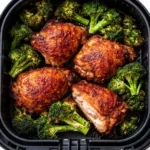 Air Fryer Chicken and Vegetables That Don’t Taste Like a Regret (30 Minutes, One Pan)