

The enemy of a good copycat lemon loaf isn’t the batter — it’s skipping the soak. Most recipes tell you to mix lemon into the batter and call it done, and what you get is a perfectly fine loaf that dries out by day two. The real Starbucks version gets its dense, velvety, almost pudding-like texture from a three-step syrup soak that seeps in after baking. It takes exactly 90 seconds to brush on and it’s the entire difference between a loaf that tastes homemade and one that tastes like it cost four dollars a slice.
The short version: A deeply tart, impossibly moist lemon loaf with a crackly white glaze — for about fifty cents a slice.
I’ve made this roughly twelve times in the past three months, mostly because my neighbor keeps asking if I’m “testing again” and I keep needing an excuse to use up the lemons I buy impulsively at the bodega. The last batch disappeared at a brunch before I’d even poured my coffee.
- Serves: 8–10 as a breakfast loaf or dessert
- Hands-On Time: 15 min | Total Time: 75 min
- Difficulty: Surprisingly easy for how professional it looks
- Cost per serving: ~$0.50 (vs. $4.50 at Starbucks)
- Calories: ~320 per serving
- Dietary Notes: Nut-free. Easily made dairy-free with a swap.
(Photo above: overhead shot of a thick slice of lemon loaf on a simple white plate, a fork resting beside it, the white glaze crackled perfectly over the golden crumb, a few scattered fresh blueberries adding a pop of color in the corner.)
The One Step Everyone Skips (Don’t Skip It)
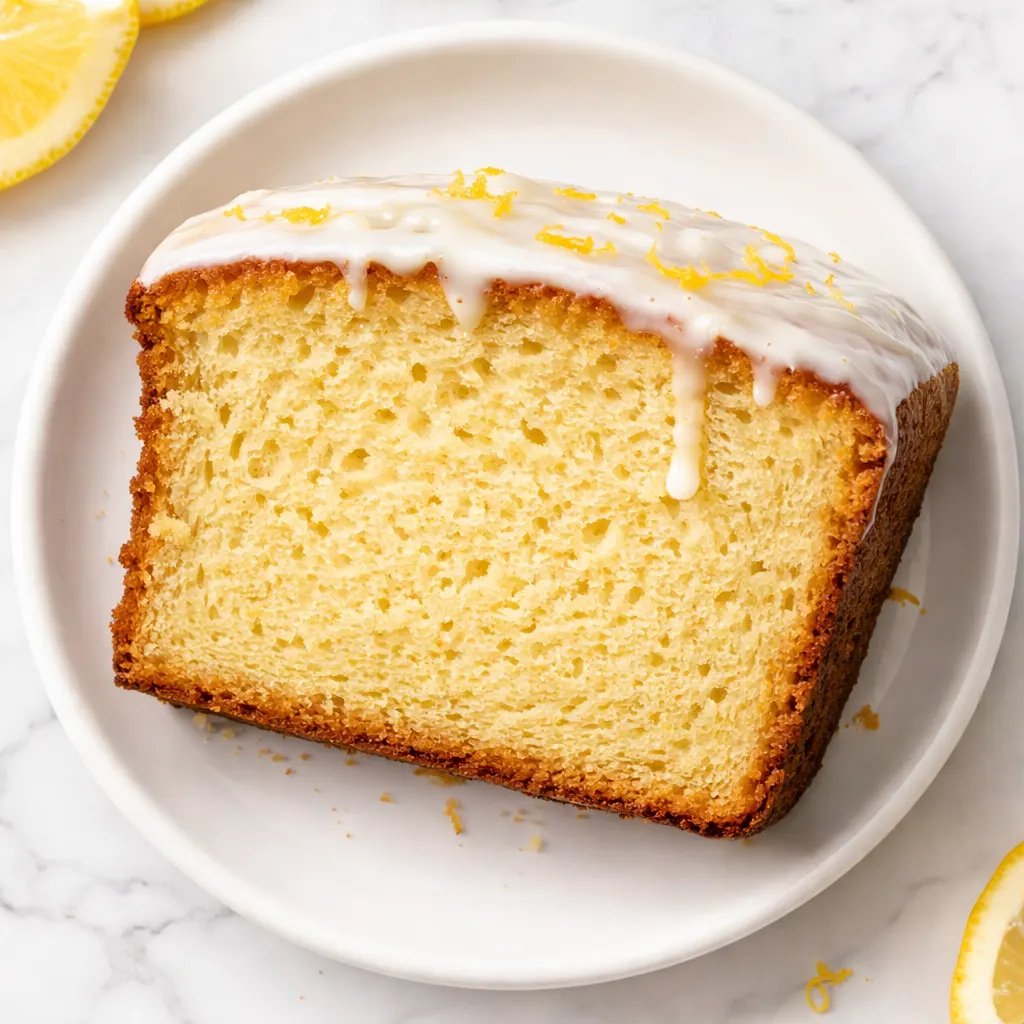
When you brush a warm lemon loaf with a simple syrup, you’re not just adding moisture — you’re changing the architecture of the crumb. The syrup seeps into every pore the baking process left behind, creating that dense, velvety texture that makes the Starbucks version so specific. Without it, you have a perfectly fine coffee cake. With it, you have something that demands to be eaten in thick slices with the glaze crackling under your fork.
Yogurt or sour cream in the batter is doing the heavy lifting for tenderness, keeping the loaf soft without making it gummy. And the glaze is not a suggestion — it’s a structural component. A thick enough ratio sets into a solid white shell that contrasts perfectly with the soft, tart crumb underneath.
Everything You Need (And a Few Notes From Me)
- 1 ½ cups (190g) all-purpose flour: The structure. We’re not getting fancy here.
- 1 tsp baking powder + ½ tsp salt: The lift and the balance.
- 1 cup (200g) granulated sugar: Sweetness, but also moisture. Sugar is a liquid ingredient in baking — it liquefies in the oven.
- ½ cup (120g) plain yogurt or sour cream: This is the texture hack. Full fat, please. Low fat adds water and changes the crumb.
- ⅓ cup (80ml) vegetable oil: Keeps it moist for days. Butter gives flavor, oil gives texture. I use both where it counts, but here oil is the star.
- 2 large eggs: The binder. Room temperature so they emulsify properly.
- 2 tbsp lemon zest (from 2–3 lemons): Zest before you juice. Do this first. A zested lemon that’s already been juiced is a genuinely frustrating experience.
- For the Soak: ¼ cup (60ml) lemon juice + ¼ cup (50g) granulated sugar. The non-negotiable step.
- For the Glaze: 1 cup (120g) powdered sugar + 2–3 tbsp lemon juice. Sift the sugar. Lumps in a white glaze are immediately noticeable and impossible to ignore once you’ve seen them.
The Setup (It’s Minimal, I Promise)
- 8.5 x 4.5 inch loaf pan — a 9×5 works but the loaf will be slightly shorter and bake a little faster
- Parchment paper sling — the only way to get a syrupy loaf out cleanly without a fight
- A pastry brush — for the soak. A spoon will not distribute it evenly.
Let’s Make It (Step by Step)
This is a two-bowl situation. Wet ingredients in one, dry in the other. Easy enough to do while the coffee brews.
Preheat and Prep: Set your oven to 350°F. Grease your loaf pan and line it with a parchment sling — meaning two long strips that hang over the long sides so you can lift the loaf out cleanly after baking.
- Whisk the dry stuff: In a medium bowl, whisk together the flour, baking powder, and salt until evenly combined. Set aside.
- Mix the wet stuff: In a large bowl, whisk together the sugar, yogurt, oil, eggs, and lemon zest until smooth and pale, about a minute. It should look thick and glossy.
- Fold them together: Pour the dry ingredients into the wet. Use a spatula to fold gently until just combined — a few streaks of flour are fine. Overmixing here will make the loaf tough. (📸 Photo tip: The batter should be thick and smooth with no visible dry flour pockets — if it looks like a thick muffin batter, you’re right on track.)
- Bake: Pour the batter into the prepared pan and spread it even. Bake for 45–50 minutes, until a tester inserted in the center comes out clean or with just a few moist crumbs. The top should be deep golden brown and cracked.
- Make the soak while it bakes: Stir the lemon juice and sugar together in a small bowl until the sugar is mostly dissolved. It won’t fully dissolve until it hits the warm loaf, so don’t stress.
- Soak the warm loaf: Let the loaf cool in the pan on a rack for 10 minutes. Then lift it out using the parchment sling and set it on the rack. Brush the syrup all over the top and sides of the warm loaf. You’ll see it disappear almost immediately — that’s the goal. (📸 Photo tip: The loaf should look damp and glossy but not pooled in syrup. If it’s absorbing everything, you’re doing it right.)
- Glaze when completely cool: Once the loaf is totally cool (at least 30 minutes), whisk the powdered sugar and lemon juice together. It should be thick enough to hold its shape for a second before slowly settling. Pour it over the center of the loaf and let it cascade down the sides. Let it set for 10 minutes before slicing.
Make-Ahead Notes (Because We’re All Busy)
This loaf is genuinely better on day two. The flavors meld and the texture becomes even more velvety. I’ve started making it the night before I need it on purpose.
- Fridge: Wrap tightly in plastic. It keeps beautifully for up to 5 days.
- Freezer: Freeze the unglazed loaf wrapped in plastic then foil for up to 3 months. Glaze after thawing.
- Reheat: A quick trip to a skillet or toaster oven brings back the crispy edge. The microwave works in a pinch but the texture gets softer.
Things I Wish I’d Known the First Time
- The Soak Is Non-Negotiable: I know it sounds like an extra fussy step. I ignored it the first time and the loaf was fine. The second time I used it, I understood the entire point of the recipe. It’s the difference between “homemade” and “copycat.” I will never skip it again.
- Zest Before You Juice: This is a true life tip. A juiced lemon is floppy and impossible to zest properly. Do the zest first, then slice and juice. You will thank me.
- Glaze Thickness: If the glaze runs straight off the loaf and pools on the plate, it’s too thin. It should be thick enough to hold its shape for a moment before slowly settling into place. Add powdered sugar a tablespoon at a time until it feels right.
- Use a Parchment Sling: Do not trust your non-stick spray here. The sugar syrup will glue the loaf to the pan like cement. The sling is the only way to get it out intact.
Swaps That Actually Work
- Dairy-Free: Use full-fat coconut yogurt or a good dairy-free sour cream. The texture is nearly identical. I’ve tested this for a friend with a dairy allergy and she couldn’t tell the difference.
- Blueberry Lemon: Fold 1 cup of fresh blueberries into the batter at the end. They burst and create jammy pockets. This is the version I make when I want people to think I tried harder than I did.
- Gluten-Free: Use a 1:1 gluten-free flour blend. The texture will be slightly more tender and delicate, but the soak helps it hold together beautifully.
- Extra Tart: Add 2 tablespoons of fresh lemon juice directly to the batter. It’s a lot of acid, so the batter will look slightly curdled — that’s fine. The result is a truly aggressive lemon punch. I do this when I’m feeling particularly bold.
Questions I Get About This Recipe All the Time
Q: Why did my loaf sink in the middle?
A: Ugh, I’ve been there. It usually means the oven was running hot so the outside set too fast while the middle kept rising, or the batter was overmixed which weakened the structure. Check your oven temp with a thermometer next time — it’s almost always the oven, not you.
Q: Can I make this dairy-free?
A: Yes. Full-fat coconut yogurt or a dairy-free sour cream works perfectly. I’ve tested it and the texture is indistinguishable. The soak helps bridge any minor differences.
Q: How long does it last? Can I freeze it?
A: Wrapped tightly, it’s perfect at room temp for 5 days. For freezing, skip the glaze, wrap the loaf in plastic then foil, and freeze for up to 3 months. When you want it, thaw and glaze fresh. The texture stays remarkably good.
Q: What do you serve with this?
A: A hot coffee is the obvious answer. But if you want to turn it into a dessert, thick slices with fresh berries and lightly sweetened whipped cream are genuinely next level. My friends request it as a “brunch dessert” regularly.
More Recipes My Friends Keep Asking For
If you liked this one, here are a few others that get the same reaction in my kitchen:
- My Copycat Starbucks Blueberry Muffins — Better than the real thing, fight me.
- The Lemon Ricotta Pancakes That Changed My Mind About Breakfast — Fluffy, tender, and dangerously easy.
- A Simple Roast Chicken That Looks Like You Tried — You didn’t, but they don’t need to know that.
This is the loaf you bring to a brunch and everyone asks for the recipe before you’ve finished putting your coat down. Have the link ready.
If you make it, let me know — drop a comment below or tag me on Instagram. I genuinely love seeing your baking wins.
📌 This Starbucks Copycat Lemon Loaf recipe uses a simple syrup soak to keep it impossibly moist — save it for your next weekend baking project when you want something that looks expensive but isn’t.

Starbucks Copycat Lemon Loaf (The Secret Is the Syrup Soak)
Equipment
- 8.5 x 4.5 inch loaf pan
- Parchment Paper
- Pastry brush
- Mixing bowls
- Whisk
- Spatula
Ingredients
- 1 1/2 cups all-purpose flour (190g)
- 1 tsp baking powder
- 1/2 tsp salt
- 1 cup granulated sugar (200g)
- 1/2 cup plain yogurt or sour cream (120g), full fat
- 1/3 cup vegetable oil (80ml)
- 2 large eggs, room temperature
- 2 tbsp lemon zest (from 2–3 lemons)
For the Soak
- 1/4 cup lemon juice (60ml)
- 1/4 cup granulated sugar (50g)
For the Glaze
- 1 cup powdered sugar (120g), sifted
- 2–3 tbsp lemon juice
Instructions
- Preheat oven to 350°F. Grease your loaf pan and line it with a parchment sling — two long strips that hang over the long sides so you can lift the loaf out cleanly after baking.
- In a medium bowl, whisk together the flour, baking powder, and salt until evenly combined. Set aside.
- In a large bowl, whisk together the sugar, yogurt, oil, eggs, and lemon zest until smooth and pale, about a minute. It should look thick and glossy.
- Pour the dry ingredients into the wet. Use a spatula to fold gently until just combined — a few streaks of flour are fine. Do not overmix.
- Pour the batter into the prepared pan and spread it even. Bake for 45–50 minutes, until a tester inserted in the center comes out clean or with just a few moist crumbs. The top should be deep golden brown and cracked.
- While the loaf bakes, make the soak: Stir the lemon juice and sugar together in a small bowl until the sugar is mostly dissolved.
- Let the loaf cool in the pan on a rack for 10 minutes. Then lift it out using the parchment sling and set it on the rack. Brush the syrup all over the top and sides of the warm loaf. You’ll see it disappear almost immediately.
- Let the loaf cool completely (at least 30 minutes). Whisk the powdered sugar and lemon juice together for the glaze — it should be thick enough to hold its shape for a second before slowly settling. Pour it over the center of the loaf and let it cascade down the sides. Let it set for 10 minutes before slicing.
Notes
Related Recipes:
 The Perfectly Pillowy Chocolate Chip Milk Buns (Tangzhong Method)
 Cheesy Hamburger Casserole Bake That’s Ready in 40 Minutes (No Canned Soup Here)
 Creamy Garlic Tagliatelle That Looks Like a Restaurant Dish in 20 Minutes
 Texas Roadhouse Style Baked Salmon with Sweet and Savory Glaze — Ready in Under 30 Minutes
 Moist Lemon Zucchini Bread with a Crunchy Lemon Sugar Top
 Strawberry Shortcake Rice Krispie Treats That Actually Taste Like Shortcake — Ready in 15 Minutes