
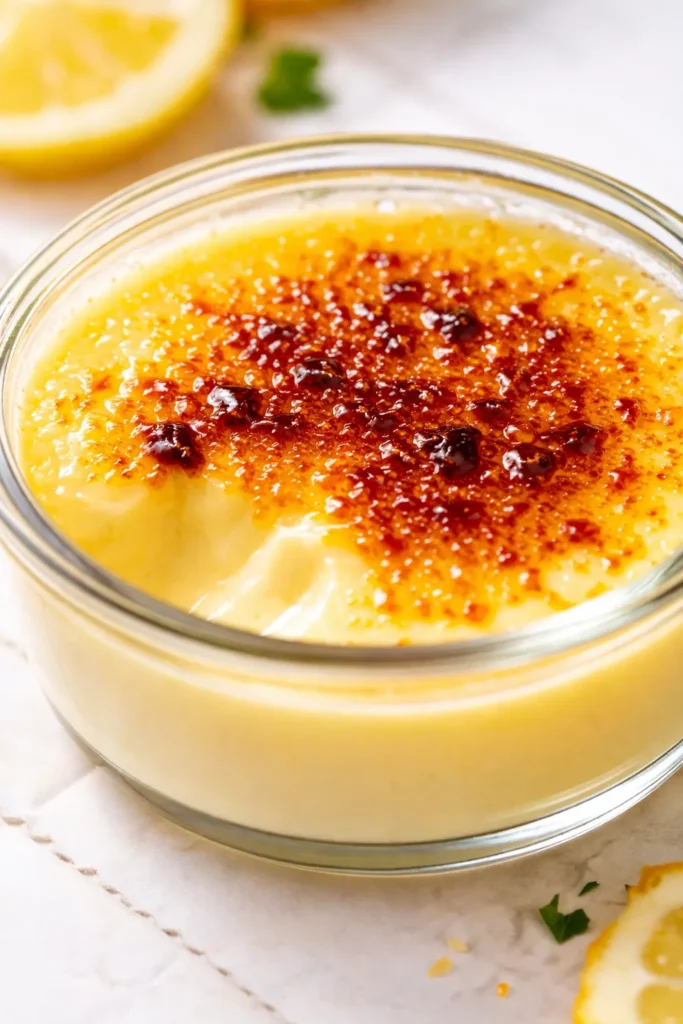
I’ve never had a dinner party dessert disappear faster than this one. The first time I made it, I literally sent a photo to my sister before I even picked up a spoon — it was that beautiful just sitting there in its little ramekin. But the real magic? It’s three ingredients. Ten minutes of hands-on work. No water bath, no tempering eggs, no complicated anything. The crack of the caramelized sugar shell against the cold, silky, intensely tart custard underneath is one of the most satisfying things I’ve ever pulled out of my kitchen. And somehow, it feels like you pulled off something impossibly fancy — which, I guess, you did. It just didn’t require any actual fussing to get there.
The short version: A velvety, eggless lemon custard that sets itself, topped with a bruleed sugar crust that shatters when you tap it.
I’ve made this roughly a dozen times now — for book club, for Easter brunch, for a random Tuesday when I needed something that felt like a victory lap. My picky nine-year-old calls it “lemon pudding” and eats it with the brûlée top on. My husband spends the whole time trying to get the biggest shard of caramelized sugar. It reliably makes people go quiet for exactly three seconds after the first bite, and then they ask for the recipe.
- Serves: 4-6 as dessert
- Hands-On Time: 10 min | Total Time: 4 hours 10 min (including chilling)
- Difficulty: Embarrassingly easy considering how it reads on a menu
- Cost per serving: ~$1.50
- Calories: ~350 per serving
- Dietary Notes: Naturally gluten-free, vegetarian. Can be made dairy-free.
(Photo above: Close-up overhead shot of two shallow white ramekins of lemon posset brûlée. The one in front has the caramelized sugar shell cracked open with a spoon, revealing the pale yellow, utterly smooth custard beneath. A vintage silver spoon rests on the edge of the ramekin. Warm, dim afternoon light from a window casts a soft shadow.)
Why This 3-Ingredient Dessert Has Everyone Asking for the Recipe
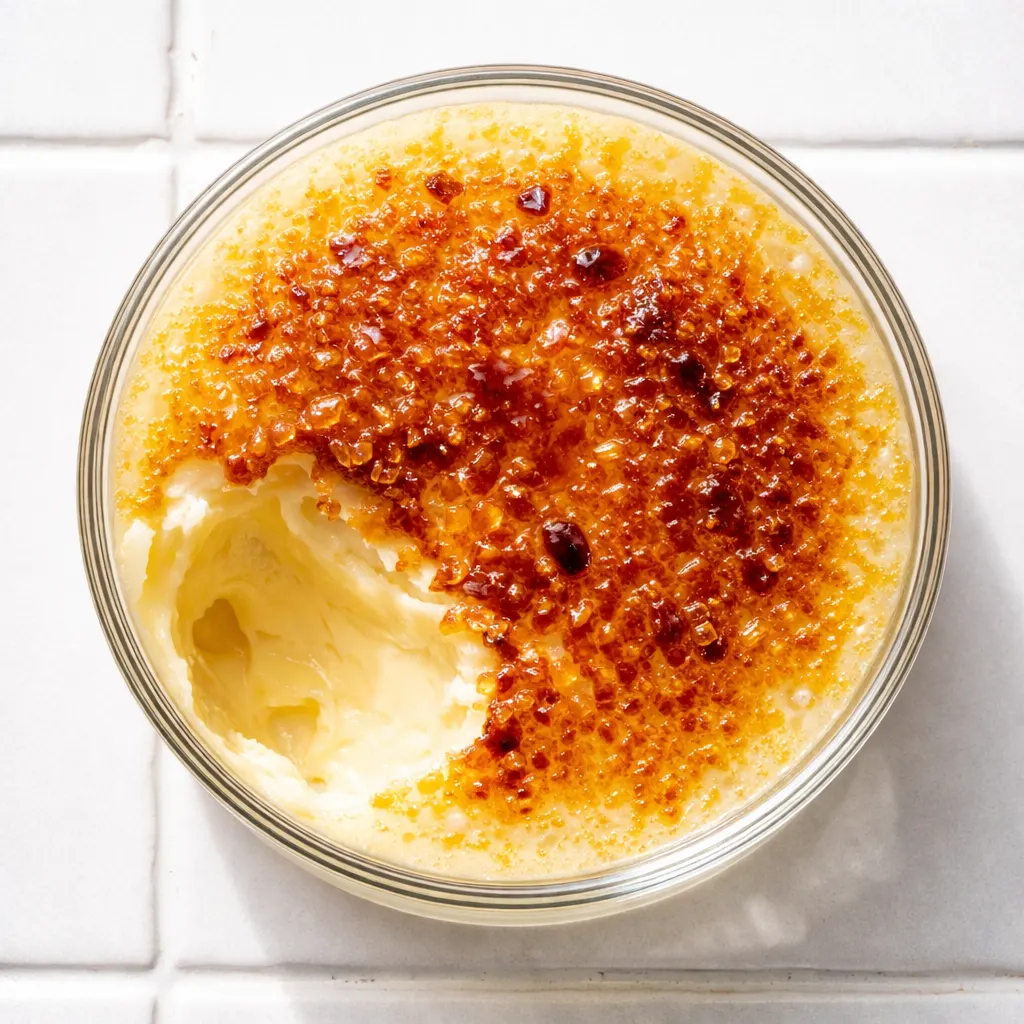
The magic here is pure chemistry — the lemon acid does all the work, creating a velvety custard without a single egg or a fussy water bath. You just heat the cream and sugar, stir in the lemon juice, and walk away. The acid curdles the cream proteins just enough to create a structure that sets into a silky, sliceable custard in the fridge.
The brûlée topping is the second piece of the puzzle. That crack of caramelized sugar against the cold, silky custard is a textural one-two punch that feels way more expensive than the sum of its parts. It’s a dead-simple trick that makes a humble cream-and-sugar dessert read like something from a restaurant pastry case. My husband thought I was overthinking it until he tried the version without the torched top. Trust me on this one — the torch is non-negotiable.
What You Need (The Shortest Grocery List of Your Life)
- 2 cups heavy cream: Don’t even think about using half-and-half. The fat content is the whole structure — it’s what makes this set into a luscious, velvety custard instead of a sad, watery mess. I learned this the hard way when I tried to “lighten” it up. Never again.
- ½ cup granulated sugar (plus more for topping): Divided into the custard and the brûlée. Use regular white sugar for the topping — it caramelizes the most evenly. My kids can smell when I try to use a fancy raw sugar on top, and they revolt. Stick with plain white for the torch.
- ½ cup fresh lemon juice (from about 3-4 lemons) and zest of 2 lemons: This is non-negotiable. Bottled lemon juice will give you a flat, harsh flavor and won’t set the same way. You need the bright, floral acidity of fresh lemons. I zest the lemons before I juice them — it saves a lot of swearing at a microplane.
- Flaky salt (optional): A tiny pinch on top before the sugar goes on makes the caramelization pop. I’m a big believer in salt on caramel.
Tools of the Trade
- 4–6 shallow ramekins (wider surface area = more glorious brûlée crust per bite)
- A microplane for zesting the lemons
- A kitchen torch (or the broiler setting on your oven — but the torch is more fun)
- A fine-mesh strainer for the smoothest possible texture
- A medium saucepan and a whisk
Here’s How I Do It
I promise you, this is the easiest fancy dessert I’ve ever made. Set a timer — it moves fast, and the hardest part is waiting for it to chill. Don’t let the number of steps fool you, most of them are just “wait.”
Prep the lemons: Zest two lemons and set the zest aside. Juice all your lemons until you have ½ cup of juice. Strain the juice through a fine-mesh sieve to catch the seeds and pulp.
- Heat the cream: In a medium saucepan, combine the heavy cream and the ½ cup of granulated sugar. Whisk to combine. Heat over medium heat, stirring occasionally, until it just comes to a boil. You’ll see small bubbles around the edges, and it should be steaming. (📸 Photo tip: This happens fast — about 4-5 minutes. You’re looking for the first gentle simmer, not a full rolling boil.)
- Add the lemon: Remove the pan from the heat immediately. Whisk in the lemon juice and the lemon zest. The mixture will visibly thicken and look slightly curdled — that’s exactly what you want. Don’t panic, it’s not broken, it’s setting!
- Strain and pour: Pour the mixture through your fine-mesh strainer into a large measuring cup or a pitcher with a spout. This catches any larger bits of zest or coagulated cream, ensuring a perfectly smooth custard. Pour the mixture evenly into your ramekins.
- Chill: Carefully transfer the ramekins to the refrigerator. Chill for at least 4 hours, and ideally overnight. The posset needs this time to fully set into a firm, silky custard. (📸 Photo tip: After an hour, you can cover them tightly with plastic wrap to prevent fridge smells from getting in.)
- Brûlée: Right before serving, let the ramekins sit at room temperature for 5 minutes. Sprinkle an even, thin layer of sugar over the top of each one — about 1 teaspoon per ramekin. Tilt the ramekin to spread the sugar evenly, then tap off the excess. Use your kitchen torch to melt the sugar until it turns a deep, golden amber. Let it sit for 1-2 minutes to let the sugar harden into a glass-like shell.
Make-Ahead Magic (This Dessert Loves a Timeline)
This is my secret weapon for dinner parties. I make the possets the night before, keep them in the fridge, and then do the brûlée step right as people are finishing up their main course. It takes me 90 seconds and everyone thinks I’m a hero.
- Fridge: Cover the ramekins with plastic wrap after they’ve fully set (about 4 hours). They’ll keep beautifully for 3-4 days in the fridge. Do not torch the sugar until just before serving. The sugar will melt and go soft if you do it ahead.
- Freezer: I don’t recommend freezing it. The texture gets grainy and the set breaks when thawed. This one is strictly a fridge situation.
- Reheat the brûlée: If you happen to lose track of time and the brûlée has been sitting for a while, just give it a quick pass with the torch again to re-crisp the top.
Things I Wish I’d Known the First Time
- The Cream Needs to Be Full Fat. Trust me. I tried a “lighter” version with half-and-half and it was a watery, soupy mess. The fat is the whole structure. You cannot substitute milk or anything less than 36% fat here.
- Don’t Over-Torch the Sugar. Okay, do it a little bit. That deep, slightly bitter caramel flavor is the perfect counterpoint to the tart, cold custard. But too much and it’s just burnt and unpleasant. Think “golden amber,” not “charcoal.” My husband likes his slightly burnt, so I just let the torch linger an extra second on his. Even if you mess it up a little, it’ll still taste good — I’ve done it.
- Warm the Ramekin Slightly Before Torching. If you’re torching on a cold day or the ramekins are straight from the back of the fridge, let them sit out for 5-10 minutes first. A huge temperature shock can cause the custard to sweat, and you want that sugar to solidify into a crisp shell, not a sticky puddle.
- My Secret for the Smoothest Custard: Strain it twice. Once over the measuring cup, and once more as you pour it into the ramekins. It takes an extra 15 seconds and guarantees that absolutely nobody finds a bit of lemon pulp in their dessert.
Swaps That Actually Work
- Lime Posset Brûlée: Use lime juice and zest instead of lemon. It’s a little more floral and tropical. My sister-in-law requests this version every time she comes over.
- Rosemary Lemon Posset: Drop a 4-inch sprig of fresh rosemary into the cream as it heats. Remove it before adding the lemon. It adds a subtle, savory depth that’s incredible with the tart lemon.
- Dairy-Free Version: Full-fat canned coconut milk works surprisingly well here. The fat content is similar, and it sets into a lovely, slightly tropical custard. The brûlée top is still perfect.
- Kid-Friendly “Pudding” Version: Skip the brûlée step entirely and just serve the posset with a dollop of whipped cream and a berry on top. My kids call this “lemon pudding” and it’s one of the only desserts I feel genuinely good about them eating seconds of.
- Fancy Dinner Party Version: Serve the brûlée with a side of shortbread cookies and a few fresh raspberries. The crunch of the cookie and the tartness of the berry make it a three-act play on one plate.
Questions I Get About This Recipe All the Time
Q: Why did my posset not set?
A: Ugh, I’ve been there. The root cause is almost always either not enough acid (you need fresh lemon juice, bottle stuff is weaker) or not enough fat (skim or 2% milk won’t work). If you used full-fat heavy cream and fresh juice, it *will* set. Just give it the full 4 hours. If it’s still soupy after that, you might have measured wrong. Don’t toss it — pour it into a bowl and serve it as a “lemon cream sauce” over pound cake or berries. It’s still absolutely delicious.
Q: Can I make this without a kitchen torch?
A: Yes! You can use your oven’s broiler. Place the ramekins on a baking sheet and put them under a hot broiler for 1-2 minutes, watching them like a hawk. Rotate the pan if needed for even browning. It works, but the torch gives you way more control and is generally more fun.
Q: How long does lemon posset last in the fridge?
A: You can keep the plain possets (without the brûlée topping) in the fridge, covered, for about 4 days. It’s best in the first 48 hours, but it’s still good for a few days after that. I wouldn’t freeze it — the texture gets a bit grainy and watery upon thawing.
Q: What do you serve with lemon posset brûlée?
A: Honestly, it’s perfect on its own. But if I’m feeling fancy, I’ll serve it with a tuile cookie for extra crunch, a few fresh raspberries on the side for a pop of color, or a tiny glass of limoncello for dipping. My kids love it with a scoop of vanilla ice cream, which I admit is decadent, but it’s good.
More Recipes My Family Makes on Repeat
If you liked this one, here are a few others that get the same “can I have the recipe?” reaction at our table:
- 3-Ingredient Chocolate Pots de Crème — The chocolate lover’s version of this same trick. No eggs, no fuss, just pure, silky dark chocolate.
- Easy Berry Crostata with Lemon Cream — My go-to summer dessert. It looks like you spent all day on it. It takes about 20 minutes of actual work.
- Salted Honey Panna Cotta with Thyme — Another no-bake stunner that’s perfect for dinner parties and makes you look like a professional pastry chef.
This is the dessert I bring to every dinner party where I want to look like I tried way harder than I did. It never fails. If you try it, drop a comment below and let me know how it goes — I love hearing about the first crack of the spoon hitting that sugar shell.
📌 This easy 3-ingredient lemon posset brûlée recipe is the perfect make-ahead dinner party trick — save it for your next spring brunch or the night you want a dessert that feels truly special with almost zero effort.
Lemon Posset Brûlée That’s Easier Than Crème Brûlée (3 Ingredients, No Bain-Marie)
Equipment
- Ramekins (4-6, shallow)
- Microplane
- Kitchen torch
- Fine-Mesh Strainer
- Medium saucepan
- Whisk
Ingredients
For the Custard
- 2 cups heavy cream
- 1/2 cup granulated sugar
- 1/2 cup fresh lemon juice (from about 3-4 lemons)
- 2 lemons zest of
For the Brûlée Topping
- 1 tsp granulated sugar per ramekin
- Flaky salt (optional)
Instructions
- Zest two lemons and set the zest aside. Juice all your lemons until you have 1/2 cup of juice. Strain the juice through a fine-mesh sieve to catch seeds and pulp.
- In a medium saucepan, combine the heavy cream and 1/2 cup granulated sugar. Whisk to combine. Heat over medium heat, stirring occasionally, until it just comes to a boil – small bubbles around the edges and steaming (about 4-5 minutes).
- Remove the pan from the heat immediately. Whisk in the lemon juice and lemon zest. The mixture will visibly thicken and look slightly curdled – that’s exactly what you want.
- Pour the mixture through your fine-mesh strainer into a large measuring cup or pitcher with a spout to catch any larger bits of zest or coagulated cream. Then pour evenly into your ramekins.
- Carefully transfer the ramekins to the refrigerator. Chill for at least 4 hours, ideally overnight, until fully set into a firm, silky custard. After 1 hour, cover tightly with plastic wrap to prevent fridge smells.
- Right before serving, let the ramekins sit at room temperature for 5 minutes. Sprinkle an even, thin layer of sugar over the top of each one – about 1 teaspoon per ramekin. Tilt to spread evenly, tap off excess.
- Use a kitchen torch to melt the sugar until it turns a deep, golden amber. Let sit for 1-2 minutes to let the sugar harden into a glass-like shell. Serve immediately with a spoon for cracking.
Notes
Related Recipes:
 The Perfectly Pillowy Chocolate Chip Milk Buns (Tangzhong Method)
 Bagel Breakfast Sliders That Taste Like a Diner Breakfast — in 25 Minutes
 Cheesy Hamburger Casserole Bake That’s Ready in 40 Minutes (No Canned Soup Here)
 Creamy Garlic Tagliatelle That Looks Like a Restaurant Dish in 20 Minutes
 Texas Roadhouse Style Baked Salmon with Sweet and Savory Glaze — Ready in Under 30 Minutes
 Easy Italian Meatloaf That’s Actually Juicy (Not Dry) — in 1 Hour