
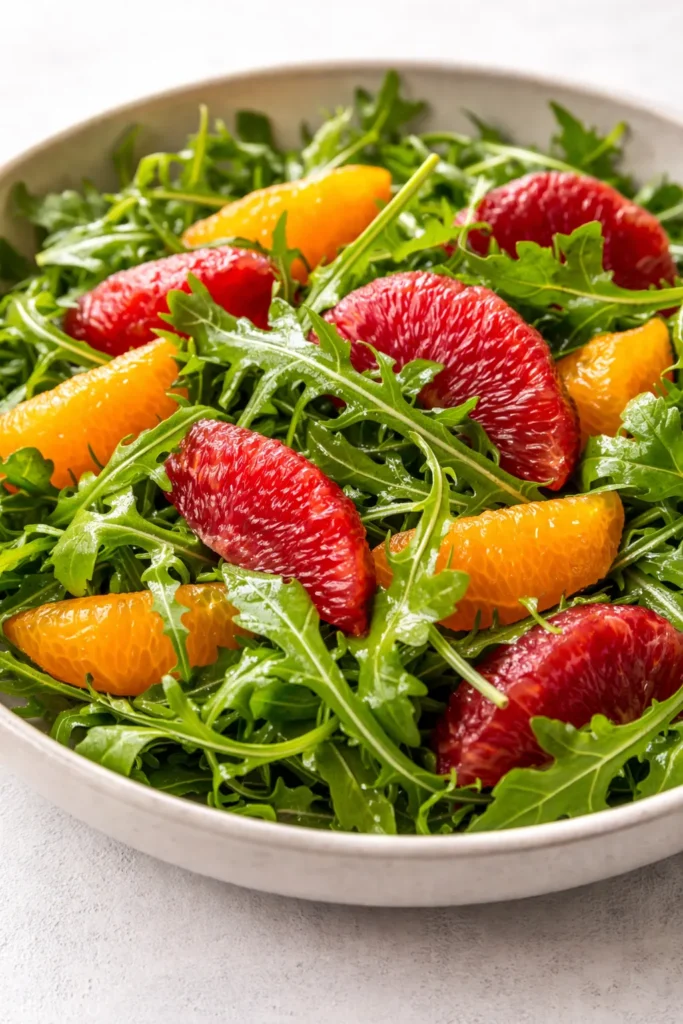
The first time I made this arugula citrus salad for a friend’s birthday brunch, someone asked if I’d staged it for a photoshoot. I hadn’t. That’s just what happens when you stop treating arugula like a base and start treating it like an ingredient that needs to be handled — kept dry, layered carefully, and barely touched by the dressing until the very last second.
The short version: A winter salad that doesn’t wilt, weep, or bore you — in 15 minutes flat.
I’ve been making this for three winters straight now. It’s the one thing my sister requests every year when she visits from the city, and it’s the first side dish I reach for when I need a table to look like I tried harder than I actually did.
- Serves: 4 as a side
- Hands-On Time: 15 min | Total Time: 15 min
- Difficulty: Easier than you think
- Cost per serving: ~$3.50
- Calories: ~180 per serving
- Dietary Notes: Naturally gluten-free and vegetarian
(Photo above: Overhead shot of the salad in a wide, low ceramic bowl. The citrus segments are fanned out in a deliberate pattern around the perimeter, with a loose pile of arugula mounded in the center. White shavings of cheese catch the light. Natural daylight from the left, late morning.)
Why This One Doesn’t Get Soggy (And the Usual One Does)
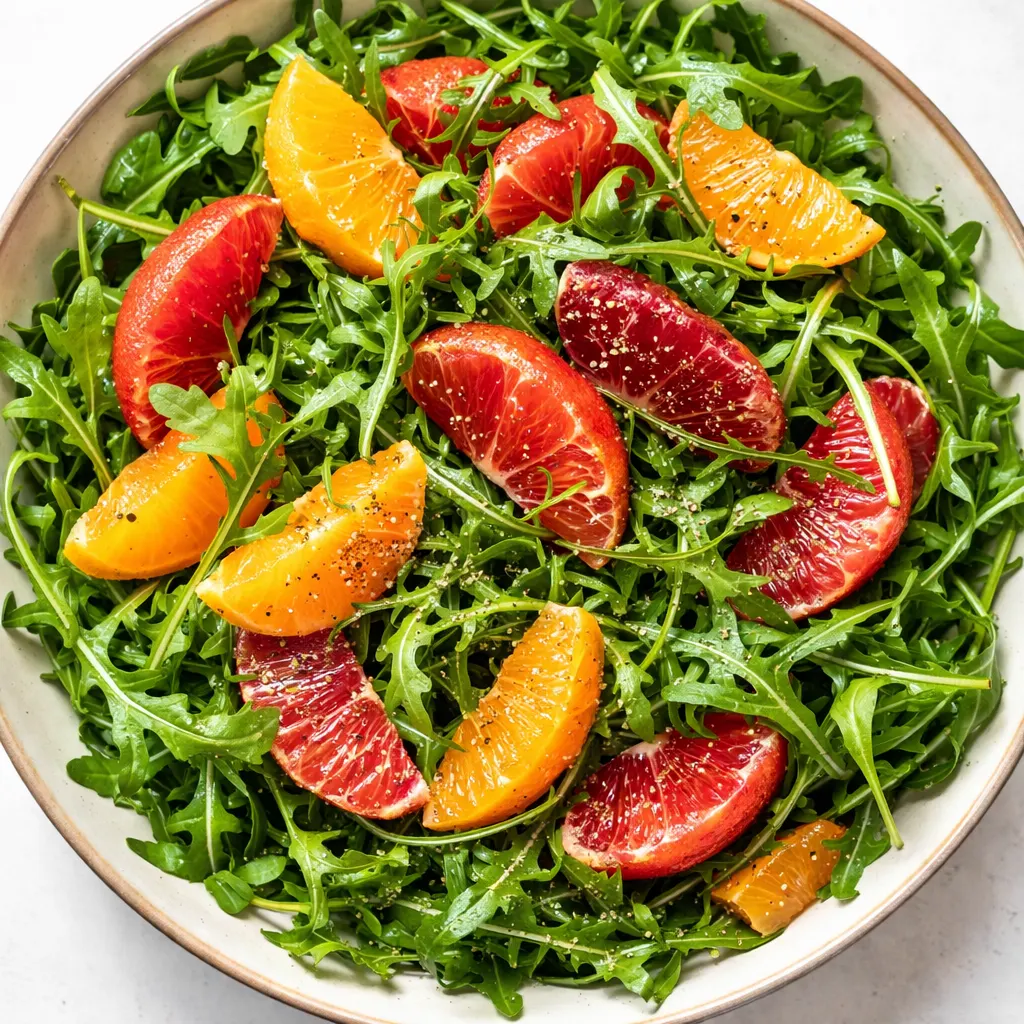
The standard move is to dump arugula in a bowl, squeeze citrus over it, and toss. By the time you bring it to the table, the leaves are already starting to go limp. The acid in the citrus juice breaks down the delicate leaves almost immediately. That’s not a flavor thing — it’s a physics thing.
Here, the citrus is the base layer. It gets dressed first, along with the shallots, and the arugula goes on top. The leaves stay dry until the last five seconds before serving. That single swap — layer the citrus, pile the greens — changes the entire texture of the salad.
What you get is a dish where every leaf is still perky, every citrus bite is cold and sweet, and the whole thing looks like you spent way more time on it than you actually did. Which is exactly the goal.
What Goes In (and Why It’s Worth It)
- 5 oz baby arugula: The peppery bite is what holds up against the sweet citrus. Don’t use mature arugula — it’s too tough and the bitterness becomes aggressive instead of complementary. I tested this with a bag of the big leaves once and my family politely ate around it.
- 2 large navel oranges: The backbone of the whole thing. Supremely sweet, easy to supreme, and they release enough juice to make the dressing without needing a separate lemon. Worth the extra 90 seconds to supreme them — more on that below.
- 1 large blood orange: This one is mostly for the color. That deep red against the green arugula is what makes the table do a double-take. If you can’t find one, a Cara Cara or second navel works fine — the flavor will still be excellent.
- 1 small shallot, thinly sliced into rounds: Rinse the slices under cold water after you cut them. It sounds fussy but it knocks the raw edge off so they taste sweet and sharp instead of aggressive. I learned this from a cookbook years ago and it’s never let me down.
- 1/3 cup extra-virgin olive oil: Good enough to drink, cheap enough to use freely. I use the unfiltered stuff from the farmer’s market that comes in the plain glass bottle.
- 2 tbsp white wine vinegar or Champagne vinegar: Mild acid that doesn’t compete with the citrus. Champagne vinegar is slightly more delicate if you have it.
- 1/2 tsp kosher salt, plus flaky salt to finish: Diamond Crystal for the dressing. Maldon for the finish. The flaky salt at the end is not optional — it’s the textural pop that makes the whole thing feel intentional.
- 1/2 cup shaved Parmesan or ricotta salata: Parmesan if you want savory depth. Ricotta salata if you want salty and clean. Both are correct. I go back and forth depending on my mood and what’s in the fridge.
- 1/4 cup toasted pine nuts or pistachios: Pine nuts are buttery. Pistachios are green and crunchy. Pick based on what you’re serving it with. My kids prefer the pistachio version — they pick them out first and eat them like a snack.
The Setup (Two Bowls, One Knife)
- A sharp chef’s knife
- A cutting board
- A small bowl for the dressing
- A large wide bowl or platter for composing
- A vegetable peeler or mandoline for the cheese
That’s it. No special equipment required. A platter is preferred over a deep bowl here — the wider surface lets the ingredients breathe and shows off the color contrast.
Making the Salad (The Method That Matters)
The sequence here is the whole point. Read it over once before you start — it’s not complicated, but the order is what keeps the arugula from turning into a sad pile.
Prep the citrus: Supreme the oranges and blood orange over a small bowl to catch the juice. If you’ve never done this, it’s just cutting off the top and bottom, removing the peel and pith, then cutting between the membranes to release clean segments. Squeeze the remaining membrane over the bowl to get every last drop.
- Make the dressing: In the small bowl, whisk together 3 tablespoons of the reserved citrus juice, the white wine vinegar, kosher salt, and a few cracks of black pepper. Slowly stream in the olive oil while whisking until emulsified.
(📸 Photo tip: The dressing should look thick and slightly cloudy when it comes together — that’s how you know it’s emulsified.) - Dress the base: Drizzle about half the dressing onto the bottom of your serving platter or wide bowl. Add the rinsed and patted-dry shallot slices on top of the dressing. This lets them soften slightly without getting lost in the greens.
- Layer the citrus: Arrange the citrus segments in a single layer over the dressing and shallots. Fan them out so they cover most of the bottom of the dish. This is the visual foundation — take the extra 30 seconds to make it look deliberate.
(📸 Photo tip: Overlapping the segments slightly creates a beautiful pattern that shows through the arugula when the salad is served.) - Pile the arugula on top: Here’s the non-negotiable step: pile the arugula on top of the citrus. Do not toss it yet. The citrus acts as a barrier, keeping the arugula from sitting in the dressing. It stays perfectly dry until the very last second.
- Garnish and serve: Scatter the cheese shavings and toasted nuts over the arugula. Drizzle the remaining dressing over the top. When you’re ready to serve, toss everything together gently — just enough to coat the leaves. Finish with a generous pinch of flaky salt and serve immediately.
Sunday Prep, Monday Lunch (Make-Ahead Notes)
I make this on Sunday nights and bring it for lunch all week. The key is keeping everything separate until the last minute. It takes about 10 minutes of active prep and the payoff is a week of salads that don’t taste like they’ve been sitting in a container.
- Fridge: Supreme the citrus, slice the shallots, and make the dressing. Store the citrus and dressing together in one container. Keep the shallots in a separate small container. The arugula stays dry in a paper towel-lined bag or container.
- Freezer: I wouldn’t freeze this one. The citrus segments get mushy and the arugula will be a lost cause.
- Assembly: When you’re ready to eat, layer the citrus and dressing, top with arugula, and toss. It takes 2 minutes and the arugula stays perfectly crispy.
Small Things That Make This Salad Look Expensive
- Wash and dry the arugula like it matters: Trapped water is what makes salads soggy. Use a salad spinner, then pat it dry with a clean kitchen towel. Wet arugula guarantees limp results. I know it sounds fussy — I’ve skipped it and regretted it every single time.
- Supreme the citrus like you mean it: It feels like a fancy chef move, but it’s literally just cutting off the peel and slicing between the membranes. It takes 90 seconds and makes the salad look like it came out of a restaurant kitchen instead of an everything bowl.
- Add the cheese and nuts right before serving: If they sit on the salad, they get soft. The cheese shavings should still be firm and the nuts should still crunch. That contrast — soft leaves, firm cheese, crunchy nuts — is the entire eating experience.
- Use a wide, shallow bowl or a platter: A deep bowl traps everything into one dark pile. A flat surface lets the ingredients breathe and shows off the color contrast. Negative space is your friend here.
- The dressing should taste a little too acidic on its own: When it hits the citrus and the cheese, it balances out. Don’t be afraid of the vinegar. I’ve made this too many times to count and the only batches that felt flat were the ones where I pulled back on the acid.
Swaps That Actually Work (No Sad Replacements)
- Dairy-Free: Skip the cheese entirely and add a handful of toasted almond slivers or roasted chickpeas for texture. Still works beautifully.
- Protein + Dinner Version: Top it with grilled chicken, seared shrimp, or a jammy soft-boiled egg. It turns into a full meal that’s still on the table in under 20 minutes.
- Citrus Swap: No blood orange? Use a Cara Cara or two regular navel oranges. The color will be a little more uniform but the flavor will still be excellent. This is the version I make for my weekly meal prep — just navel oranges and it’s still the best part of my lunch.
- Nut-Free: Swap the pine nuts for roasted sunflower seeds or pepitas. Same salty crunch, zero nut allergens.
The Questions I Always Get About This Salad
Q: Why did my arugula turn out limp and soggy?
A: Two culprits. Either the arugula was wet when you added it, or you dressed it too far in advance. Next time, dry the leaves thoroughly and don’t add the dressing until the very end. It’s a 30-second fix that changes everything.
Q: Can I make this vegan?
A: Absolutely. Skip the cheese or use a vegan parmesan-style shred. The citrus and nuts carry the flavor without it.
Q: How long does this keep in the fridge?
A: Undressed, it keeps for 2 days. Once dressed, eat it within 30 minutes for peak texture. The leftovers, if dressed, will be sad — I won’t pretend otherwise.
Q: What do you serve this with?
A: It’s my go-to with roasted chicken, crispy-skinned fish, or a crusty piece of sourdough with butter. My family loves it alongside simple grilled steak. It also works beautifully with a bowl of soup for a lighter dinner.
More Recipes That Rely on One Good Technique
If you liked this one, here are a few others that get the same reaction at our table:
- Peach Arugula Salad — The grain bowl that doesn’t taste like a meal prep obligation.
- Stuffed Chicken Rolls with Caramelized Onions — Same citrus energy, on a filet that looks fancy but takes 20 minutes.
- Garlic Steak Bites with Potatoes — The side dish that outshines everything on the plate.
This is the salad I bring to every potluck and the one I make when I need to feel like I have my life together on a Wednesday. If you try it, tag me on Pinterest or Instagram — I genuinely want to see your citrus spiral.
📌 This arugula citrus salad recipe stays crisp and beautiful — save it for your next winter brunch or easy dinner side.
The Arugula Citrus Salad for Winter Lunches That Actually Feel Fresh
Equipment
- Chef’s knife
- Cutting board
- Small Bowl
- Large Serving Platter
- Vegetable Peeler
Ingredients
For the Dressing
- 3 tablespoons reserved citrus juice from supreming the oranges
- 2 tablespoons white wine vinegar or Champagne vinegar
- 1/2 teaspoon kosher salt (Diamond Crystal preferred)
- 1/3 cup extra-virgin olive oil
For the Salad
- 5 oz baby arugula
- 2 large navel oranges, supremed
- 1 large blood orange, supremed (or Cara Cara)
- 1 small shallot, thinly sliced into rounds and rinsed
For the Garnish
- 1/2 cup shaved Parmesan or ricotta salata
- 1/4 cup toasted pine nuts or pistachios
- Flaky salt (such as Maldon) for finishing
Instructions
- Supreme the oranges and blood orange over a small bowl to catch the juice. Cut off top and bottom of each orange, remove peel and pith, then cut between the membranes to release clean segments. Squeeze the remaining membrane over the bowl. Set the segments aside and reserve the juice.
- Make the dressing: In a small bowl, whisk together 3 tablespoons of the reserved citrus juice, the white wine vinegar, kosher salt, and a few cracks of black pepper. Slowly stream in the olive oil while whisking until emulsified. The dressing should look thick and slightly cloudy.
- Dress the base: Drizzle about half the dressing onto the bottom of your serving platter or wide bowl. Add the rinsed and patted-dry shallot slices on top of the dressing.
- Layer the citrus: Arrange the citrus segments in a single layer over the dressing and shallots. Fan them out to cover most of the bottom of the dish. Overlap slightly for a beautiful pattern.
- Pile the arugula on top of the citrus. Do not toss yet. The citrus acts as a barrier, keeping the arugula dry until serving.
- Scatter the cheese shavings and toasted nuts over the arugula. Drizzle the remaining dressing over the top. When ready to serve, toss gently just to coat the leaves. Finish with a generous pinch of flaky salt. Serve immediately.
Notes
Related Recipes:
 Twice Baked Breakfast Potatoes for a Lazy Sunday: The Only Brunch Dish You Actually Want to Make
 The Starbucks Pink Drink Recipe with the Perfect Coconut Milk Float
 The Perfectly Pillowy Chocolate Chip Milk Buns (Tangzhong Method)
 Baked Protein Pancake Bowls That Are Fluffy, Golden, and Ready in 25 Minutes (Hands-Free)
 Bagel Breakfast Sliders That Taste Like a Diner Breakfast — in 25 Minutes
 Healthy Hard Boiled Egg BLT Bites That Taste Like the Real Thing — in Under 20 Minutes