
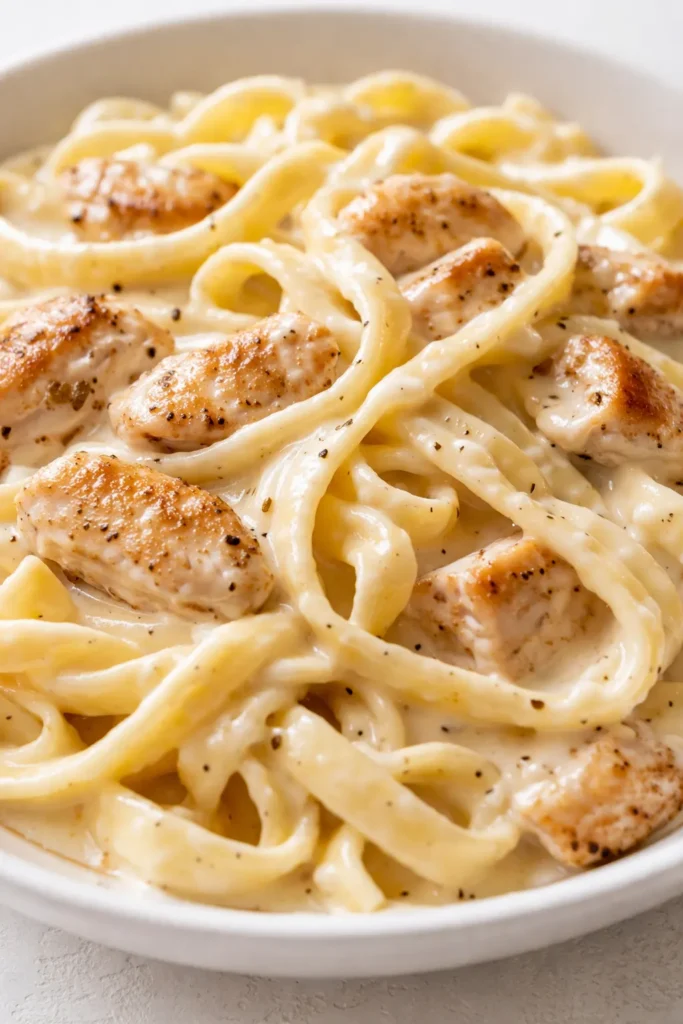
I have not ordered takeout Alfredo since I figured this particular version out. The restaurant ones I used to love now taste gloppy and heavy by comparison. This one is silky — genuinely silky — and actually tastes like pasta that happens to be coated in a rich, savory sauce, rather than noodles swimming in something that congeals before you finish the plate.
The short version: Thirty minutes, one skillet, no cream cheese shortcuts, and my brother texted me a full week asking when I’d make it again.
I started making Alfredo in college with a jar and a container of cream cheese. It was fine for a Tuesday, but it wasn’t this. The real version takes maybe twelve extra minutes and the difference is the kind of meal you’d serve to someone you’re trying to impress — which is exactly what I did the first time I made it for my now-husband. He married me anyway, and I maintain the Alfredo helped.
- Serves: 4 as a main course
- Hands-On Time: 20 min | Total Time: 30 min
- Difficulty: Easy enough for a school night — looks like it took all afternoon
- Cost per serving: ~$4.50
- Calories: ~680 per serving
- Dietary Notes: Can be adapted gluten-free
(Photo above: An overhead shot of the fettuccine in a wide, low ceramic bowl, the sauce pooling just slightly at the edges and clinging thickly to each strand. Sliced seared chicken thighs are arranged on top, finished with a generous crack of black pepper and a few small basil leaves. The light is warm and golden, coming from the left.)
The Thing That Makes This Silky (Not Gloppy)
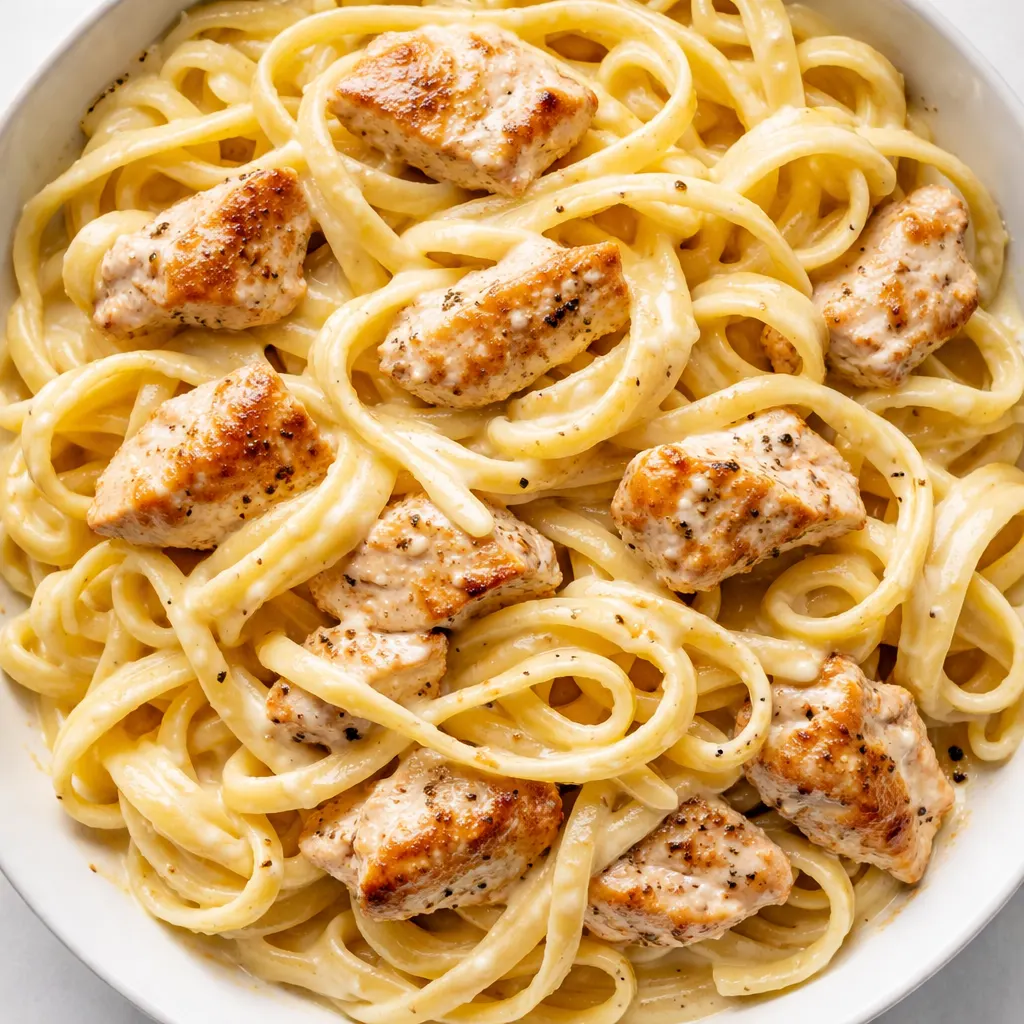
The trick here isn’t a secret ingredient — it’s the method. You start by searing the chicken in the same skillet you’ll build the sauce in. Those browned bits on the bottom of the pan are not dirty. They are flavor. They are what makes a sauce taste like it cooked for hours when really it took about eight minutes.
Then comes the pasta water. I know every blog says this. I am saying it again because it actually matters: the starch in that water is what lets the cream and cheese bind together into something that coats the pasta instead of pooling underneath it. Without it, you just have noodles in cream soup.
The other thing is the cheese. Pre-shredded Parmesan is coated in cellulose to keep it from clumping in the bag, which also keeps it from melting into a unified sauce. You need to grate it yourself. It takes ninety seconds and it’s the difference between a sauce that’s smooth and a sauce that’s grainy. I learned this the hard way so you don’t have to.
Everything You Need (Plus What to Skip)
- 1 lb fettuccine: The flat wide noodles are traditional for a reason — they catch the sauce and hold it. You can substitute another pasta shape, but fettuccine is the move here.
- 1.5 lbs boneless skinless chicken thighs: Thighs stay juicy through the sear in a way breasts just don’t. If you only have breasts, pound them even and watch the internal temp carefully.
- 2 cups heavy cream, divided: Not half-and-half. The fat content is the backbone of the emulsion. If you try to lighten it here, the sauce won’t have the same body.
- 1 cup freshly grated Parmesan: Do not buy the green can. Do not buy the bag. Buy a block of real Parmigiano-Reggiano and grate it on the small holes of a box grater.
- 4 tbsp unsalted butter: Butter is the flavor base. Salted butter works if that’s what you have — just adjust your final seasoning.
- 4 cloves garlic, sliced thin: Sliced, not minced. Sliced garlic infuses the cream gently without turning bitter. Minced garlic burns faster and leaves little bits in an otherwise smooth sauce.
- 1 cup reserved pasta water: The non-negotiable magic ingredient. Do not forget to scoop it out before you drain the pasta.
- Salt, black pepper, and fresh basil or parsley for finish:
The Setup (It’s Minimal, I Promise)
- A 12-inch skillet or large straight-sided sauté pan — you need the surface area for searing and room to toss the pasta later.
- A large pot for boiling the pasta — at least 5 quarts.
- A wooden spoon or silicone spatula for scraping up the fond.
A box grater for the cheese doesn’t strictly make the list of kitchen equipment but if you don’t have one, get one. A microplane works but takes longer for a full cup.
Here’s How I Do It (Start to Finish in 30 Minutes)
The timing here is the whole game. Boil your water first, and by the time the pasta is almost al dente, the sauce is ready to welcome it. Do not start cooking until you’ve measured everything and grated the cheese — this moves fast once it starts moving.
Step 1: Boil the pasta: Bring a large pot of generously salted water to a boil — it should taste salty like the sea. Add the fettuccine and cook 1 minute shy of the package’s al dente time. Right before draining, scoop out 1 heaping cup of pasta water and set it aside. Drain the pasta but do not rinse it. (📸 Photo tip: You should see starchy, cloudy water clinging to the noodles — that’s gold.)
Step 2: Sear the chicken: While the pasta boils, pat the chicken thighs dry and season both sides with salt and pepper. Heat the 4 tablespoons of butter in your skillet over medium-high heat. Once the butter stops foaming, add the chicken thighs in a single layer. Sear for 5–6 minutes per side, until golden brown and cooked through (165°F internal temp). Transfer the chicken to a cutting board to rest. Do not wipe out the skillet — every browned bit left behind is flavor for the sauce.
Step 3: Build the sauce base: Reduce the heat to medium. Add the sliced garlic to the skillet and cook for about 30 seconds, just until fragrant. Pour in 1.5 cups of the heavy cream and a good pinch of black pepper. Use your wooden spoon to scrape up all those browned bits from the bottom of the pan — they dissolve into the cream and turn it a pale golden color. (📸 Photo tip: The cream will look streaky with brown at first. Scrape and stir until it’s uniform and smooth.)
Step 4: Emulsify the cheese: Remove the skillet from the heat entirely. Whisk in the freshly grated Parmesan, a handful at a time, until the sauce is smooth and completely combined. If you add it all at once or keep the pan too hot, the cheese can clump. Off the heat gives you control.
Step 5: Finish the pasta: Add the drained fettuccine to the skillet along with the remaining ½ cup of heavy cream and about ½ cup of the reserved pasta water. Return the skillet to low heat and toss constantly with tongs for 1–2 minutes. The sauce will thicken and coat each strand. If it looks too tight, add another splash of pasta water. If it looks too loose, keep tossing — it will tighten.
Step 6: Slice and serve: Slice the rested chicken thighs into ½-inch strips. Divide the pasta among warm bowls and arrange the chicken on top. Finish with a final crack of black pepper and a few fresh basil leaves or a pinch of fresh parsley.
How I Make This for Busy Weeks
Alfredo is one of those dishes I have in my back pocket for the nights when I have exactly zero energy left but I want to eat something that feels like I made an effort. Here’s how I’ve adapted it for the chaotic weeks:
- Fridge: The sauce and pasta store well together for up to 3 days. The pasta will absorb some liquid overnight, so add a splash of milk or reserved pasta water when you reheat it to loosen the sauce back up.
- Freezer: I do not recommend it. The cream-based sauce separates during the thaw and no amount of vigorous stirring brings it back to the original texture. Make it fresh or within a few days.
- Reheat: The best method is a skillet over medium-low heat with a splash of water or milk, tossing constantly until it’s hot and glossy. The microwave works in a pinch but the texture won’t be quite the same.
Things I Wish I’d Known the First Time
- Grate your own cheese. I cannot say this enough. The pre-shredded bags are coated with cellulose to prevent clumping, which means they refuse to melt into a unified sauce. You’ll end up with a grainy mess. A block of real Parmigiano-Reggiano and a box grater is the way.
- Reserve that pasta water before you drain. I have forgotten this exactly once and had to substitute plain tap water. The result was noticeably thinner and sadder. The starch in the pasta water is what gives the sauce body and helps it cling to the noodles. Do not skip this.
- Keep the heat low when you add the cheese. If the pan is too hot, the Parmesan will turn into a stringy, clumpy ball instead of melting into the cream. Pulling the pan off the heat while you whisk in the cheese gives you control and guarantees a smooth finish.
- Trust the tossing. The final step — tossing the cooked pasta in the sauce over low heat — is where the magic happens. The starches from the pasta and the water mingle with the cream and cheese to create the exact silky texture you’re after. Don’t just stir gently. Toss it with purpose using your tongs.
Make It Yours (Easy Swaps)
- Gluten-Free: Use a high-quality gluten-free fettuccine — brown rice or legume-based hold up best. Reserve your pasta water just the same. The sauce itself has no gluten, so it’s just the noodles that need swapping.
- Lighter Version: Substitute half the heavy cream for whole milk. It won’t be as decadent, but it’s still very good. Add an extra tablespoon of butter to help the body.
- Veggie Boost: Add 1 cup of thawed frozen peas or a handful of sautéed mushrooms right at the end when you toss the pasta. My nephew eats the pea version by the bowlful and doesn’t even notice the green.
- Protein Swaps: Sliced Italian sausage (cooked and crumbled) or seared shrimp both work beautifully here. If you use shrimp, cut the cook time to 2–3 minutes per side.
- Spicy Kick: Add ½ teaspoon of red pepper flakes along with the garlic. It won’t make it spicy — just gives it a little warmth behind the richness.
Questions I Always Get About This Alfredo
Q: Why did my sauce turn out grainy?
A: Ugh, I’ve been there. It usually means the heat was too high when you added the cheese, or you used pre-shredded Parmesan. The cheese separates when shocked by high heat. Next time, pull the pan off the heat completely before you whisk the cheese in, and make sure you’re using freshly grated. You’ve got it next time.
Q: I don’t have heavy cream. Can I use milk or half-and-half?
A: You can in a pinch, but it won’t have the same velvety thickness. Heavy cream is the backbone here. If you only have whole milk, add an extra tablespoon of butter and be prepared for a thinner sauce. The result will still taste good, it just won’t coat the pasta the same way.
Q: How long does it keep? Can I freeze it?
A: It keeps for up to 3 days in the fridge in an airtight container. The pasta will absorb some of the sauce, so add a splash of milk or water when you reheat it to bring the consistency back. I do not recommend freezing it — the cream emulsion breaks during thaw and the texture becomes grainy.
Q: What do you serve with this chicken alfredo?
A: A simple crisp green salad with a sharp lemon vinaigrette is my go-to — the acid cuts the richness perfectly. Garlic bread is also a non-negotiable in my house. My kids love it with a side of roasted broccoli because they can dip it in the extra sauce on the plate.
More Recipes My Family Makes on Repeat
If this one lands in your regular rotation, here are a few others my family has tested and demanded again:
- One-Pot Creamy Lemon Pasta with Spinach — Zesty, bright, and on the table in 20 minutes with barely any cleanup.
- Crispy Baked Chicken Thighs with Garlic Butter — Juicier than fried and the crispy skin is genuinely shatter-level.
- Simple Garlic Bread That’s Actually Garlicky — No powdered garlic here. Just real butter, real garlic, and a very hot oven.
Set the plates down, watch the steam hit the garlic bread, and listen for the quiet. That’s the sound of everyone at the table being genuinely thrilled about what’s in front of them. That’s the whole point of this dish.
If you make this creamy chicken alfredo, drop a comment and let me know how it went — I love hearing what your family thought. It’s the kind of meal that makes the people you feed feel taken care of, and that’s never not worth sharing.
📌 Save this creamy chicken alfredo recipe for the next time delivery sounds good but you want something way better — it comes together in just 30 minutes, all in one skillet, and your family will ask for it weekly.
Creamy Chicken Alfredo That Beats Takeout – in 30 Minutes
Equipment
- 12-inch skillet or large sauté pan
- Large pot (5 quarts)
- Wooden spoon or silicone spatula
- Box grater
- Tongs
Ingredients
- 1 lb fettuccine
- 1.5 lbs boneless skinless chicken thighs
- 2 cups heavy cream, divided
- 1 cup freshly grated Parmesan cheese
- 4 tbsp unsalted butter
- 4 cloves garlic, sliced thin
- 1 cup reserved pasta water
- Salt and freshly ground black pepper, to taste
- Fresh basil or parsley, for garnish
Instructions
- Boil the pasta: Bring a large pot of generously salted water to a boil. Cook fettuccine 1 minute shy of package al dente. Before draining, reserve 1 cup pasta water. Drain (do not rinse) and set aside.
- Sear the chicken: While pasta boils, pat chicken thighs dry and season with salt and pepper. Melt butter in a 12-inch skillet over medium-high heat. Sear chicken 5-6 minutes per side until golden and cooked through (165°F). Transfer to a cutting board to rest. Keep the browned bits in the skillet.
- Build the sauce base: Reduce heat to medium. Add sliced garlic and cook 30 seconds until fragrant. Pour in 1½ cups heavy cream and a pinch of black pepper. Scrape up browned bits from the pan with a wooden spoon until the cream is smooth and pale golden.
- Emulsify the cheese: Remove skillet from heat. Whisk in freshly grated Parmesan a handful at a time until completely smooth. Off the heat prevents clumping.
- Finish the pasta: Add drained fettuccine, remaining ½ cup heavy cream, and about ½ cup reserved pasta water to the skillet. Return to low heat and toss constantly with tongs for 1-2 minutes until sauce thickens and coats the noodles. Add more pasta water if needed to loosen.
- Slice and serve: Slice rested chicken thighs into ½-inch strips. Divide pasta among warm bowls, top with chicken, and finish with a crack of black pepper and fresh basil or parsley.
Notes
Related Recipes:
 Peach Arugula Salad with Brown Butter Pecans: The 15-Minute Summer Dinner I Make on Repeat
 Cheesy Hamburger Casserole Bake That’s Ready in 40 Minutes (No Canned Soup Here)
 Lemon Capellini Salad for Late Summer Evenings: Bright, Tangy, Ready in 20 Minutes
 Creamed Cabbage and Ground Beef Casserole That’s Rich, Tender, and Done in 45 Minutes
 Grilled Peach Burrata Salad That Tastes Like a Fancy Restaurant — at Home in 20 Minutes
 Dolly Parton’s Easy 5-Ingredient Casserole That Feeds a Crowd in 45 Minutes